Editorial
Unsafe, destructive excavation of Kengen land

Dear Editor,
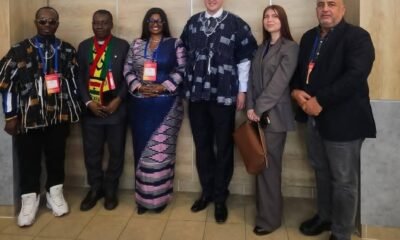
We, the people of Kengen in the diaspora have uncovered an unsafe and destructive excavation of Kengen land in the Jomoro District of the Western Region. We, therefore, request all excavation of Kengen land be paused until the following potential problems have been addressed.
The excavation is causing the exposure of land surfaces, resulting in increased sediment loads that will ultimately pollute the surrounding water bodies. This contamination can have detrimental effects on the ecosystem, aquatic life, and the availability of clean water for both human consumption and agricultural purposes.
The excavation involves clearing native vegetation and often results in the discharge of sediment or dirty water into nearby stormwater drains or waterways. Such actions contribute to the degradation of the environment, impacting biodiversity and compromising the quality of water resources in the area.
The excavation creates permanent deep holes filled with contaminated water, giving rise to multiple hazards. These hazards include the breeding of mosquitoes, providing a breeding ground for snakes and other reptiles, the growth of algae, and the release of foul air, which can have severe health implications on the residents of Kengen.
Widespread Erosion and Infrastructure Damage: The earthwork excavation leads to widespread erosion, washing away the surface soil and posing a significant risk to nearby homes and roads. Signs of erosion resulting from the excavation can already be observed across the main road and neighbouring plots, further deteriorating the infrastructure and creating hazards for commuters.
Uninhabitable Land and Impediment to Development: The excavation renders the land uninhabitable for many years, making it unsuitable for any developmental projects.
Considering the current expansion plans for the town, this site will eventually be in the heart of Kengen, posing a serious threat to the entire community in terms of health risks, diseases, and potential damage to properties and livestock.
Given the gravity of the situation and the far-reaching consequences of the damage, we, the Kengen Manle Association (KMA) in the diaspora, strongly urge the Chief of Kengen to immediately cease all excavation activities in the area till further notice.
We are committed to monitoring the already excavated areas and will promptly notify local authorities of any further environmental damage we may discover.
We firmly believe that by halting the earthwork excavation, we can safeguard the future of Kengen and protect the well-being of our current and future generations. The preservation of our land, water, and overall environment is crucial to ensuring a sustainable and healthy community. Together, let us save our future and that of our children.
Kengen Manle Association in the Diaspora (KMA)


Dear Editor,
I WRITE to condemn the circumstances under which an accident victim died recently after three major hospitals reportedly turned him away due to what has earned a place in our local parlance as ‘no bed syndrome.’
Reports suggested that this motor rider who got knocked by a vehicle was taken to three major hospitals – Police Hospital, Greater Accra Regional Hospital (Ridge Hospital), and the Korle-bu Teaching Hospital – but they all claimed they had no beds.
But one may ask, would there ever be beds?
Such is the treatment Ghanaians endure every now and then when one visits our hospitals, especially the public ones which are run with the taxpayers’ money. Many a time when one visits the hospitals, the sight of patients admitted and lying on benches, and some sitting on chairs while receiving care, is visible to all; making one wonder why this particular motor rider was not admitted at any of the facilities, looking at his condition.
This leads to the reason for this letter, which is to bring out a perceived apathy against these motor riders, the majority of whom are referred to as ‘Okada’ riders.
Due to their recklessness on the roads and the inconvenience caused to commuters, people always speak ill about them; drivers equally have no regard for them. Every user of public transport would attest to this. These riders are blamed for every offence, even when it is obvious drivers may be at fault sometimes.
Motor riders have become like orphans on the road; people care less about them, and when they are unfortunately knocked down, no one cares about them.
This is the mischief our authorities and agencies, including the police, must seek to cure to make the road safe for all users.
These are young folks that want to make a living for themselves, and with no skill or education, ‘Okada’ rides have become their source of livelihood. They need the protection accorded drivers and commuters as well.
In other countries, some facilities have been provided to make their work safer, but in Ghana, we lack them, leaving them with no alternative than to share the available space with the cars.
What has happened should serve as a wake-up call on our authorities to aim to take a second look at the ‘Okada’ menace. With the numbers increasing, there should be a way to regulate them because no government would have the guts to ban it totally.
Drivers should be made to accept the reality that they are sharing the roads with them, and therefore the need for patience and tolerance.
For some of our hospitals, I suggest the Ministry of Health conduct their own investigations to see what patients go through in accessing medicare, which is even not for free.
Thank you, Editor, for the space.
F. Morgan, Kokrobite
Dear Editor,
THE heartbreaking death of 29-year-old engineer Charles Amissah in a hit-and-run accident has exposed once again the failures in our health system.
Even more painful is the fact that his father had previously donated beds to some hospitals, yet when his son needed urgent care, he was moved from one facility to another because there were ‘no beds.’
This is not only tragic but unacceptable. How can a country lose its bright young citizens simply because hospitals cannot provide emergency treatment? The ‘no bed syndrome’ has become a national disgrace, and Charles’ death is a reminder that reforms cannot wait.
Our hospitals must be equipped to handle emergencies, and accountability must be enforced. If donations are made to improve facilities, then those facilities must serve the people when it matters most. Ghana cannot afford to keep losing lives to negligence and poor infrastructure.
Charles Amissah’s death should be the turning point. Let us honor his memory by fixing the system so that no family would suffer this kind of preventable loss again.
Princess Wonovi
Accra
Join our WhatsApp Channel now!
https://whatsapp.com/channel/0029VbBElzjInlqHhl1aTU27