Sports
U20 AFCON Egypt 2025: Ghana pip Senegal


- /home/u249204778/domains/spectator.com.gh/public_html/wp-content/plugins/mvp-social-buttons/mvp-social-buttons.php on line 27
https://spectator.com.gh/wp-content/uploads/2025/05/image-5-960x600.png&description=U20 AFCON Egypt 2025: Ghana pip Senegal', 'pinterestShare', 'width=750,height=350'); return false;" title="Pin This Post">
- Share
- Tweet /home/u249204778/domains/spectator.com.gh/public_html/wp-content/plugins/mvp-social-buttons/mvp-social-buttons.php on line 72
https://spectator.com.gh/wp-content/uploads/2025/05/image-5-960x600.png&description=U20 AFCON Egypt 2025: Ghana pip Senegal', 'pinterestShare', 'width=750,height=350'); return false;" title="Pin This Post">
At the ongoing U20 Africa Cup of Nations Egypt 2025, Ghana’s Black Satellites edged a fiercely contested match against Senegal with a narrow 1-0 victory, thanks to an early first-half goal from Emmanuel Mensah and a resolute display anchored by standout performances from Goalkeeper Gidios Aseako and midfield dynamo Lord Afrifa.
The game burst into life right from the start, with Ghana earning a corner and nearly scoring in the 1st minute, as Aziz Issah came close.
Ghana pushed forward with several early forays into the Senegal area, applying sustained pressure.
Senegal had their first opportunity in the 6th minute, but Satellites’ goalkeeper Gidios Aseako made a good save.
Moments later, Dennis Marfo received an early yellow card after a tactical foul following a defensive lapse, though Senegal failed to capitalize on the resulting free kick.
The contest evened out between the 10th and 20th minutes, but it was Ghana who struck first.
Emmanuel Mensah found the net in the 15th minute after a sharp pass from striker Jerry Afriyie. The Senegalese briefly protested the goal, but the referee let it stand.
Senegal responded with urgency, creating a number of chances. They missed from a one-on-one situation in the 18th minute, had a header saved from a corner in the 20th, and saw a long-range effort fly wide a minute later.
Ghana’s Jerry Afriyie then missed a gilt-edged chance in the 22nd minute after he was put through one-on-one with the Senegalese Goalkeeper.
Injuries and heavy challenges punctuated the half, including a brief stoppage for Misubau in the 24th minute. Aseako produced a sensational save in the 27th minute, denying Senegal from close range.
The half ended with another chance for the Satellites in the 43rd minute, after Lord Afrifa’s brilliant play nearly created a second goal. The Satellites led 1-0 at the break.
The second half began with a missed chance for Ghana in the 46th minute, followed by a Senegalese double substitution. Senegal came close again in the 51st minute, but Aseako remained firm.
The Satellites missed more chances in the 54th and 57th minutes, while Senegal failed to convert another in the 63rd. Ghana made key changes in the 63rd minute, introducing Maxwell Azafokpe and Sulemana.
Lord Afrifa, in the No. 9 jersey for the Satellites, continued to dominate the midfield, winning tackles and disrupting play with tireless effort.
Senegal made further changes in the 68th and 82nd minutes, trying to inject energy into their attack. Aseako received a yellow card in the 73rd minute for time-wasting, a sign of Ghana’s tactical management.
Andrews Adjabeng and Hayford Adu Boahen came on for the Satellites in the 78th minute as Coach Ofei looked to fresh limbs to maintain the team’s tempo.
Despite increased pressure, Senegal’s finishing let them down with a downward header in the 81st minute being expertly saved by Aseako.
Joseph Aidoo came on for the Satellites in the dying embers of the match, with Marfo continuing to shine, winning a free kick in a dangerous area in the 79th. The free kick was well executed but narrowly missed the target.
Six minutes were added on at the end of regulation time and the Senegalese tried valiantly to grab the equaliser. In the 93rd minute, Senegal had one last chance with a free kick, but once again Aseako held firm.
It was a match of high tempo, missed chances, and brave defending. Ghana’s midfield energy, smart substitutions, and goalkeeping heroics sealed a deserved and hard-earned win over a physically strong Senegal side.
With this victory, the Satellites have secured four points and lie second in the group, behind the Democratic Republic of Congo on goal difference. The top two teams in each group automatically qualify to the quarterfinals of the tournament.
Ghana’s goal scorer, the enterprising Emmanuel Mensah, was adjudged the player of the match.
The Satellites will round off their Group C campaign with a match against the Central African Republic who lost 1-3 to the Democratic Republic of Congo in the Group’s earlier fixture of the day.

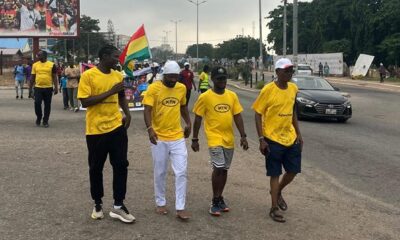



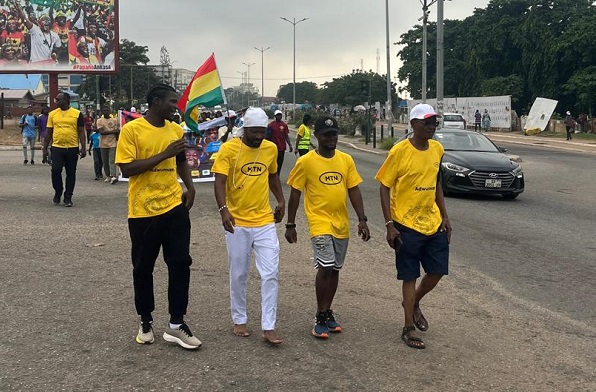
Students and management staff were joined by keep fit enthusiasts to partake in the 2026 edition of the Street Academy annual health walk held last Saturday.
It was held on the theme: “Feet on the Street, Hope in Motion.”
The event also brought opinion leaders from some of the Ga communities, sports men and women including former world boxing champion, Joseph Agbeko, and children from the academy and neighbouring communities.
The event was originally slated for July 18 but postponed due to President John Dramani Mahama’s declaration of July 17-18 as National Clean-up Day.
That development did not affect the event in any way as participants, mostly cladded in yellow outfits, turned up in their numbers.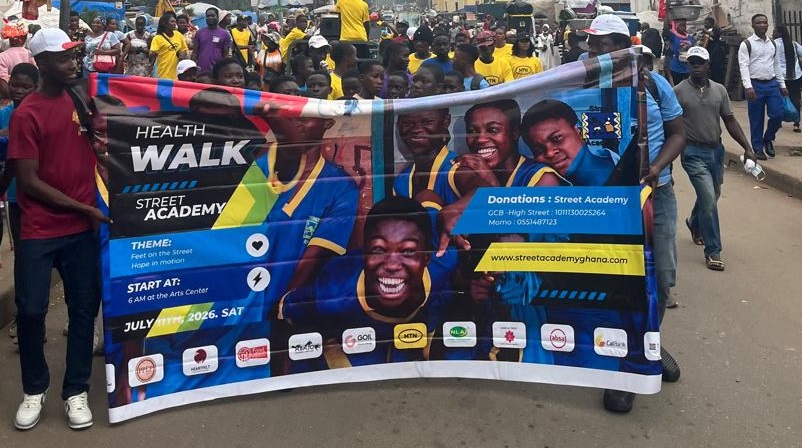
Spurred on by brass band music, the walk went through some of the principal streets of the capital, drawing more crowds from the communities it went through before returning to the Accra Arts Centre, the starting point.
Participants then went through another exhaustive aerobic session before they were refreshed.
Addressing the participants, Dr Ataa Lartey, the Founder and Executive Director of the Academy, commended them for turning out in their numbers for the walk, which he described as an event to enable the children and other guests to exercise.
Secondly, the event, he stated, was also to raise awareness about the plight of needy and underprivileged children, promote healthy living, and advocate the importance of basic education.
By Spectator Sports Reporter
Usually, when a coach is tasked to build a formidable national team for a major tournament, he does so with the best players available to him, with a special focus on local talents.
But where such local talents are not available or are unconvincing, the coach is allowed to supplement with foreign based players.
In this case, these players scouted beyond the borders of the country must be in top form and prove beyond reasonable doubt that they are far better than the locals.
Again, such players must also show some commitment and dedication to the national call.
A coach can however, decide to ignore this system in cases where there is insufficient time for the exercise, when there is a policy that forbids him from inviting certain crop of players, or if he finds himself in a position where he has no say on the players selected for him to use.
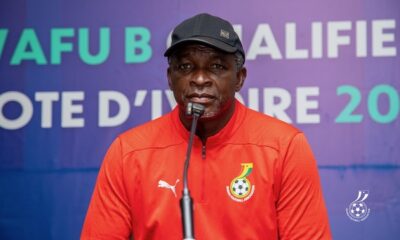
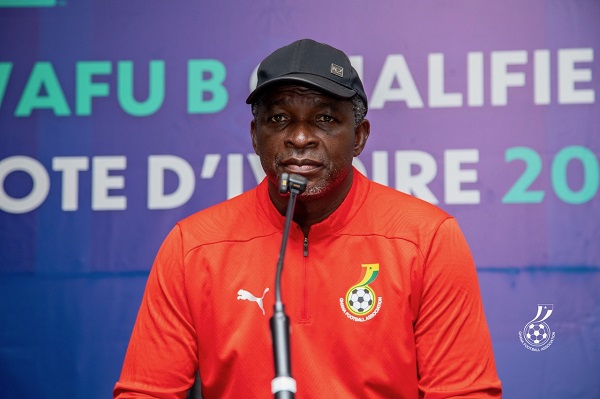
Recently, Coach Maxwell Konadu was tasked to build a Black Satellites team for the ongoing WAFU B U-20 championship in Cote d’Ivoire, a tournament which also serves as a qualifier for the 2027 Africa U-20 Championship which Ghana is hosting.
With that status, the Black Satellites become automatic candidates and rightfully, the focus should have been on a team to be groomed for the ultimate.
The sub-regional tournament did not actually oblige Konadu to rely on foreign based players, most of who are on pre-season assignments with their respective clubs.
Also, Konadu was under no misperception about quotas to allot local or foreign based players. It was very clear that the tourney was for the locals.
With this background, he is believed to have selected the players that formed the team that represented Ghana at the championship.
Sadly, Konadu and his boys disappointed woefully at the championship, failing to march his words against performance on the field.
Exiting just after the group stage came with little surprise. That has been the pattern for the national juvenile teams in their respective championships for now.
What left tongues wagging, however, was Konadu’s claim that lessons from the championship would help build a “stronger and more competitive squad for next year’s TotalEnergies CAF U-20 Africa Cup of Nations.”
The confusion lied in his admission that “the squad which competed in Côte d’Ivoire is unlikely to be the same one that represents Ghana at the 2027 TotalEnergies CAF U-20 Africa Cup of Nations.”
It would have made a lot of sense to rather build a team that uses the WAFU B Championships as a platform to prepare for the main championship next year, than selecting a team that in his own words is unlikely to compete.
This is a very common feature in other jurisdictions. The English FA, for instance, would have used an Under-18 team for the WAFU B, knowing the impact that experience would have on the team.
So clearly, the experience and lessons Konadu spoke about would be non-existent and would not help the team in anyway because if he happened to be in charge of the Ghana 2027 championship team, he would be supervising an entirely new team.
From where I sit, Konadu and whoever played any role in assembling this team got everything wrong and must be reminded that there would be no assurances that the next team would excel in the championship.
By Andrew Nortey

 News1 week ago
Prof. Kwabena Twerefou holds inaugural lecture; calls for better stewardship of Ghana’s natural resources
- News1 week ago
Prez Mahama to visit Jamaica to strengthen ties and advance reparations agenda
- News1 week ago
Ahanta Heritage Month: Diplomats, youth tour forts, Cape Three Points and historic sites