Features
The sins of Sodom and Gomorrah

The biblical Sodom and Gomorrah typified sin in its raw, carnal and abominable form.
Sin was widespread and so deep-rooted that the Lord could not find even 10 righteous men in the twin city.
If He found at least 10, Sodom and Gomorrah would have been saved from the blazing fire that turned the entire city into ashes; courtesy of God’s anger and fury.
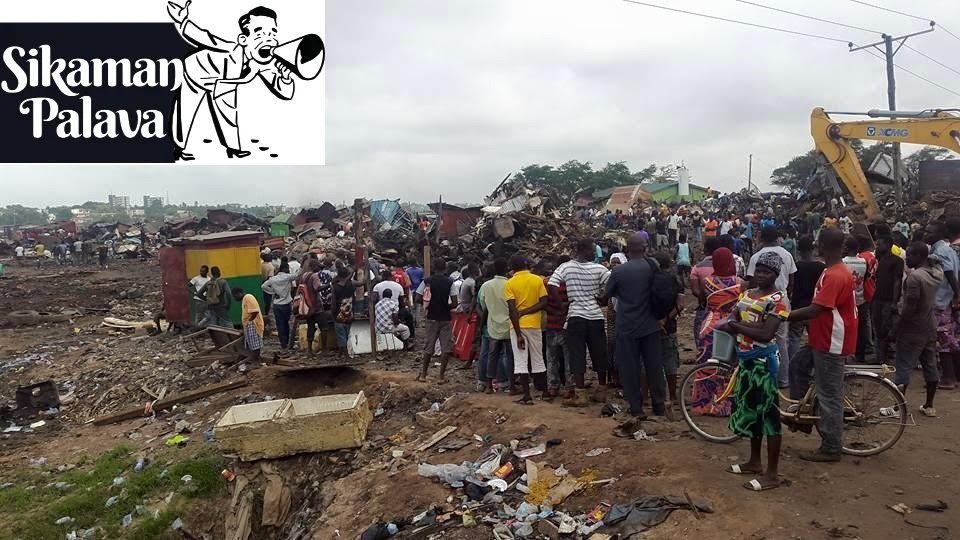
Sodom and Gomorrah was quite forgotten since the days of Noah until a slum developed in the Odododiodio constituency of the Greater Accra Region of the Republic of Ghana. It was not named Sodom and Gomorrah out of whim. Some say it is the cradle of sin, another birthplace of the seeds of transgression.
Others beg to differ
Whatever it is, in modern-day Sodom, both the good and the bad co-exist. There are good, righteous, hardworking fellows earning a decent living but have to pass each night in Sodom because foxes have holes and birds have nests but the son of man has nowhere to lay his head.
In Sodom and Gomorrah today, you’d find civil servants, reverend ministers, businessmen, aspiring politicians, technocrats, polytechnic students and managing directors. You’ll also find robbers, prostitutes, graded pimps, sodomists, small-time pickpockets, magicians, boxers and kpalogo dancers. So you’ll find both good and bad people.
History has always repeated itself. The current Sodom and Gomorrah was burnt down recently but not completely. Certainly, more than 10 righteous folks were found there. So some areas were spared.
The problem now is that, there are plans to resettle residents of the infamous twin city, and one of the reasons is that, the place is so filthy and disease-ridden so much that the continued human existence is deemed not in the interest of anybody.
A new settlement is what the government sees as ideal for these people, more so when the name Sodom and Gomorrah is nothing complimentary as a name.
The residents, however, say that they love the place. Their hearts and souls are enshrined in Sodom and Gomorrah, so they won’t move, bulldozer or not.
The situation recalls the one similar to the people of Tema Mahean who lived at the site where Meridian Hotel is located. To get the site for the hotel, the Nkrumah government had to resettle the indigenes who were rather unwilling.
A bulldozer was brought in to do the job, and the people still feel bitter about it. Their collective soul was uprooted and of course, they left a curse, as some people say. The Meridian Hotel and its present state, similar to a bomb-ridden edifice, may be a living testimony of the bitterness of the people.
But the difference between the Tema and Sodom variants – the Tema case was that of an ancestral home with its shrine and roots. Sodom and Gomorrah is a slum that has developed over the years, and you’d find people of various nationalities there. They include Burkinabes, Nigeriens, Ivorians. Some are perchers; others appear and disappear as and when they deem fit.
“It would be a mistake for this government to send us away after we’ve voted for Kufuor for positive change”, one resident has said. “We cannot be sent away like animals.
They must give us time to decide. We support the government, so the government must not go against our wishes and make us miserable”.
Another resident I had a chat with said the government should think about places like Ashaiman (pronounced by many ‘Ashiaman’), because the sins of Sodom and Gomorrah are nothing to be compared to the abominations of Ashaiman.
“I’ve stayed at Ashaiman before and I know the difference. In Ashiaman you can find every type of criminal. Sodom and Gomorrah is not a crime haven, as others think. It is a residential area for the poor. And if poverty can be said to be a crime, then we are criminals. Otherwise, we are like anybody else,” he said.
The mention of Ashaiman was intriguing. Ashaiman, also called Hanoi, may be one of the infamous crime cities in West Africa, sharing the infamy with places like Brooklyn, Harlem and Manhattan in the United States.
But those who live in Ashaiman have very favourable comments about the place. They admit that criminals live there. But the good thing about it is that they don’t commit their crimes in Ashaiman. They go out to sin and come back to roost quietly. After all the township is full of poor people you cannot steal from, they contend.
Yeah, Sodom and Gomorrah is once again about to be obliterated from the surface of the earth. Personally, I do not like the name, and it bothers me. At any rate, I believe that if the people are going to be resettled, it should be done benevolently and what should precede it is education.
They must be told why it is necessary to resettle them. And in resettling them, they should be comfortable – electricity, water, playground for the kids and recreational centres, etc. They must leave smiling, not grumbling and leaving curses behind.
This article was first published on Saturday May5, 2001






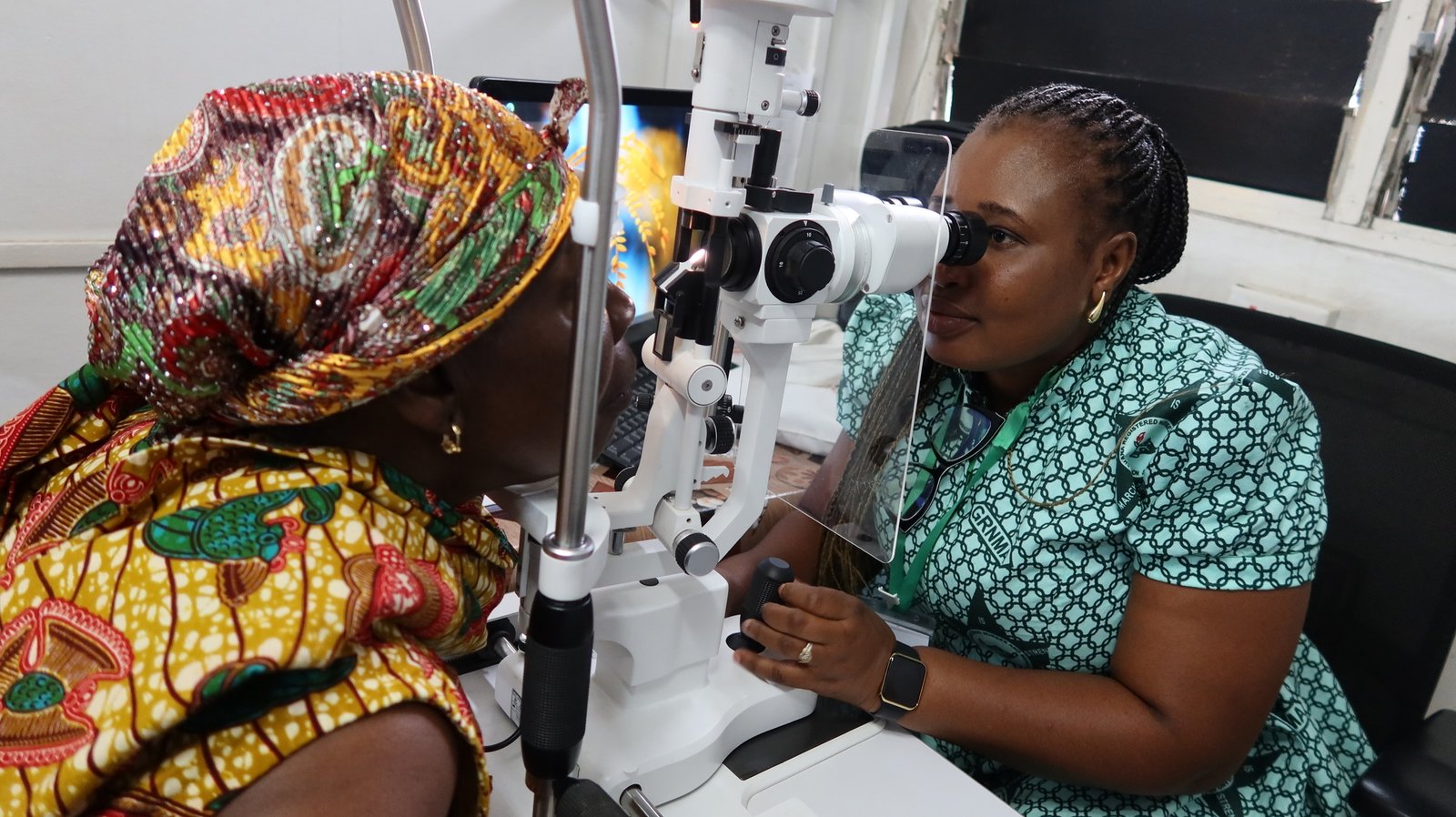
My focus today is on eye care and therapy among Ghanaian migrants in Finland, as I continue to move away from the subject of personalities or groups and their accomplishments within the Ghanaian community in Finland that I have been writing on.
Eye conditions are remarkably common in the world. Experts say that those who live long enough will experience at least one eye condition during their lifetime. According to the World Health Organisation (WHO), globally, at least 1 billion people have a near or distance vision impairment that could have been prevented or has yet to be addressed.
In recent times, I have been thinking about eye problems among Ghanaian migrants in Finland about how they take care of their eyes and their general wellbeing. Health experts say that in the absence of timely detection, reduced or absent eyesight can have long-term personal and economic effects.
Finnish healthcare services
Finland has a very good healthcare delivery system and social services accessible to all residents in the country. Information about healthcare delivery services is provided for every citizen.
Many migrants, including those in the Ghanaian community, are aware of these opportunities and are expected to take advantage of such chances.
Experts say that vision impairment affects people of all ages, with the majority being over the age of 50. Cataracts and uncorrected refractive errors are estimated to be the leading causes of vision impairment; other causes for vision impairment cannot be ignored. Age-related degeneration, glaucoma, long-standing systemic conditions like diabetes causing diabetic retinopathy, infectious diseases of the eye and trauma to the eye are all key causes for vision impairment that need to be addressed.
When it comes to Ghanaian migrants, I have been asking myself what kind of challenges they may face in accessing health information and care services. Do they adhere to calls or requests/invitations to go for check-ups in order to detect health defects early enough to enhance a successful treatment?
Migrants’ vulnerability
Research has shown that migrants or minorities are vulnerable and they face challenges accessing information, including language barriers in Finland. There was potentially lower levels of awareness, perceptions of risk, and misconceptions not addressed in public health guidance and the national response.
Glaucoma is prevalent, and although the Finnish healthcare system covers the whole population and its services are mainly tax-financed, criticism have been levelled at unequal access to care and large variations in the distribution of healthcare services. Research indicates that migrants or people with a culturally and linguistically diverse background face challenges in accessing such information. The Finnish government and health authorities have been promoting digitalisation of personal health records and aspects of healthcare services, although older Russian migrants, for example, face barriers.
Enhancing inclusion
I think Ghanaian migrants in Finland should see the need to adhere to invitations by health personnel to undergo routine medical checks at points in time. I know Ghanaian migrants generally cooperate on such issues.
All the same, I think it is pertinent for migrant associations to help the health authorities and formally create awareness among their members and other migrants, especially in collaboration with some Finnish institutions, for the good of all.
This will no doubt enhance inclusion of migrants in Finnish society. As I wrote previously, the role of migrant associations acting as bridge-builders for the integration and inclusion of migrants through participation in the decision-making process and by acting as a representative voice is highly appreciated in Finland.
The social media outlets could be used as an important means for disseminating information and it could be a key medium through which migrant groups or associations and other institutions could educate people.
Thank you!
Dinah came to our home early the following morning, as Martin was having breakfast. He congratulated her for qualifying as a doctor, and chatted briefly with her about her new posting and arrangements for starting work.
Then he left for work, hoping to see her ‘later’. For the next three hours I had a heart to heart chat with her, and she got a feel of the reality I was facing.
“Sarah, I’m concerned about the situation in your home. Martin seems to have decided that he doesn’t need a wife after all, that he is better off enjoying life with his beer colleagues and girls. I don’t think even his parents can influence him. But let’s continue to pray, and act with wisdom, especially in how you talk and how you react to provocation. Although the situation seems bad, I’m glad to notice that it has not affected you mentally.
Now that you have virtually secured admission to the university, you must stay focused on getting the degree. You have to create a life for yourself. Let’s start planning.”
Paul was waiting at Royalty restaurant when we got there. We had a great time. Paul asked Dinah quite a lot of questions about her experiences with the medical course, and she was happy to share them.
I had the greatest surprise when I found out that he wasn’t, as I thought, an ordinary clerk and driver who distributed bills and collected payments for his employers, but the owner of the company. And his company didn’t just collect rubbish and dump them, but was also involved in recycling.
And beyond that, he was helping industrial establishments to deal with chemical waste. After lunch, he first dropped me at home, and took Dinah to my parents’ place.
The following morning, Martin announced, with a sour face, that his mother would arrive in the evening, and would spend a few days. I wasn’t expecting much to change, but I got ready to do some shopping and cook some meal.
Paul asked me what I was doing the rest of the day, and I told her that my main reason for coming to Takoradi is to spend some time with you.
So he suggested that I go with him to the office, so I did. First of all, his office is quite impressive. I spent a couple of hours on the Internet whilst he worked, then we went to the Sports Club.
Nice place. I met two doctors who want to recruit me to work for their company, which owns twenty clinics around Ghana. We left the club at about seven-thirty, bought some chips and grilled chicken, and went to his place to eat. Sarah, Paul is one very humble but really impressive guy.
He’s picking me up for lunch at twelve-thirty.
“Ei Sarah, you seem to be making some headway.”
“You must be joking. He told me something very interesting, which I will discuss fully with you tomorrow.”
“And what could that possibly be?”
“We will discuss it tomorrow. But clean your ears out. It is very interesting.”
After a couple of days, Martin had finished breakfast and was about to leave, when his mother motioned to him to wait.
“When will you come back this evening? And in what state will you be? What’s happening to you, Martin? Where do you go after work every evening?”
“Mama,” he said as he moved to the door, “I’m sorry I have to leave. Moreover, I’m not a boy anymore. I’m quite capable of managing my affairs.” But his mother blocked the door.
“If you are capable of managing your own affairs, why did you call to make all those complaints about Sarah? Since I’ve been here, I’ve noticed that the place is always clean, this stupid lifestyle, or we will force you to change.”
“What will you do, Mama, beat me up?”
His Mama surprised him with a big, nasty slap, nearly flooring him. Very angry, he picked his briefcase and went out.
He came home very late as usual, ate and dropped off to sleep. The following morning he confronted me as I was preparing his breakfast.
“Sarah, what nonsense have you been telling my mother? If you can’t keep your mouth shut, then it’s best you go to your parents. After all, even though our parents gave their blessing to our coming together, we are not officially married. So you are free to leave. I will live my life the way I want.”
He paused when his mother appeared.
“Martin, Sarah hasn’t said one word about you since I’ve been here. But you, Martin, you called and made all kinds of allegations against her. And since I’ve been here, I’ve found out the truth. And you have the nerve to ask her to go away? Now I understand why her father wouldn’t give you his full blessing. Don’t worry. I’m leaving this morning. Immediately I get home, your father and I will go to her parents and apologise to them.”
Nice place. I met two doctors who want to recruit me to work for their company, which owns twenty clinics around Ghana. We left the club at about seven-thirty, bought some chips and grilled chicken, and went to his place to eat. Sarah, Paul is one very humble but really impressive guy.
Surprisingly, Martin was not happy that his mother was coming to spend some days with us. Dinah called as I was about to leave.
“Dinah, I was just leaving home to do some shopping. Martin’s mother is coming here this evening, and will be spending a few days, so I want to do some cooking. What’s up?”
“Well, I had a great evening yesterday. On the way to the hotel, then I will personally come back and take her home.”
“Martin, I came here from Koforidua three days ago, not because I have nothing to do at home, but because your father and I thought we should find out how you and Sarah are doing. Yet since I’ve been here, you’ve not sat down with me for even fifteen minutes.”
“Mama, I’m getting late for work. Can’t this wait till when I get back? There’s always good food available. She washes your clothes and even irons them. And what’s your response? You’ve turned yourself into a ghost, leaving home first thing in the morning and coming home late, every day. All those tales you told us about Sarah, they have turned out to be lies. Listen, you either change. I hope you understand the implications of the behaviour you are putting up. You are not only rejecting Sarah, you are rejecting your parents. You can go away. Sarah will take me to the Accra station.”
To my great surprise, he left.
By EKow de Heer