Features
The need for freedom in education

- /home/u249204778/domains/spectator.com.gh/public_html/wp-content/plugins/mvp-social-buttons/mvp-social-buttons.php on line 27
Warning: Trying to access array offset on false in /home/u249204778/domains/spectator.com.gh/public_html/wp-content/plugins/mvp-social-buttons/mvp-social-buttons.php on line 27
&description=The need for freedom in education', 'pinterestShare', 'width=750,height=350'); return false;" title="Pin This Post">
- Share
- Tweet /home/u249204778/domains/spectator.com.gh/public_html/wp-content/plugins/mvp-social-buttons/mvp-social-buttons.php on line 72
Warning: Trying to access array offset on false in /home/u249204778/domains/spectator.com.gh/public_html/wp-content/plugins/mvp-social-buttons/mvp-social-buttons.php on line 72
&description=The need for freedom in education', 'pinterestShare', 'width=750,height=350'); return false;" title="Pin This Post">
Once again, in most communities in this country, the learning process is underway in the schools; from kindergarten through college and on into adult education. It is a life-giving source of enrichment, not only in professional preparation, but in the overall enjoyment of life here upon the earth.
We are told that “the Glory of God is intelligence…” that “a wise man will hear and will increase learning…” This admonition applies to both the temporal and spiritual spheres.
True education is the paramount purpose of a free people. It helps us develop fundamental operating principles in our lives that can guide and influence us for good. It helps make living happier by contributing to the prosperity, peace, and security of our country. And so, as a free people, we must always strive for the highest and best in education.
And as individuals, learning should be a lifelong endeavour…a continuing exercise in thinking, preparing and living. The very process of learning helps us develop and preserve such valuable habits of the mind as curiosity, objectivity, open-mindedness, respect for evidence, and the capacity to think critically. It awakens and encourages a love of truth and contributes to our individual wellbeing as long as life endures.
Learning need not always be a formal exercise that takes place in a classroom or in a library. Sometimes, we become educated when we least expect it. We learn through our day-to-day accomplishments, and we learn about ourselves through living. That, too, is an important part of education, learning what is inside us, finding the spark of truth that God has put into every heart, acquiring the inner knowledge of what is right and wrong for each one of us.
And some of our most vital learning takes place as we study the scriptures. We learn not only the truths of this earth, but the truth of the Creator. We learn to know Him, to have confidence in Him, to have faith in His laws. We learn to love Him and to serve Him, not because we fear Him but because we have knowledge of His purpose.
Yes, for most of us, the beginning of a school year is a reminder of our life-long education process, a process that includes the growth of spiritual knowledge as well as temporal learning.
As school doors open again to receive the youth of our generation, it is my wish that we don’t only focus on free education but what is commonly called academic freedom. We know that in the halls of learning there must be freedom to tell the truth, freedom for the discovery of new truth, freedom for the acceptance of new truth, and also (sometimes overlooked) freedom for the acceptance and preservation of old truth. In other words, there must be freedom for the presentation of facts as they are. But with our insistence upon academic freedom, we must insist equally against academic licence. Grave difficulty always follows when men fail to distinguish between freedom and licence.
This isn’t true only in academic circles. It is true in all human activities. Freedom that has exceeded the bounds of freedom, freedom that has been permitted to become a perversion of freedom, becomes a devastating licence. By the misunderstanding of academic freedom, some of the instructors of youth may sometimes be led to suppose that they have a right deliberately to plant seeds of unbelief, to suppose that they may teach unproven theories as inviolate, truths, to suppose that they may dogmatically proclaim their own opinions as incontrovertible facts.
The abuse of academic freedom, as is true of the abuse of any other freedom, is something to be reckoned with, because the impact of ideas, true or false, is far-reaching in its effect upon the lives of all of us. But still we must insist upon this freedom. Education without it is a mockery. But we must insist that theories and inferences will not be mistaken for law, and that unverified beliefs and personal opinions will not be arbitrarily presented as universal truths.
One of the most solemnly sacred responsibilities in the world is that of teaching other men’s children. It is a responsibility that may well bring an earnest teacher to his knees in humility and in supplication that he may not implant in the heart or in the mind of any child, by statement or suggestion, anything that is not true, anything that would undermine our heritage of freedom, anything that would cast doubt upon the basic realities of life, anything that would devaluate the great moral verities that time and Providence have given us. The theories and the opinions of men change so much and so often. May we vigilantly preserve the freedom to teach truth, and may we vigilantly guard against letting freedom become a licence to teach anything else.
By Samuel Enos Eghan
Email: samueleghan@gmail.com


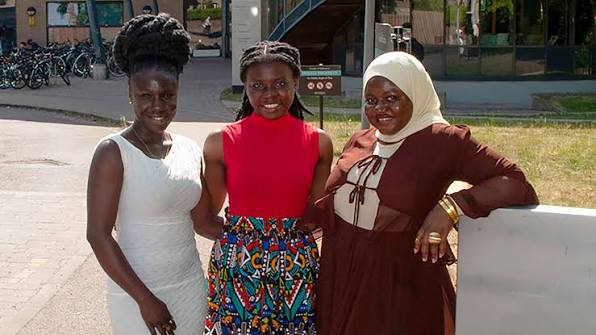
The average modern Gold Coaster born and bred in Sikaman is an adventurous creature. Go to any part of the world and you’ll find Ghanaman diligently slugging it out either in the snow or in hot sweltering weather, earning a decent living.
Go to Guinea and see Ghanaman in the garb of a herbalist, curing the sick of various ailments. He makes the Guinean understand that not all diseases are caused by James Lucifer alias Jimmy Satan. On the contrary, most diseases are caused by kooko which can even attack the human nose and turn it upside down.
That kooko is also the cause of poverty and the internal bleeding of personal back-pocket economies. And that kooko can be cured using the chemistry underlying Sikaman herbal medicine which has been blessed by the gods of Larteh.
And before Ghanaman starts dispensing his herbal concoctions, he must attract the passing crowd with some Sıkaman-originated choreography, akin to a combination of adowa and agbadza, such that the dancer can easily dislocate a shoulder and start crying for his mother.
When the crowd is enough to form a quorum, Ghanaman must perform magic as a side-attraction, and proceed to sell his drugs. The drugs are genuinely made from potent herbs which the Pharmacy Board of Sikaman says it has no confidence in. Believe me, Ghanaian herbalists are practising in neighbouring countries like Guinea, Cote d’Ivoire, Sierra Leone and Benin, while we are discouraging them from practising in Sikaman.
Go to Las Palmas and see Ghanaman as a fisherman. He sails on Korean-owned boats and is forced to eat garlic and raw tuna for radiant health. The garlic is also supposed to protect him against witches. But sometimes, he is not good bedfellows with some Korean crew members, and once in a while a fight breaks out.
The typical Korean is a Kung Fu expert and before displaying a golden dragon data. He must first terrify Ghanaman with a Korean dance which consists of wild arms and leg throwing. But Ghanaman is usually not daunted. Why has he been eating cancer kenkey all years without developing cancer? It mean is a superhuman capable of countering Kun fu side-kicks to the ribs.
Anyhow Ghanaman’s most potent arsenal lies in his fists. If he is a southpaw, it mean left fist is probably insured and can cause damage. When Ghanaman lands a cassava blow and it lands on a Korean chest, it has the effect of a cruise missile. If there is no ceasefire a funeral cannot be ruled out.
Greenland
Go to Alaska and find Ghanaman there. Greenland, Iceland, Brazil, Argentina, Madagascar, everywhere and you’ll find him. He has become an international citizen and is generally lauded for his hardwork, sincerity and honesty.
However, some bad nuts are also condemned and despised.
The world and all its parts and corners are for the human race, and anyone can choose to live anywhere and earn a decent living so long as he doesn’t misconduct himself or become a social misfit and a law unto himself.
Sıkaman for instance accepts foreigners, and we are so liberal that people just come in through our borders and we welcome them with the best palmwine in town and goat light soup. Who cares about passports and visas? Our hospitality is, as it were legendary.
So we have Liberians, Nigerians, Sierra Leoneans, Togolese, Europeans, Americans, Scandinavians and Koreans in Sikaman. And some of them have misinterpreted our overzealous accommodation to mean “foolishness” and are misconducting themselves.
The newspapers carry stories of some unscrupulous Nigerians stealing, defrauding and collaborating with their Sikaman counterparts to rob people. You’ll find some good and law-abiding Liberians around but some other Liberians are in the business of fraud, robbery, money printing, money doubling, anything criminal.
Ghanaian hospitality can no longer be extended to such people. I do not think Ghanaians will be treated kindly either, when they misbehave anywhere in the world. Those who come from outside with the intention of bringing down their evil deeds and to practise them here professionally must be getting ready because Ghanaians are getting fed up with the menace.
These days, you’ll find strange people following you as soon as you emerge from a bank. If you are not careful, they’ll wrestle your briefcase from you and speed away in a waiting taxi.
Someone was just saying that many foreign criminals are flocking to Ghana because in their countries, they are enable to operate either because they are being looked for by the police for offences committed or fear instant justice at the hands of mobs. Ghanaians, it is said, are humanitarian in dealing with criminals.
Well, in some African countries, a thief who is being chased runs directly to the police station in his own interest and begs the officer at the counter to lock him up. Otherwise he’ll be lynched or be burnt to death. In Ghana, it is the opposite. The thieves run far away from the cop stations.
The criminals must reform and stay peacefully in Sikaman or quit. No court case!
This article was first published on Saturday September 5, 1998
The human condition is defined by two absolute, biological bookends: the commencement of complex cellular animation and its ultimate, irreversible cessation.
For centuries, medicine treated life and death as strictly separate states. Today, modern pathology and molecular biology reveal a more profound truth: the mechanisms that allow us to live are the exact same mechanisms that dictate how we die.
Understanding this relationship is no longer just a philosophical pursuit. It is a clinical necessity for managing public health in the 21st century.
Part I: How we live – The mechanics of animation
At its core, biological life is a continuous, high-stakes battle against entropy (the natural tendency of systems to degrade into disorder). To maintain form, consciousness, and function, the human body relies on three fundamental pillars:
1. Cellular respiration and energy production
Every second of human life is powered by the conversion of oxygen and glucose into Adenosine Triphosphate (ATP), the universal energy currency of our cells. This process occurs within the mitochondria.
Without a constant supply of ATP, the microscopic pumps that maintain electrical gradients across our cell membranes fail, causing cellular collapse within minutes.
2. Homeostasis: The balancing act
To survive, the internal environment of the body must remain incredibly stable, regardless of external chaos. This balancing act, known as homeostasis, regulates:
Blood pH: Strictly maintained between 7.35 and 7.45.
Core Temperature: Ideally kept around 37°C (98.6°F).
Electrolyte Balance: Precise ratios of sodium, potassium, and calcium that allow nerves to fire and muscles to contract.
3. The Autonomic Nervous System (ANS)
The ANS acts as the invisible conductor of life, split into two complementary branches:
Part II: How we die – The path of cessation
Death is rarely a singular event; it is a progressive biological cascade. Whether caused by old age, chronic illness, or sudden trauma, the final pathways of mortality generally follow a predictable trajectory.
1. The cellular horizon: Senescence and Apoptosis
Every time a human cell divides, the protective caps at the ends of its chromosomes-telomeres-shorten. Eventually, telomeres become so depleted that the cell can no longer divide safely. It enters senescence (a state of permanent arrest) or triggers apoptosis (programmed cell death). This gradual, systemic loss of cellular renewal is the underlying engine of aging.
2. The clinical cascade of somatic death
When the body can no longer maintain homeostasis, somatic death (the death of the organism as a whole) begins. This occurs in a distinct sequence:
1
Clinical Death
Zero to four minutes
The heart stops pumping blood, and respiration ceases. While breathing and circulation have ended, the body’s tissues still contain residual oxygen and cellular energy reserves. At this stage, resuscitation is often still possible.
2
Brain Death (Infarction)
Four to six minutes
Deprived of fresh oxygenated blood, the brain’s highly sensitive neurons begin to starve. Lacking ATP, the brain cells lose their electrical charge, swell, and begin to burst. Permanent, irreversible neurological damage occurs within minutes.
3
Biological Death
Hours to days
The organs fail entirely. Without central control or blood flow, individual cells throughout the body consume their final energy reserves. Enzymes that once aided digestion begin to break down the body’s own tissues from the inside out, a process known as autolysis.
Part III: The modern collision of life and death
In the modern era, the boundary between how we live and how we die has blurred. Historically, humanity died primarily from infectious diseases and acute trauma. Today, global mortality is dominated by non-communicable, chronic lifestyle diseases.
Modern Pathology: How we live (the cause) how we die (the result)
Cardiovascular disease, chronic stress, poor diet, and lack of sleep keep the sympathetic nervous system hyper-activated, damaging blood vessels .Occlusion of coronary arteries leads to myocardial infarction (heart attack) or ischemic stroke.
Metabolic syndrome over nutrition and physical inactivity overwhelm cellular mitochondria, leading to systemic insulin resistance. Multi-organ failure, chronic kidney disease, and severe vascular complications.
Neurodegenerative Disorders Chronic systemic inflammation and sleep deprivation prevent the brain from clearing metabolic waste. Gradual loss of synaptic connections, leading to dementia and the eventual loss of basic autonomic functions.
Conclusion: The unified theory of health
Ultimately, how we live directly shapes the path of how we die. The micro-choices of daily existence-how we manage emotional stress, the quality of our rest, our communal connections, and our nutrition-either preserve the integrity of our homeostatic systems or accelerate their decline.
True medical advancement is shifting away from merely extending the final, frail stages of biological death. Instead, the focus is turning toward optimising our living years-ensuring that the intricate, beautiful machinery of human animation runs smoothly until its natural, quiet conclusion.
By Robert Ekow Grimmond-Thompson