Features
The need for freedom in education

Once again, in most communities in this country, the learning process is underway in the schools; from kindergarten through college and on into adult education. It is a life-giving source of enrichment, not only in professional preparation, but in the overall enjoyment of life here upon the earth.
We are told that “the Glory of God is intelligence…” that “a wise man will hear and will increase learning…” This admonition applies to both the temporal and spiritual spheres.
True education is the paramount purpose of a free people. It helps us develop fundamental operating principles in our lives that can guide and influence us for good. It helps make living happier by contributing to the prosperity, peace, and security of our country. And so, as a free people, we must always strive for the highest and best in education.
And as individuals, learning should be a lifelong endeavour…a continuing exercise in thinking, preparing and living. The very process of learning helps us develop and preserve such valuable habits of the mind as curiosity, objectivity, open-mindedness, respect for evidence, and the capacity to think critically. It awakens and encourages a love of truth and contributes to our individual wellbeing as long as life endures.
Learning need not always be a formal exercise that takes place in a classroom or in a library. Sometimes, we become educated when we least expect it. We learn through our day-to-day accomplishments, and we learn about ourselves through living. That, too, is an important part of education, learning what is inside us, finding the spark of truth that God has put into every heart, acquiring the inner knowledge of what is right and wrong for each one of us.
And some of our most vital learning takes place as we study the scriptures. We learn not only the truths of this earth, but the truth of the Creator. We learn to know Him, to have confidence in Him, to have faith in His laws. We learn to love Him and to serve Him, not because we fear Him but because we have knowledge of His purpose.
Yes, for most of us, the beginning of a school year is a reminder of our life-long education process, a process that includes the growth of spiritual knowledge as well as temporal learning.
As school doors open again to receive the youth of our generation, it is my wish that we don’t only focus on free education but what is commonly called academic freedom. We know that in the halls of learning there must be freedom to tell the truth, freedom for the discovery of new truth, freedom for the acceptance of new truth, and also (sometimes overlooked) freedom for the acceptance and preservation of old truth. In other words, there must be freedom for the presentation of facts as they are. But with our insistence upon academic freedom, we must insist equally against academic licence. Grave difficulty always follows when men fail to distinguish between freedom and licence.
This isn’t true only in academic circles. It is true in all human activities. Freedom that has exceeded the bounds of freedom, freedom that has been permitted to become a perversion of freedom, becomes a devastating licence. By the misunderstanding of academic freedom, some of the instructors of youth may sometimes be led to suppose that they have a right deliberately to plant seeds of unbelief, to suppose that they may teach unproven theories as inviolate, truths, to suppose that they may dogmatically proclaim their own opinions as incontrovertible facts.
The abuse of academic freedom, as is true of the abuse of any other freedom, is something to be reckoned with, because the impact of ideas, true or false, is far-reaching in its effect upon the lives of all of us. But still we must insist upon this freedom. Education without it is a mockery. But we must insist that theories and inferences will not be mistaken for law, and that unverified beliefs and personal opinions will not be arbitrarily presented as universal truths.
One of the most solemnly sacred responsibilities in the world is that of teaching other men’s children. It is a responsibility that may well bring an earnest teacher to his knees in humility and in supplication that he may not implant in the heart or in the mind of any child, by statement or suggestion, anything that is not true, anything that would undermine our heritage of freedom, anything that would cast doubt upon the basic realities of life, anything that would devaluate the great moral verities that time and Providence have given us. The theories and the opinions of men change so much and so often. May we vigilantly preserve the freedom to teach truth, and may we vigilantly guard against letting freedom become a licence to teach anything else.
By Samuel Enos Eghan
Email: samueleghan@gmail.com


When Abigail Fremah steps up to the Armwrestling table, the noise fades, the tension settles, and order takes over.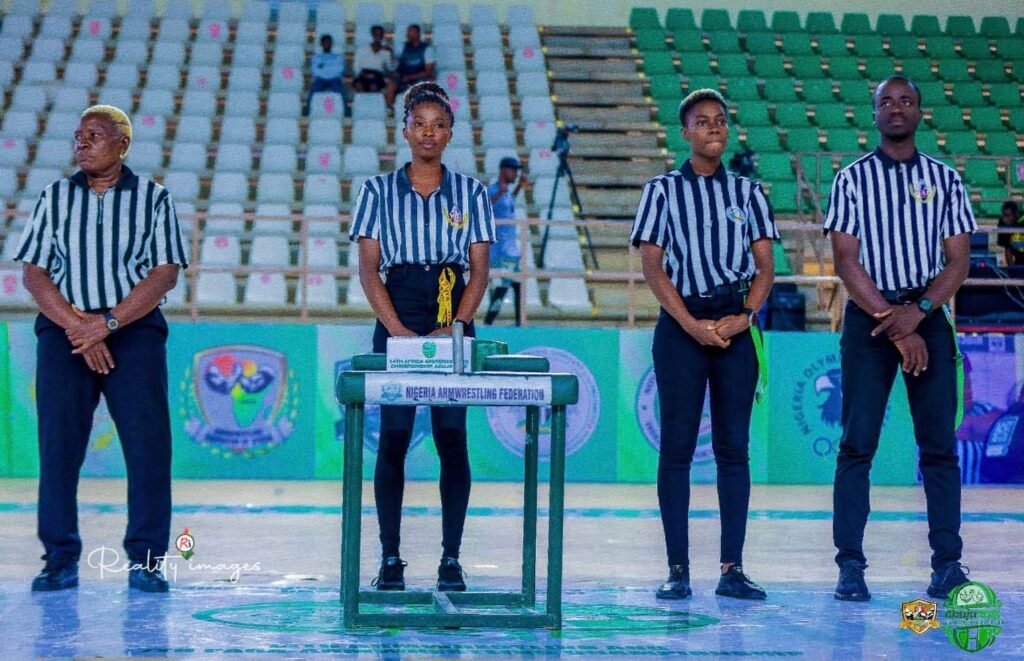
Despite a calm, but firm and meticulous disposition, she has become one of the quiet forces shaping Ghana’s growing reputation in the sport, not as an athlete, but a referee trusted on the continental stage.
Abigail’s journey into Armwrestling did not begin at the table. Like many Ghanaian sports enthusiasts, she grew up playing several disciplines. Football was her first love, but she also featured in volleyball and basketball during her school years. Sports, she says, was simply a way of life not just for her.
“It runs through the family. All my siblings are into sports,” she stated.
“I was involved in almost every sport in school, football, volleyball, netball, hockey; I did everything,” she recalls.
Her academic background in Health, Physical Education and Recreation laid a solid foundation for her sporting career. While on scholarship at the university (University of Cape Coast), she often used her modest budget to support young athletes, sometimes sharing skills and even T-shirts at programmes she attended. Giving back, she explains, has always been part of her motivation.

However, as she matured as an athlete, Abigail made a critical self-assessment.
“Armwrestling involves a lot of strength,” she admits. “Looking at my body type, I realised I couldn’t fit properly as a competitive athlete.”
That moment of honesty pushed her to a different trajectory but equally important path in sports; which is officiating.
During her National Service, she was encouraged by Mr Charles Osei Asibey, the President of the Ghana Armwrestling Federation (GAF), to consider officiating. He introduced her to a technical official, Mr Hussein Akuerteh Addy, who formally took her through the basics of Armwrestling officiating in 2021.

“I started as a case official,” she says. “We moved from region to region every week, officiating competitions. That’s where it all began.”
By 2022, Abigail was actively involved in national assignments, though she missed the African Championship that year. Her breakthrough came in 2023, when Ghana hosted the African Armwrestling Championship.
It was her first experience officiating at a major international competition and it changed everything.
“That was my first national and international exposure at the same time,” she says. “It really opened my eyes.”
Today, Abigail is a World Junior Armwrestling Referee, a status earned through performance, consistency and discipline. She explains that progression in officiating was not automatic.
“It’s all about performance, your appearance at African Championships, your conduct, how you handle pressure; that’s what takes you to the world level,” she stressed.
As a referee, Abigail’s priority is safety and fairness. Armwrestling, she notes, comes with risks, particularly injuries to the wrists, elbows, shoulders and arms.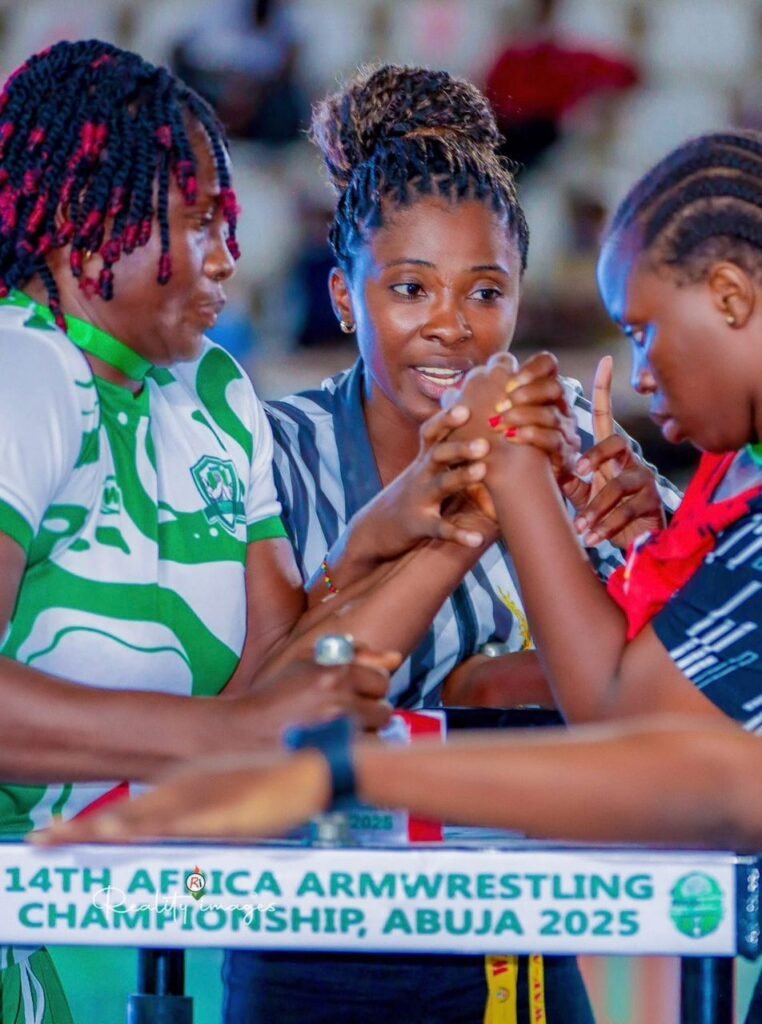
“If athletes don’t follow the rules or refuse to listen to officials, injuries can happen,” she explains, adding that focus was everything.
Before every match, she ensures that all equipment which includes elbow pads, hand pegs and table alignment were properly set. Athletes are not allowed to cover their elbows, must grip correctly, and must follow the referee’s commands precisely.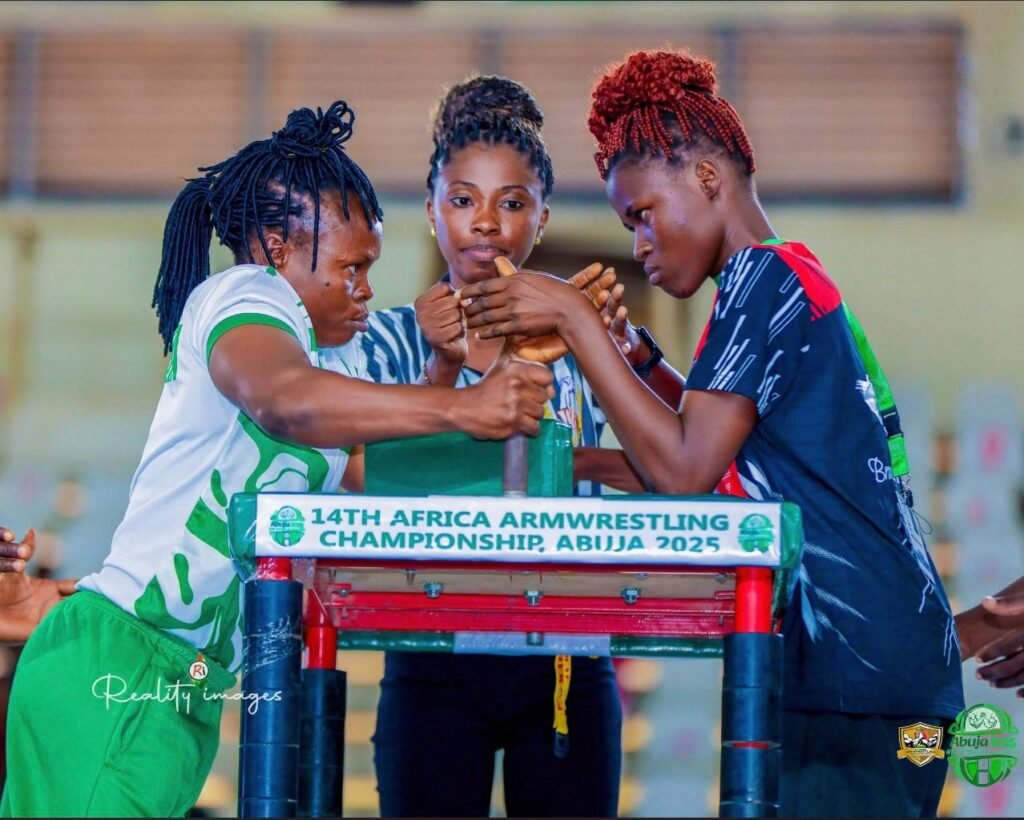
“We make sure everything is fixed before the grip,” she says. “Once we say ‘Ready… Go’, there should be no confusion.”
She is also firm on discipline. Warnings are issued for infractions, and repeated misconduct attracts penalties.
“The referee must be respected, if you don’t listen, the rules will deal with you,” she says.
Abigail credits her confidence partly to her sporting family background. Her mother was a volleyball player, while other family members also participated in sports. Though they were initially concerned about her safety, her rise to the top reassured them.
“They were afraid at first,” she admits. “But they were also very proud, especially because some of them never got the opportunity to reach this level.”
Looking ahead, Abigail is optimistic about the future of Armwrestling in Ghana. In less than a decade, the country has produced African and world-level medalists, a sign, she believes, of great things to come for Ghana.
“Whenever we go out, we come back with medals such as gold and silver,” she says, and to her that was a sign of growth.
In the next five to ten years, Abigail sees herself rising to become a World Master Referee, the highest officiating level in the sport. Until then, her routine remains intense, training four times a week, working closely with athletes, standing on her feet for hours, and constantly refining her understanding of the rules.
“I love this sport,” she says simply. “That love is what keeps me going.”
Abigail encouraged women to be bold and intentional about their place in sports saying “don’t limit yourself because of fear or stereotypes.”
She also urged women to invest in learning, discipline and consistency, stressing that respect was earned through performance.
For Abigail, as Ghana’s armwrestlers continue to make their mark, she will remain where she is most effective at the table, ensuring the game is played right.
By Esinam Jemima Kuatsinu
Join our WhatsApp Channel now!
https://whatsapp.com/channel/0029VbBElzjInlqHhl1aTU27

As he had promised Aperkeh, the elderly man and his wife and three daughters stopped by Aperkeh’s parents’ house. Mr Amando and his family were preparing to settle in for the night.
“Brother Ben and family”, Mr Joshua Amando said warmly, “although I know you are here on a matter that can hardly be described as joyous, it is still good to see you. You are welcome. Please sit down while I bring you water”.
“Yes, we will take water, even though we are hardly thirsty, because this is our home”.
“Okay, Ben”, he started after they had drank, “Let me go straight to the point. My daughter Priscilla has told me about the goings on between her brother Aperkeh and our daughter Stella.
Before informing me, Priscilla had expressed concern to Aperkeh about some habits he is adopting, especially the late nights and the drinking. She tells me that one Saturday morning, she was there when Stella complained about his drinking and some girls who had come to the house to look for him, and he assaulted her.
I called him and complained, but all he could say was that I don’t know what caused him to react that way, so I could not judge him. Now he does not answer my calls.
I have sent Priscilla to his house to call him, but he has refused to come. Unfortunately, Ben, my son is a much different person than the young boy who completed university and started work at the bank. I am really embarrassed about his treatment of Stella”.
“Joshua, let me assure you that even though what is happening is very unfortunate, it will not affect our relationship.
We have been friends since childhood, and I thought that with their parents’ blessing, the relationship between Aperkeh and Stella would grow to become a blessing to all of us. But there appears to be a real challenge now.
Stella thinks that Aperkeh wants her out of his house, and indeed Aperkeh himself told me that, about an hour ago.
So I’m taking my daughter home. I suggest that you do what you can to straighten him out, but if it does not work out, let’s accept the situation and continue to be one family.
I am sure that being the well behaved girl that she is, Stella will meet a young man who will cherish her. Fortunately, this problem is happening early in the day, so they can sort things out if possible, or move on with their lives if they are unable to stay together”.
“I’m really grateful for that, Ben. I will do my best in the next few days to reason with him, because apart from the relationship with Stella, Aperkeh is risking his job and career with this lifestyle.
A good job and salary offers an opportunity to gather momentum in life, not to destroy yourself”.
“Okay Brother Joshua. We will say goodnight. I hope to hear positive news from you”.
As he descended in the lift from the fourth to the ground floor, Aperkeh wondered who would be waiting at the reception to see him at nine on Monday morning. He had spent good time with both of his new girls during the weekend, so it had to be someone else. He got out of the lift and pulled a face when he saw Priscilla.
“Priscilla”, he said as he sat down by her, “what do you want here? You know Monday morning is a busy time at the bank. I am a very busy person, so say what you want, I have work to do”.
“You are very funny, Aperkeh. You are telling me, your sister, that you have work to do, so I should hurry up? Okay, Dad says I should advise you to come home tonight, because he wants to discuss the issue of Stella with you. He sent me to you twice, and you did not come.
He has tried to call you quite a number of times, but you have refused to answer his calls. He says that if you do not come tonight, you will be very surprised at what he will do. He says you will not like it at all, so better come.
“What is all this? Why won’t you people leave me alone? Stella is very disrespectful. I told her that if she wanted to continue to live in my house, she must obey me. It is that simple.
She chose to continue ordering me about, controlling me in my own house, so I told her that if she could not live under my conditions she should leave. And she left. In fact, her own father came and took her away. So what again?’’
“How did she disobey or control you? Was she complaining about your continuous drinking and late nights? And did you slap her on several occasions because of that? Did you tell her that if she could not live under your conditions she should leave? You actually said that to her father? You have forgotten that before she came to live with you, our two parents met and agreed, and gave it their blessing?’
“Why don’t you leave, Priscilla? I don’t have to listen to all that”. “Okay, I will go. Your father who gave birth to you and educated you to university level sends me to you, and you ask me to leave? I wish you would defy him, and refuse to come home as he’s telling you, because he is planning to give you the discipline you badly need. Let me tell you. Stella is such a beautiful and decent girl, and I assure you that someone will grab her before you say Jack. You are only 30 years old, and you have already become a drunkard”.
As he walked towards the lift, Aperkeh decided on what to do. He would go home, and calmly listen to what his father had to say. The old man was very unpredictable, and he wouldn’t dare ignore him. So he would take all the insults and threats, but as for Stella she was history. According to Priscilla, Stella was beautiful and all that, but she had not seen the two curvaceous princesses who were all over him, ready to do anything he asked. And these were not barely literate waakye girls, but university graduates from wealthy homes, really classy girls. With stuff like that, who needs a waakye girl? He smiled as he took his seat.
A few minutes to five, Aperkeh was packing up to leave for home to meet his dad when his phone rang. It was Priscilla.
“Aperkeh, Dad says you don’t need to bother to come. Stella’s dad says she came to him early this morning to plead that she would rather stay at home than return to your house. She thinks you are already decided to be rid of her, and she does not want to risk being assaulted again. So it’s done. You can go ahead and enjoy the nice life you have started”.
Before he could tell her to go to hell, Priscilla hanged up the line. He was partially stung that his dad had virtually cut him off. The last thing anyone would want was to fall out of relationship with his own family, which had always supported him.
But the truth was he was no longer interested in Stella. What was wrong with going by one’s feelings? He could only hope that one day, his parents and sister would try to reason with him.
By Ekow de Heer
Join our WhatsApp Channel now!
https://whatsapp.com/channel/0029VbBElzjInlqHhl1aTU27