News
Speed up action to achieve universal access to WASH -CONIWAS to government


The Coalition of NGOs in Water and Sanitation (CONIWAS) has called on the government of Ghana to double its steps for urgent action to achieve Universal access to WASH.
For them, the world had about seven years to achieve SDG 6 and if the needed efforts were not doubled, Ghana might lose out on its target.
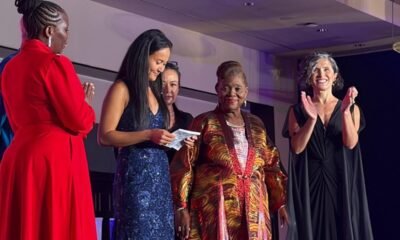
Ms Basilia Nanbigne, the Executive Secretary of CONIWAS made the call in Accra when the Coalition presented a paper to the Sector Ministry to input in their presentation at the 2023 UN Water Conference from 22-24 March 2023 in New York.
It is expected to see the adoption of the Water Action Agenda, representing voluntary commitments of nations and stakeholders to accomplish the Sustainable Development Goals (SDGs) and their targets connected to water.
Ms Nanbigne said bold commitments were required to ensure the well-being and prosperity of both people and the planet, to achieve the SDGs and to meet biodiversity and climate targets.
“Per SDG 6, every Ghanaian must have access to “safely managed sanitation” by 2030. This means providing everyone with a toilet that is linked to a system of safe waste disposal.”
She said the focus should be on “Safely Managed” while dealing with equity and inclusion to address inequalities guiding the water supply.
The Executive Director said in practical terms, it required the government to begin a programme to bring water supply closer to the premises, building on existing boreholes, and putting safely managed statistics at the front burner in the national discourse.
She said it also involves addressing the entire sanitation value chain beyond the provision of improved household toilets.
Ms Nanbigne also called for a deliberate effort to universalize institutional WASH (Health Facilities and Schools).
She stated that all investments for WASH in communities must include the mandatory provision of WASH to schools, in consultation with teachers, parents, and the Ghana Education Service.
In that regard, she said, to achieve this goal, a comprehensive assessment of gaps in WASH in schools and the health system should be conducted as a matter of urgency to complement data available for schools and health facilities through the Education Management Information System (EMIS) and the District Health Information Management System (DHIMS) respectively.
Other issues raised by CONIWAS cover the need for the sector ministry to engage more on climate change, gender equity and equality, and human rights to WASH as well as develop Ghana Presidential Compact for WASH, and approve the National Sanitation Authority immediately.
She also called for comprehensive sector reforms that addressed institutional, regulatory, human resource, governance, funding, and technological aspects of WASH.
The Chief Director of the Ministry of Sanitation, Water and Resources, (MSWR) Mr Noah Tumfo assured the Ministry of its commitment to put into consideration the paper.
BY BENEDICTA GYIMAAH FOLLEY

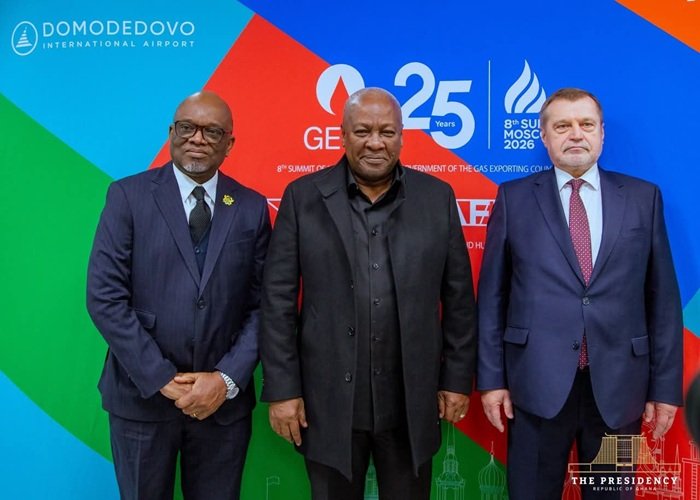
President John Mahama has arrived in Moscow, Russia, from Ethiopia to participate in the 3rd Russia-Africa Summit.
The summit is being hosted by Russian President Vladimir Putin.
During the visit, President Mahama will join fellow African leaders at the Economic and Humanitarian Forum and summit plenary sessions.
He is also scheduled to hold high-level bilateral talks with President Putin and attend a Kente exhibition organised by the Russia-Ghana Parliamentary Forum.
As part of the visit, the President will receive honorary doctorate degrees from the Russian University of Transport and the Peoples’ Friendship University of Russia.
He will also engage Russian businesses and state institutions to advance bilateral cooperation between Ghana and Russia.
By Edem Mensah-Tsotorme
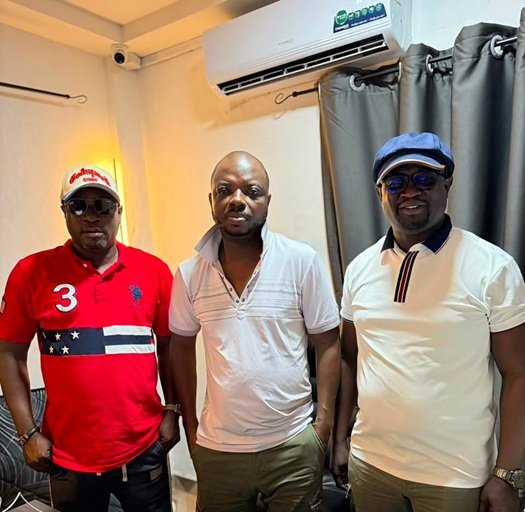
The Greater Accra Regional Organiser of the New Patriotic Party (NPP), Moses Abor, has met with the Bono Regional Chairman of the party, Kwame Baffoe, popularly known as Abronye DC, to address concerns arising from recent social media developments.
In a statement shared , Mr. Abor said he yesterday visited Chairman Baffoe over comments he made on his show, which had raised concern among some party activists.
According to him, he also engaged Charles Opoku Presidoo and ironed out grievances he had earlier held regarding the matter.
Mr. Abor said he was pleased that in the spirit of unity and the party’s shared commitment to return to power in 2028, they had a constructive conversation and addressed the concerns amicably.
“With the matter now resolved, I encourage all Party activists to let the matter rest and redirect our energy toward holding the NDC accountable for its failures and misleading claims,” he said.
He urged party members to continue making the case to Ghanaians on why Dr. Mahamudu Bawumia is the right person to lead the country in 2028.
By Edem Mensah-Tsotorme