News
“Support women farmers in Northern Ghana to access fertile land”


- /home/u249204778/domains/spectator.com.gh/public_html/wp-content/plugins/mvp-social-buttons/mvp-social-buttons.php on line 27
https://spectator.com.gh/wp-content/uploads/2023/03/WhatsApp-Image-2023-03-20-at-2.27.58-PM.jpeg&description=“Support women farmers in Northern Ghana to access fertile land”', 'pinterestShare', 'width=750,height=350'); return false;" title="Pin This Post">
- Share
- Tweet /home/u249204778/domains/spectator.com.gh/public_html/wp-content/plugins/mvp-social-buttons/mvp-social-buttons.php on line 72
https://spectator.com.gh/wp-content/uploads/2023/03/WhatsApp-Image-2023-03-20-at-2.27.58-PM.jpeg&description=“Support women farmers in Northern Ghana to access fertile land”', 'pinterestShare', 'width=750,height=350'); return false;" title="Pin This Post">
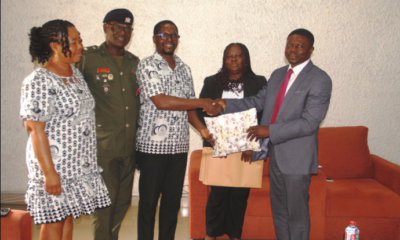
The Upper West Regional Programme Manager of ActionAid, a non-governmental organization (NGO), Ms Terence Tienaah has called on traditional authorities and stakeholders to support women farmers in Northern Ghana to access fertile land for their vocation.
She said women farmers had limited access to land which according to her, limited their gains in agriculture hence the need for all to join hands to support women farmers to help boost agricultural production in this part of the country.
Ms Tienaah stated this on Wednesday at a stakeholders’ meeting at Wa on the Northern Ghana Integrated Development Project (NGIDP) by ActionAid, Ghana and funded by the European Union (EU).
The engagement meeting brought together various partners at the grassroots level of implementation in the region and sought to discuss sustainability plans as the project was exiting, focused on; “promoting opportunities for sustainable agriculture, social protection and decent work in the agrarian sector”
The NGIDP sought to facilitate the reduction of rural poverty by promoting environmentally-sustainable agricultural practices that would contribute to the nation’s green economy as well as create opportunities for income generation within the agricultural value chain, among other goals.
Ms Tienaah said to be able to sustain the agricultural sector for women farmers, it was vital that women were granted the right to adequate farm lands as was possible for their male counterpart.
“We are appealing again to reduce the practice where the woman would have to support her husband on his farm before going to theirs as it affected planting and harvesting period”, she said.
She said the project since its inception had trained 240 leaders of women farmer groups on advocacy and campaigns as well as organizational development and also conducted 120 community awareness sessions on women rights to access land and other productive resources in the region.
A beneficiary of the project, Madam Bogkur Patience, leader of the Lawra Te-nyogtaa women’s group said the project had helped them to adopt environmental friendly practices in their vocation.
She however added her voice to the call on Landlords and traditional authorities to make fertile lands available to women farmers in the various communities
She enumerated that difficulty in accessing fertile land and credit facilities were some of the challenges women in agriculture in the region were faced with.
FROM RAFIA ABDUL RAZAK, WA

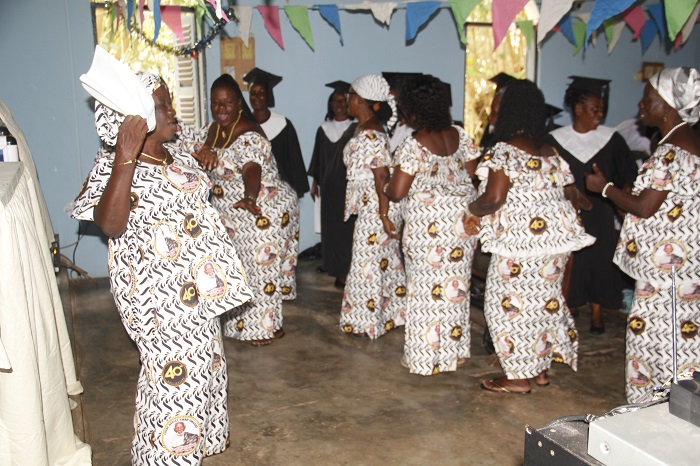
Christians have been urged to demonstrate a living faith in Jesus Christ by allowing their confession of Him as Lord and Saviour to reflect in their daily lives.
According to the Kaneshie District Pastor of the Evangelical Presbyterian Church, Ghana (EPCG), Rev. Dzidzor Nathaniel Affram, a genuine Christian’s confession should go beyond words and be demonstrated through obedience to God, love for others and service to the Church.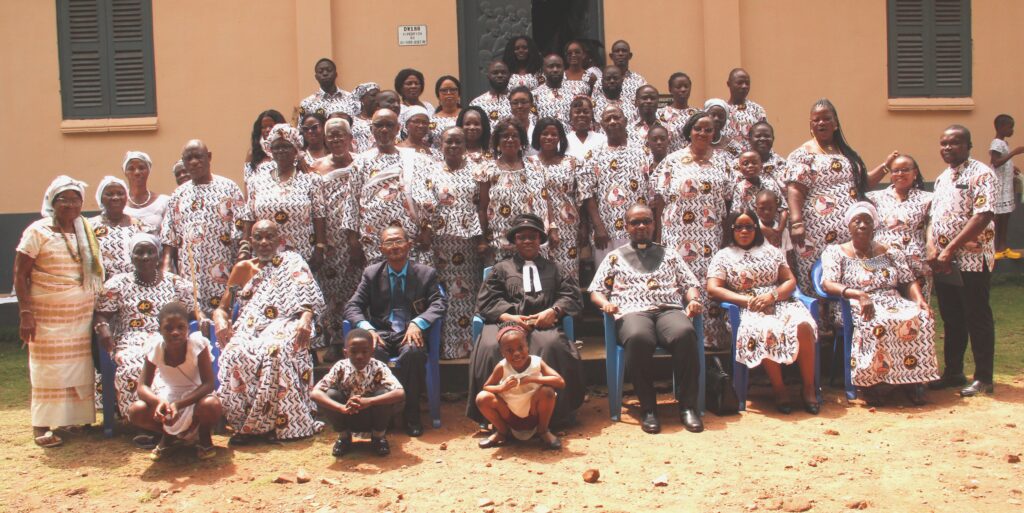
He made the call at the 40th anniversary remembrance service for the late Wesley Kwasi Kwadzo at the Evangelical Presbyterian Church, Ghana, Maranatha Congregation at Awudome Avenui in the Volta Region.
Speaking on the theme, “The Church Built on a Living Confession,” Rev. Affram said life would continually present challenges capable of testing Christians’ faith, making it necessary for believers to hold firmly to their confession that Jesus Christ is Lord.
He explained that accepting Jesus Christ as Lord and Saviour required Christians to live according to His teachings, stressing that their faith must be evident in their conduct.
“A living confession listens to God and not man,” he said, urging Christians to remain obedient to God even when faced with difficulties and pressures.
Rev. Affram further encouraged the congregation to care for vulnerable people and demonstrate concern for others, adding that such acts were practical expressions of Christian faith.
He also urged Christians to identify and use their God-given gifts to build the Church.
He said every member of the Church had a role to play and cautioned Christians against looking down on others because of their status or abilities.
The remembrance service brought together family members, friends, members of the congregation and sympathisers to commemorate the 40th anniversary of the late Wesley Kwasi Kwadzo.
By Lizzy Okai
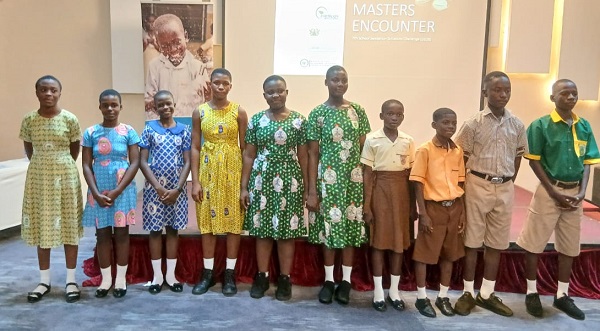
Two female students from the Eastern and Upper West regions of Ghana have booked their qualifications for the finals of this year’s World Vision Ghana School Sanitation Solutions Challenge slated for September 21, at the National Theatre in Accra.
The girls are Dede Nyarko from the Nkawkaw St Anthony RC JHS in the Eastern Region and Dasanah Candi Mwine Maalo from the Star of God RC JHS in the Upper West Region.
In all, 10 schools reached the semifinal stage held in Sunyani in the Bono Region.
The School Sanitation Solution Challenge by the World Vision Ghana instituted in 2019 is an annual national competition for Ghanaian pupils from primary six to Junior High School students up to form two.
The programme aims to foster environmental consciousness and empower children to concrete sustainable water, Sanitation and hygiene (WASH) Solution
The annual event is supported by the Ministry of Local Government, Chieftaincy and Religious Affairs, Ghana Education Service and Zoomlion Foundation among other partners.
The girls won their respective contest from SHELP and COCOA zones and are expected to face other competitors from the southern zones for the ultimate prize at the National Theatre next month.
Dasanah Candi Mwine Maalo had an aggregate score of 77 points to pick the Shelp zone slot while Dede Nyarko also had an aggregate score of 89 to win from the Cocoa zone.
The Bono Regional Minister, Joseph Addae Akwaboah, in a speech read on his behalf commended World Vision Ghana and its partners for instituting the competition to highlight sanitation issues in the country.
“Placing young people at the centre of the conversation on sanitation is highly commendable,” he said.
According to him under the government’s reset agenda, sanitation has received renewed attention as a critical component of effective local governance and service delivery
Mr Akwaboah said sanitation issues is a national responsibility and which everybody must play a role in ensuring clean, safer and sustainable environment devoid of diseases.
The WASH Technical Specialist- World Vision Ghana Atta Arhin in an address highlighted that while Ghana has achieved high basic access rates to safe drinking water approximately 87 per cent nationally, environmental sanitation and elimination of open defections lag critically behind.
He said the winner of the seventh edition would embark on a fully sponsored educational trip abroad and other prices.
From Daniel Dzirasah, Sunyani
SKIP THE QUEUE, TAP THE NEWS
You can now read the Ghanaian Times and The Spectator newspapers from the comfort of your device via TimesNewsPlus.
Join our WhatsApp Channel: https://whatsapp.com/channel/0029VbBElzjInlqHhl1aTU27