News
‘More than 2m Ghanaians have varying degrees of disability’


- /home/u249204778/domains/spectator.com.gh/public_html/wp-content/plugins/mvp-social-buttons/mvp-social-buttons.php on line 27
https://spectator.com.gh/wp-content/uploads/2025/08/Professor-of-Special-Education.jpg&description=‘More than 2m Ghanaians have varying degrees of disability’', 'pinterestShare', 'width=750,height=350'); return false;" title="Pin This Post">
- Share
- Tweet /home/u249204778/domains/spectator.com.gh/public_html/wp-content/plugins/mvp-social-buttons/mvp-social-buttons.php on line 72
https://spectator.com.gh/wp-content/uploads/2025/08/Professor-of-Special-Education.jpg&description=‘More than 2m Ghanaians have varying degrees of disability’', 'pinterestShare', 'width=750,height=350'); return false;" title="Pin This Post">
More than 2 million Ghanaians, aged five years and above, have varying degrees of difficulty in performing daily activities, Professor Samuel K. Hayford of the University of Education, Winneba, has disclosed.
He said the figure, pegged at 2,098,138, represented a higher prevalence among females (8.8 per cent) compared to males (6.7 per cent), according to data from the Ghana Statistical Service (GSS).
Visual impairment remains the most prevalent form of disability in Ghana, affecting 4.6 per cent of males and 4.0 per cent of females nationwide.
The Professor of Special Education presented the data at the 42nd Annual Workshop in Accra for Heads of Special Schools, on the theme: ‘Inclusive Education in Ghana: The Role of Special Schools.’
He said the GSS 2021 report revealed that 150,000 persons aged five years and above had severe to profound disabilities, including non-expressive communication (17,577), self-neglect (28,598), unintelligible speech (15,196), immobility (33,778), deafness (19,448), and blindness (35,642).
“Five of Ghana’s 16 regions – North East, Bono, Western North, Savannah, and Oti – lacked special education facilities such as special schools or resource and assessment centres,” he noted.
In addition, four districts; Gushegu (59.4 per cent), North Gonja (55.8 per cent), Central Gonja (54.0 per cent), and Karaga (51.9 per cent), had more than half of all children aged five to 15 years who had never been to school.
Prof. Hayford said Ghana’s 2015 Inclusive Education Policy defined inclusive education as “a system that accommodates all learners, irrespective of their physical, intellectual, social, emotional, linguistic, or other conditions.”
He likened the role of special schools in education to intensive care units in health facilities, indicating that while inclusion was key, there would always be a need for specialised institutions to support learners with profound and pervasive needs.
Prof. Hayford, however, pointed out several implementation challenges, including negative societal attitudes and stigma, gaps in teacher training, limited resources, inadequate teaching materials, assistive technology, and infrastructure deficits.
“Many mainstream schools still lack accessible buildings and facilities, while classrooms are overcrowded, and there are inadequate assessment centres and professionals to identify and support learners with disabilities,” he explained.
To address the gaps, Prof. Hayford proposed increased investment in special schools to enable them to support mainstream schools in meeting the needs of learners with disabilities. —GNA

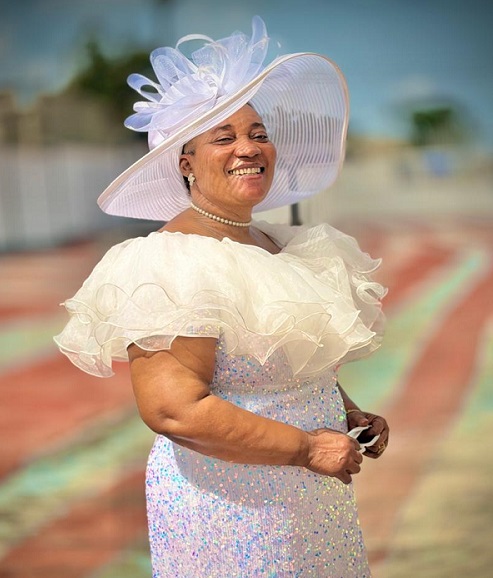
A Prophet and General Overseer of Jesus Prayer Ministry at Ejisu Asuasi, Kumasi, and Pig Farm, Accra, Rt. Rev. Dr Mrs Grace Frimpong-Boateng, has urged Ghanaians to pray fervently to avert any disaster that would endanger many.
“God hears prayers, and intercessory prayers will provide your family safety and protection so you can live long and enjoy life in this world,” she added.
Rt. Rev. Dr Mrs Frimpong-Boateng was speaking with The Spectator in an interview last week.
According to her, she had a revelation that there would be a tragedy that will harm many people, however, effective prayers can avert it.
She said that the Ghana Meteorological Agency (GMet) predicted another heavy downpour from Thursday to Sunday following the recent torrential rain that devastated Accra and other areas. However, strong intercessory prayers prevented the prediction, which would have been catastrophic.
She claims that whenever she shares something that God has revealed to her, she does not receive widespread support from people to join her in effective intercession.
As a result, she has urged everyone including members of parliament, cabinet ministers, traditional authorities, religious leaders, and other citizens to exercise caution and pray fervently in order to avoid premature death.
According to Rt. Rev. Dr Mrs Frimpong-Boateng the recent downpour in Accra which claimed lives and destroyed property was unusual.
“The sea was irritated because of certain rituals performed and caused it to spew forth, exposing the dirt.” There are still some rites in the sea, and they will definitely surface,” she disclosed.
“Let’s pray that God would burn and destroy the things that have contaminated the sea,” she indicated.
By Spectator

The Adentan Circuit Court has convicted a mason for stealing a four-year-old boy from Kpedze in the Volta Region and bringing him to Accra.
David Kpandoyo, 25, a Togolese national, pleaded guilty to a charge of child stealing.
The court, presided over by Mrs Angela Attachie, convicted him on his own plea and adjourned sentencing to July 14, 2026.
Kpandoyo told the court that he had gone to a drinking spot to consume alcohol when the child approached him.
He said he gave the boy some money, took him home, and could not remember what happened afterwards because he was intoxicated.
Assistant Commissioner of Police (ACP) Patience Mario, assisted by Chief Inspector Jacob Nyarko, led the prosecution.
The prosecution said the complainant, Mr Bismark Gbago, is a 52-year-old painter residing at New Legon in Accra.
The victim’s mother, Ms Patience Ablordefey Afefa, is a 25-year-old hairdresser living at Kpedze in the Volta Region with the victim, a Kindergarten One pupil.
The prosecution said Kpandoyo also resided at New Legon, where he worked as a mason.
It said the victim went missing at Kpedze on July 1, 2026, at about 18:00 hours.
On July 3, at about 6:30pm, the complainant reported to the New Legon Police that he had found the four-year-old boy wandering around the area and that the child was unable to identify his home.
The prosecution said that on July 4, at about 4 p.m., the complainant informed the Police that after announcements were made within the community, Kpandoyo came forward claiming that the boy was his son.
The complainant and Kpandoyo subsequently went to the police Station to identify the child.
However, Kpandoyo was unable to produce the child’s birth certificate or lead the Police to the child’s mother.
Later that day, the police received a flyer bearing the name and telephone numbers of the victim’s mother, together with the child’s photograph, indicating that he had gone missing from Kpedze.
The police contacted the victim’s mother and asked her to report to the New Legon Police Station with the child’s birth certificate and weighing card because another person was claiming to be the child’s parent.
On July 6, the victim’s mother and her relatives reported to the Police Station and stated that they did not know Kpandoyo.
During investigations, Kpandoyo admitted in his cautioned statement that the victim was not his child.
He further confessed that while working at Kpedze, he stole the boy and brought him to Accra. –GNA