Features
Minimum wage that cannot take the worker anywhere!

The National Tripartite Committee (NTC) recently announced an increase in the national daily minimum wage to GHc 12.53 which represents a four per cent increment on the 2020 figure of GHc 11.82. The increment followed a conclusion of negotiations on the determination of the National Daily Minimum Wage in respect of 2021 and 2022 at its meeting held on Thursday, June 3, 2021, in Accra.
The determination of the national minimum wage is in accordance with Section 113 (1) (a) of the Labour Act, 2003 (Act 651).
NATIONAL MINIMUM WAGE
At the end of that meeting, it was also agreed that for the year 2022, the national daily minimum wage would be pegged at GHc 13.53, a seven per cent increment on the 2021 figure.
The reason assigned to the current figures was that the NTC took into account the COVID-19 pandemic and its attendant hardships that strongly influenced the percentage increases in the salary adjustments.
“In determining the new rates, the NTC took into account the impact of the Covid-19 pandemic on the national economy, cost of living, sustainability of businesses and the desirability of attaining high level of employment,” it stated.The national minimum wage rate for 2021 which is tax exempt took effect from June 4, 2021.
DON’T USE COVID-19 AS AN EXCUSE
The Trades Union Congress (TUC), had early on, asked the government to stop using COVID-19 pandemic as an excuse and review the salaries of the workers upwards to help them deal with the recent economic hardships in the country.
Organised labour argument is that the recent fuel increments, coupled with the skyrocketing prices of goods and services, are taking a toll on the Ghanaian worker. They have pleaded with government to review workers’ salaries, as well as taxes to reduce their financial burden.
Indeed, times are hard and workers are justifiably right in asking for salary increases that will stand the test of time and support them to make ends meet with their families and other dependants. You cannot begrudge them. The workers are, indeed, not happy with the TUC for their stance in the recent salary negotiations, accusing the union of stabbing them at the back.
GLOBAL EMERGENCE OF MINIMUM WAGE
For the benefit of my readers and patrons, it is important to delve a bit into history of how this minimum wage came into being globally, vis- a- vis how some countries have managed to make their workers better using the National Minimum Wage formula.
The minimum wage concept was first introduced in New Zealand in 1984 and the Austrian State of Victoria in 1986. The motivation was to fight poverty among the working class, particularly the segment of the workers that was not covered by collective agreements and was vulnerable to low pay conditions. By close of 2016, about 160 economies of 189, had a minimum wage. Countries with national minimum wage include, United States of America (USA), South Korea, Spain, Portugal, Argentina, Australia, Austria, Belgium, Benin, Botswana, Brazil, Burkina Faso among others.
THE WORK OF THE TRIPARTITE COMMITTEE
Over here in Ghana, the annual fixing of the minimum wage lies in the bosom of the Tripartite Committee made up of the government, employer and the worker. The committee is headed by the Minister of Employment and Social Welfare. The committee is established under section 112 of the Labour Law, Act 651 of 2003. Its core mandate is to review and adjust the minimum wage in line with the changes in the economic and social circumstances of the country including changes in the cost of living. This ensures that the minimum wage stays closer to the economic and social realities of the country. The minimum wage covers workers in all sectors of the economy.
It is unfortunate that despite annual adjustment, Ghana’s minimum wage is normally very low wage. The minimum wage has remained around US$ 2.00 a day for the past decade. It is also significant to note that increases in the minimum wage have always been below inflation rate and that has often led to decreases in real minimum wage.
It appears that the national institutions that have the mandate to enforce the minimum wage and other labour legislations are too weak to carry out their duties.
SIGNIFICANCE OF MINIMUM WAGE INTRODUCTION
When the minimum wage was introduced in the country in 1939, the major objective was to fight poverty among the working class. It was to ensure that people working on full time basis, could earn enough to enable them and their families to escape poverty. Thus, minimum wage increases are aimed at motivating workers to raise their effort levels and spur greater investments in human capital as well as boosting labour productivity.
Another major weakness in Ghana’s minimum wage is the lack of enforcement. This has resulted in high level of non-compliance. Enforcement is hampered by the failure of the state to resource the industrial relations institutions that are mandated to enforce the minimum wage and other labour legislations.
REPORTS OF ARTICLE 71 OFFICE HOLDERS EARNING FAT SALARIES
Currently there are allegations that while the average workers are being asked to tighten their belt by receiving as low as six per cent increment in their 2020 salaries for this year, Article 71 office holders who include the President and his Vice, the Speaker of Parliament, the Chief Justice and the Justices of the Supreme Court, Members of Parliament, Ministers of State, political appointees and public servants, are paying themselves fat salaries at the blind side of the workers. If that is the case as being peddled on social media, then that is most unfortunate and not healthy for this country.
The Tripartite Committee which sat and arrived at the six per cent increment use the COVID-19 pandemic which has affected the economy greatly as a yardstick for fixing the percentage increase and, therefore, that should be the overriding principle in the determination of the general salaries for this country. Besides, the Executive and ministers of state and other government functionaries are already earning good salaries with other service conditions that go with them. Therefore, giving themselves more salaries is not in the best interest of a country such as Ghana which is facing a lot of challenges with the economy.
FREEZE ON SALARY INCREMENTS FOR EXECUTIVE, OTHERS
The President must give true meaning to his recent announcement that he has put a freeze on salary increments for himself, the Vice President, ministers of state and all other appointees of the Executive as a way of appreciating the plight of Ghanaians in the wake of the negative economic impact of the pandemic.
Indeed, the workers are suffering and the recent four per cent increase in their salaries is nothing good to sustain them, especially when most of them have other dependants and families to cater for. This is the time for the Trades Union Congress (TUC) and other organised labour unions to team up and fight for the rights of workers. Money being spent aimlessly on unnecessary projects at this point in time needs to be channeled to improve the welfare of workers who are toiling day and night with their sweat to build this nation.
Contact email/WhatsApp of author:
By: Charles Neequaye


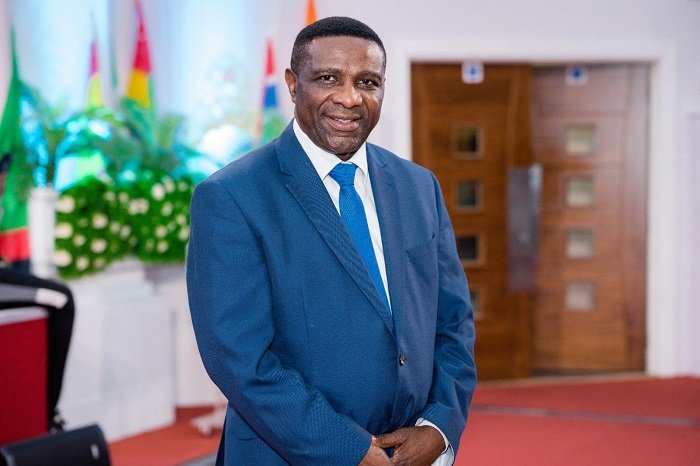
Today, I focus on Apostle Edmund Appiah, the immediate past National Head of the Church of Pentecost (COP) in Finland, as I continue with my narration of personalities and their accomplishments as members of the Ghanaian Diaspora in Finland.
The growth of COP and its contributions to positive interactions among Ghanaian migrants and others in Finland cannot be recounted without mentioning the role played by Apostle Appiah.
Apostle Appiah arrived in Finland on 10 September 2013 and took up the position as the National Head of COP in Finland until November 2020 when he moved to the UK, where he became the Area Head of the Church of Pentecost in the London South area.
Recently, Apostle Appiah visited Finland for a wedding ceremony. It was very exciting to see him or hear about his presence in Helsinki after many years. The great joy expressed by many people was simply infectious and portrayed how much Apostle Appiah is loved just as his successor, Apostle Francis Owusu Kwaah.
Actually, when Apostle Appiah assumed office in Finland, he was also in charge of Denmark from 2013-2015. He became solely responsible for only Finland after 2015. It must be pointed out that Apostle Appiah has the enviable record of being the first resident pastor of the church in Finland.
The Church in Finland was established over 20 years ago, having started in September 2000 as a prayer group with a small number of devoted persons in Helsinki (see www.copfinland.fi).
Achievements as Head of COP Finland
There is no denying that under Apostle Edmund Appiah as the National Head of COP Finland, the church chalked significant progress, including re-organising the Vaasa branch of the church.
Also, branches were opened in Turku and Tampere, while a nursery assembly was started in Oulu and an innovative Online Church was established to cater especially for people scattered around Finland. The COP Finland continues to extol Apostle Appiah’s ministration and clarity on Jesus and heaven as the central focus.
A description of his ministration during the farewell service organised by the Church for Apostle Appiah said that his “unadulterated and lucid exposition on the doctrines and principles of the church deeply equipped both officers and members of the church”. This is an achievement of the Church, which has continued under Apostle Owusu Kwaah, who took over from Apostle Appiah.
The positives, the challenges, and the future of COP
Apostle Appiah expressed optimism and positivity about the Church and the future of COP in Finland.
He was highly impressed when he first arrived in Finland, despite that the church was still virtually in its infancy. “Many of the members of the church were students who worked part-time and were very busy, but they did their best and this is commendable; they indeed had the zeal”, Apostle Appiah said.
Finland’s official or state religion is Lutheranism and one is born into it. To Apostle Appiah, the emergence of other denominations such as COP has brought about diversity and multiple roles. According to the Apostle, “the COP cooperated with the Ghana Union Finland, the Asanteman and other associations, and through that many Ghanaians came to church. This was part of the missionary approach, which helped a lot”.
“We also invited many groups and personalities, including the [then] Honorary Consul [Ms Ulla Alanko, who is now retired]. It gave us leverage to curb the excesses or bad habits that people would fall into”, Apostle Appiah stated.
Concerning challenges, Apostle Appiah noted that initially there were impediments such as language barriers, while a lack of work opportunities was a major problem for members. He noted that the weather is quite severe in winter, but the members had to surmount all these challenges to ensure that they played their role well for the growth of the church.
On the future of the church, one hindrance could be how to reach out to more native Finns, but, to Apostle Appiah, the future looks good as “the kids born to Ghanaian migrants in Finland can speak the Finnish language fluently and can reach out to their peers and the society as a whole”.
Apostle Appiah’s current position
Apostle Appiah’s role in London South area where he is the Area Head of the Church of Pentecost is significant. The London South area has six districts and thousands of church members.
According to Apostle Appiah, about 85 per cent of the members in the London South community are of Ghanaian descent. This is a big number as compared to the figures in Finland. The Apostle expressed heartfelt gratitude to the many people whose support encouraged him when he worked in Finland. Thank you
With Dr Perpetual Crentsil
!
I experienced something on Monday, June 15, that really frustrated me. I had to go to the ministries but I could not get up early that day so I decided to pick a taxi and get to the Tuba Junction.
When I got there I realised that Traffic had built up from the Toll Booth towards Accra. After a while I got a Taxi and it was when we got to a certain spot on the road, that I realised why there was a traffic jam.
There is a short stretch of the road where each time it rains heavily, loose material run down the hill onto the road, blocking one side of the road. Vehicles from Kasoa to Accra are then forced to move into one of the lanes of those going towards Kasoa from Accra.
The two lane road from Accra to Kasoa becomes a single carriage way. That was the reason for the traffic jam from the toll booth onwards.
This has been a perineal problem and yet, no permanent solution has been found till date. The area falls under Ga South and even though, a new MCE has taken over, the technocrats are still there and so the problem is not new to them.
There is therefore no excuse for the inability of the Ga South Metropolitan Assembly to resolving the problem on that stretch of the road. Apart from the Ga South Metropolitan Assembly, another institution that must be held accountable is the Ghana Highways Authority.
The Highways Authority cannot say they are unaware of this issue. The fact that the problem falls within the area of responsibility of the Ga South Assembly, does not relieve the Ghana Highways Authority, of their responsibility of ensuring that our highways are maintained in a motorable state at all times.
A collaboration between the Ghana Highways Authority and The Ga South Municipal Assembly is required for a permanent resolution of the problem.
There was another traffic jam at a place called Atala about 250 metres to the traffic light at Old Barrier as a result of an issue similar to the one close to the toll booth, that I talked about earlier.
When we got to Weija junction, we encountered another traffic jam. The cause of this jam was a bad condition of road about 80 metres from the traffic light at Ga South Hospital heading towards Accra.
Due to the bad nature at that section of the road, vehicles are compelled to slow down resulting in a traffic jam stretching all the way to Weija Junction.
I started wondering if that short stretch of road cannot be sorted on one Sunday when traffic is usually light. When we got to the traffic light at Odorkor, there was another issue.
When the traffic light shows green, there is a slow down because there is a big pothole or should I say manhole in the outer lane, right at the traffic light. Vehicles in the outer lane are compelled to swerve into the second lane thereby causing a traffic to slow down and resulting in a traffic jam.
It is very important to take into account the effect of traffic jam on the national economy. If we are able to assess the value of the loss to the economy of the nation, I believe the issue of traffic jam will be prioritised.
Imagine persons working at various Government Organisations like Registrar General’s Department, Ghana Ports and Habours Authority, Ghana Revenue Authority, CEPS etc. and lives at Kasoa and whose job is to collect revenue for the state and is held up in traffic.
Just imagine the effect their lateness to work will have on the economy if you consider the delays in say clearing of goods at the port and as a result traders cannot sell their goods for government to generate the required taxes.
Let us deal with the traffic jams on our streets to promote economic growth. God bless.
By Laud Kissi-Mensah

 News1 week ago
FSD Africa, others launch Green Project Preparation Facility to unlock investment in climate infrastructure in Ghana
- News1 week ago
Merck Foundation holds 13th Africa Asia Luminary with 12 First Ladies to advance healthcare capacity across Africa and Asia
- News1 week ago
Bryan Acheampong calls for unity, urges Kennedy Agyapong to support Dr. Bawumia