Nutrition
Leadership, accountability, and the urgent need to prioritise nutrition outcomes

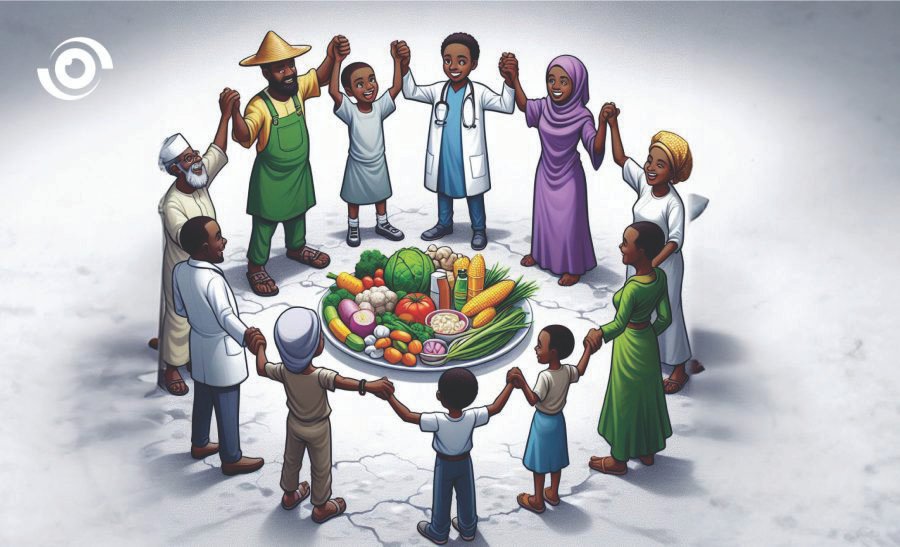
The persistence of malnutrition in Ghana raises important questions about leadership and accountability in nutrition governance. While technical expertise and donor support are available, progress remains uneven due to weak accountability mechanisms and limited political prioritisation.
Effective leadership for nutrition requires more than policy statements. It demands clear targets, sustained financing, and transparent monitoring systems.
Nutrition outcomes must be tracked and publicly reported, allowing citizens to assess government performance.
Accountability must extend across all levels of government. National leadership sets the tone, but district and regional authorities are responsible for implementation.
Strengthening leadership capacity at these levels is essential to ensure that national commitments translate into tangible results.
The media and civil society play a critical role in sustaining advocacy and demanding accountability.
By keeping nutrition on the public agenda, they help ensure that commitments are not forgotten once policy documents are launched.
Ghana’s development ambitions, including middle-income growth and human capital development, cannot be achieved while malnutrition persists.
Nutrition outcomes should be treated as indicators of governance effectiveness, alongside economic growth and infrastructure delivery.
Leadership that prioritises nutrition sends a powerful signal about national values and priorities. It demonstrates a commitment to equity, child survival, and long-term prosperity.
The fight against malnutrition is ultimately a test of leadership. Ghana has the knowledge, resources, and capacity to succeed. What is needed now is the political will to act decisively and hold institutions accountable for results.
Key policy recommendations: The Ghana Statistical Service should establish a National Nutrition Dashboard, publishing real-time data on stunting, wasting, and micronutrient deficiencies by district and region, updated quarterly and accessible to the public.
Parliament’s Public Accounts Committee (PAC) must conduct annual nutrition expenditure reviews, tracking budget allocations versus actual spending across all MDAs.
The Office of the President should institute an Annual National Nutrition Summit where Ministers and DCEs present progress reports, with independent evaluation by civil society organizations.
The National Commission for Civic Education (NCCE) should launch a “Nutrition Accountability Campaign” educating citizens on nutrition as a governance issue and how to demand action from elected officials. Media houses should be supported to develop specialized nutrition reporting units that investigate and expose gaps in service delivery.
Finally, the Auditor-General’s office should include nutrition programme audits in its annual work plan, examining value-for-money and impact of nutrition investments with findings presented to Parliament.
Feature article by Women, Media and Change under its Nourish Ghana: Advocating for Increased Leadership to Combat Malnutrition project
Join our WhatsApp Channel now!
https://whatsapp.com/channel/0029VbBElzjInlqHhl1aTU27


Ghana’s decision to uncap the National Health Insurance Levy in 2025 marks an important shift in health financing. By removing limits on how much revenue the National Health Insurance Scheme (NHIS) can receive, government has created room to strengthen and expand essential health services.
This change comes at a crucial time for maternal and child nutrition, where effective solutions already exist but are yet to reach everyone who needs them.
Two such interventions are Ready-to-Use Therapeutic Food (RUTF) for children with severe acute malnutrition and Multiple Micronutrient Supplements (MMS) for pregnant women. Both are included in Ghana’s Essential Medicines List and Standard Treatment Guidelines, confirming their safety and effectiveness. Yet neither is currently covered under NHIS, leaving access dependent largely on donor-supported programmes.
The consequences are visible. An estimated 68,517 children in Ghana need treatment for severe acute malnutrition, but only about 15 per cent receive RUTF. For pregnant women, iron–folic acid supplements remain the standard, even though they address only two of the 15 essential micronutrients required during pregnancy. As a result, maternal anaemia remains widespread, affecting between 37 and 63 per cent of pregnant women depending on the trimester.
What makes this moment different is that Ghana already has the systems needed to deliver these services at scale. NHIS enrollment among mothers of children under five stands at about 84 per cent. National guidelines for the use of RUTF and MMS are finalised and in use, and more than 600 health workers have been trained on updated protocols. Supply chain structures are in place. The missing link has been sustainable, predictable financing.
Cost should not be a barrier. A full course of MMS costs about USD 2.50 per pregnancy and has been shown to reduce low birth weight by 12 per cent and preterm births by 11 per cent. This represents a small share of current spending on undernutrition. RUTF, while more resource-intensive, reduces the need for expensive hospital admissions by enabling effective community-based care, with recovery rates of 75 to 90 per cent. Ongoing Health Technology Assessments will provide Ghana-specific evidence to guide NHIS reimbursement decisions.
Including RUTF and MMS in the NHIS benefits package would change how nutrition services are delivered. Coverage would no longer depend on where donor programmes operate. Families would be protected from out-of-pocket costs, and services would be delivered as part of routine maternal and child healthcare. Importantly, data on coverage and outcomes would flow through national systems, strengthening monitoring, accountability, and planning.
Ghana has committed to achieving 80 per cent coverage of essential health services by 2030 under its Universal Health Coverage agenda. Nutrition is central to this goal, as it underpins child survival, maternal health, and long-term human development. The uncapping of the National Health Insurance Levy offers a rare chance to close long-standing nutrition financing gaps using domestic resources.
The opportunity is clear. The systems are ready. The evidence is established. What remains is a deliberate policy choice to use this expanded fiscal space to ensure that lifesaving nutrition services reach mothers and children across the country, consistently, equitably, and sustainably. The levy uncapping opens the door; leadership must walk through it.
Feature article by Women, Media and Change under its Nourish Ghana: Advocating for Increased Leadership to Combat Malnutrition project
Join our WhatsApp Channel now!
https://whatsapp.com/channel/0029VbBElzjInlqHhl1aTU27

Chocolate is made from tropical Theobroma cacao tree seeds. It has since become a popular food product that millions enjoy every day. It has a unique, rich, and sweet taste.
-Cholesterol
A researcher revealed that chocolate consumption help to reduce low density lipoprotein.
Regular consumption of chocolate bars with low-fat diet supports cardiovascular health by lowering cholesterol and improves blood pressure.
- Keeps brain healthy
Researchers have suggested that drinking two cups of hot chocolate a day could keep the brain healthy and reduce memory decline in older people.
The researchers found that hot chocolate helped improve blood flow to parts of the brain where it was needed.
- Heart disease
Consuming chocolate could help lower the risk of developing heart disease and also lower risk of cardiometabolic disorders.
-Stroke
Canadian scientists, in a study involving 44,489 individuals, found that people who ate one chocolate were 22 per cent less likely to experience a stroke than those who did not.
Also, those who had about two ounces of chocolate a week were 46 per cent less likely to die from a stroke.
-Fetal growth and development
Eating chocolate every day during pregnancy might benefit fetal growth and development, according to a study presented at the 2016 Pregnancy Meeting of the Society for Maternal-Fetal Medicine in Atlanta, GA.
The flavonoids in dark chocolate can stimulate the endothelium (lining of arteries) to produce nitric oxide (NO).
One of the functions of nitric oxide is to send signals to the arteries to relax, which lowers the resistance to blood flow and therefore reduces blood pressure.
Dark chocolate may also improve the function of your brain.
Studies show that eating high flavanol cocoa could help improve blood flow to the brain in young adults.
Cocoa flavonoids may also help maintain brain health and the ability to think in older adults with mild cognitive impairment and reduce the chance of progressing to dementia. But more research is needed.
-medicalnewstoday.com
Join our WhatsApp Channel now!
https://whatsapp.com/channel/0029VbBElzjInlqHhl1aTU27