News
launch 3rd anthology of short stories

The Ama Ata Aidoo Centre for Creative Writing at the African University College of Communications, Accra, is launching its third anthology of short stories on Wednesday, December 15, 2021, at the AUCC campus, Adabraka in Accra.
The book titled, “The Lockdown: Creative non-fiction about living with COVID-19”, features 16 authors including three men, four non-Ghanaians from Japan, the United Kingdom and United States of America.
The lucky authors who made the cut are Ijahra Larry, Ursula Abanga, Benjamin Cyril Arthur, Philomena Esi Agudu, and Jane Abraham. Others are Samantha Erskine, Emmanuella Obeng-Koranteng, Frederick Nii Ofei Bruce, Emmanuella Ako-Nai, Lawrencia Owusu and Abaa Moses.
The rest are Grace Wood, Miho Boateng, Araba Ofori-Acquah, Franka Andoh and Renee P. Taylor.
According to Nana S. Achampong, Director of the Ama Ata Aidoo Centre for Creative Writing at African University College of Communications, editors and publishers at the Centre invited writers to submit their original experiences in the form of short stories for an anthology from March to December 2020 during the COVID-19 period of isolation.
“In all, the call for submissions received 136 entries out of which 17 authors were shortlisted,” he said.
“Lockdown” is the Aidoo Centre’s third anthology in three years following the previous years’ successful release and limited local tour of “Adabraka: Stories from the Centre of the World and Larabanga: Stories from the Savannah.”
The Ama Ata Aidoo Centre for Creative Writing is a not-for-profit literary resource. In March 2018, the African University College of Communications created a home at its Adabraka campus to honour the legendary feminist author.
The main aim of the Centre is to increase critical reading, creative writing, and literacy generally among the youth in Ghana.


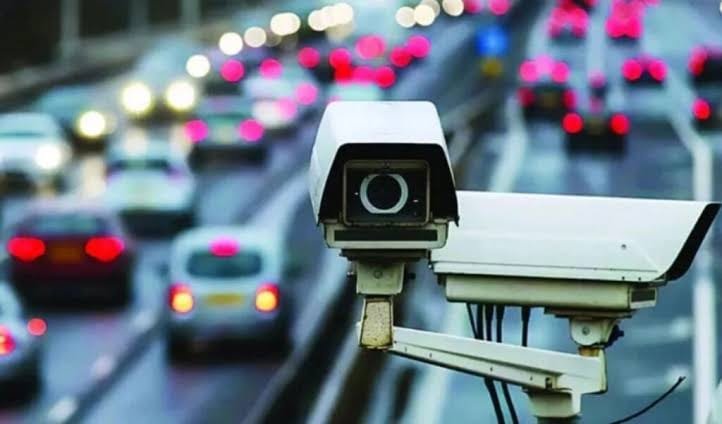
The Ghana Police Service has begun automated enforcement of road traffic laws under a new system dubbed Traffitech-GH.
In a statement signed by the Director-General of Public Affairs, Deputy Commissioner of Police Grace Ansah-Akrofi, the Service said the project officially took effect on November 1, 2026.
The system is being implemented by the Motor Traffic and Transport Department (MTTD).
Under the initiative, motorists who commit traffic offences will receive an Electronic Notice of Violation (ENV).
The Police said motorists must first check that the notification comes from the official Sender ID, GPS-MTTD, adding that genuine notifications will not be sent from an ordinary mobile phone number.
Motorists are to open the ENV to confirm the vehicle’s photograph and number plate, as well as the location, date and time of the offence, and watch the video where available.
According to the police, payments can be made through the NIB Payment Portal.
The Police cautioned motorists and vehicle owners to remain vigilant against fraud and never pay a traffic fine into a personal mobile money number or through any unofficial account.
The Service expressed appreciation to the general public, particularly motorists, vehicle owners and transport operators, for their cooperation in promoting safer roads and ensuring compliance with road traffic laws.
By Edem Mensah-Tsotorme
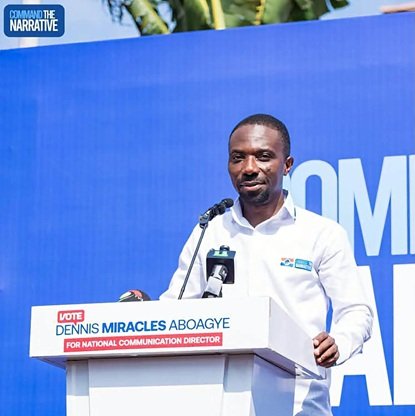
The Director of Communications of the New Patriotic Party (NPP), Miracles Aboagye, has taken a swipe at the government over the worsening cost of living in the country.
In a strongly worded statement, Aboagye said while the cost of living continues to skyrocket, the government keeps pointing Ghanaians to figures on paper.
According to him, the reality on the ground tells a different story:
Cocoa farmers have suffered a haircut, tertiary students are demonstrating over high fees and accommodation, teachers and nurses are striking over unpaid allowances, and judiciary workers are also on strike over unpaid allowances.
He added that transport fares, electricity, water, and fuel prices are all higher than before, making life unbearable for the ordinary Ghanaian.
“The cost of living and the pocket of the Ghanaian citizen keeps worsening but government says, don’t cry about the pocket when the paper looks good,” Aboagye said.
He summed up his criticism with the hashtags #PaperEconomyPocketDry and #PaperEconomyVsPocketEconomy — a direct jab at what he describes as a disconnect between official economic figures and the daily struggles of Ghanaians.
By Edem Mensah-Tsotorme