News
IPR Ghana Inaugurates Northern Belt Chapter

- /home/u249204778/domains/spectator.com.gh/public_html/wp-content/plugins/mvp-social-buttons/mvp-social-buttons.php on line 27
https://spectator.com.gh/wp-content/uploads/2025/07/unnamed-1000x600.jpg&description=IPR Ghana Inaugurates Northern Belt Chapter', 'pinterestShare', 'width=750,height=350'); return false;" title="Pin This Post">
- Share
- Tweet /home/u249204778/domains/spectator.com.gh/public_html/wp-content/plugins/mvp-social-buttons/mvp-social-buttons.php on line 72
https://spectator.com.gh/wp-content/uploads/2025/07/unnamed-1000x600.jpg&description=IPR Ghana Inaugurates Northern Belt Chapter', 'pinterestShare', 'width=750,height=350'); return false;" title="Pin This Post">
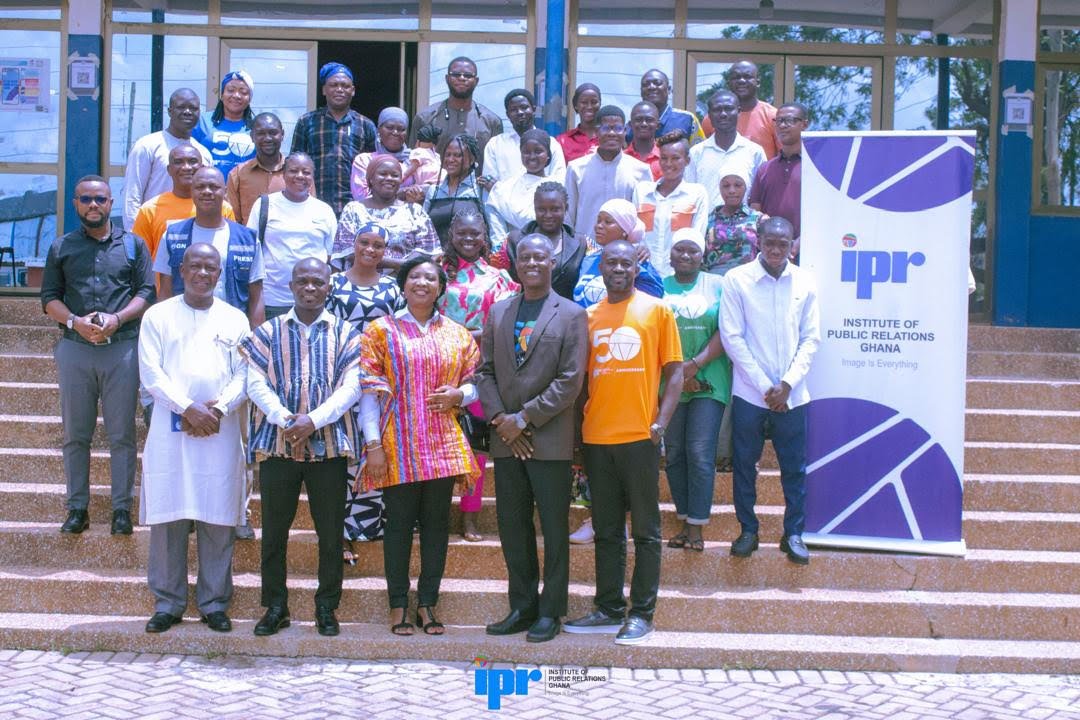
The Institute of Public Relations (IPR), Ghana, has officially inaugurated its Northern Belt Chapter.
The establishment of the chapter with a ceremony at the GNAT Hall in Tamale contributes to strengthening and enhancing the national presence of the Institute. It also bringsprofessional Public Relations practice closer to stakeholders in Northern Ghana.
The ceremony was attended by Public Relations Practitioners from the Northern Belt of the country, namely, the Upper East, Upper West, North East, Northern, and Savannah regions.
Representing the national leadership alongside the Vice President were Madam Solace Akomeah, APR, Honorary Secretary, and Mr. Gabriel Ankrah, APR, Treasurer, who reaffirmed the Executive Committee’s commitment to fostering growth, unity, and collaboration among members across all regions.
The inauguration is one of the activities marking the annual IPR Ghana Month celebrations and the global observance of World Public Relations Day (WPRD) 2025 (16/7/25), which is being marked under the theme “Building Bridges & Navigating Polarisation.”
Delivering the inaugural address, Donald Gwira, Vice President of IPR Ghana, commended members and stakeholders for their dedication to advancing public relations in the northern regions, describing the day as a proud and defining moment for the Institute.
“The creation of the Northern Belt is more than a geographic expansion. It is a strategic move that aligns with our broader vision of inclusivity and capacity building,” Mr. Gwira stated.
He said, “We believe that public relations must reflect the diversity and unity of Ghana, and that every PR professional, regardless of location, should have access to the tools, networks, and opportunities to grow and contribute meaningfully to national development.”
The Northern Belt Chapter is meant to serve as a platform for professional engagement, mentorship, policy advocacy, and knowledge-sharing.
Mr. Gwira also highlighted the relevance of the theme for this year’s World PR Day, urging practitioners to “lead with empathy, communicate with clarity, and act with integrity, serving as connectors in a fragmented society.”
Mr. Gwira further congratulated the members of the Northern Belt on this milestone and encouraged them to embrace their roles as ethical advocates and nation builders.
As part of the Institute’s ongoing efforts to strengthen professional networks and global collaborations, Mr. Gwira also announced that Accra will host the Public Relations Knowledge Sharing Conference from 1st to 3rd October 2025.
This high-level event will be organised under the joint auspices of the Institute of Public Relations, Ghana, the African Public Relations Association (APRA), and the International Public Relations Association (IPRA).
The conference will bring together leading professionals, academics, and policymakers from across Africa and beyond to discuss trends, share insights, and chart the future of strategic communication.
“Together, we move forward,” Mr. Gwira concluded, pledging continued support from the Executive Committee and Governing Council.
The Institute of Public Relations, Ghana, is the recognized professional body mandated to regulate, develop, and promote excellence in public relations and strategic communication practice in Ghana.

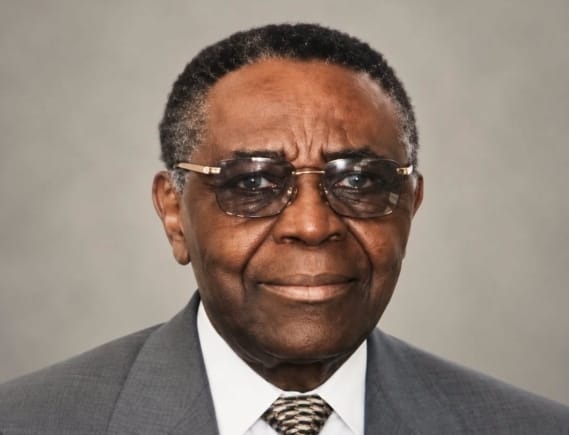
The New Patriotic Party (NPP) has announced with profound sorrow the passing of Ambassador Samuel Arthur Odoi-Sykes, describing him as an eminent statesman, distinguished patriot, and one of the founding pillars of the party.
In a statement issued by the party, Ambassador Odoi-Sykes was eulogized for dedicating several decades of his life to the service of Ghana and the cause of democratic governance.
“His constant dedication to public service, constitutional democracy, and principled political leadership earned him the admiration and respect of colleagues across the political divide,” the statement said.
Ambassador Odoi-Sykes served as Member of Parliament for Ashiedu Keteke, now Odododiodio, during the Third Republic, where he rose to become Minority Leader of Parliament. He was noted for his exemplary parliamentary leadership and advocacy for democratic ideals.
As a founding father of the NPP, he played a pivotal role in laying the institutional and ideological foundations of the party.
His leadership as National Chairman from 1998 to 2001 was instrumental in uniting and strengthening the NPP, culminating in its historic electoral victory in the year 2000 and the first democratic transfer of power between political parties under the Fourth Republic.
Following that landmark achievement, he continued his service to the Republic as Ghana’s High Commissioner to Canada from 2001 to 2006, where he represented the nation with distinction and enhanced Ghana’s diplomatic relations abroad.
The party noted that throughout his lifetime, Ambassador Odoi-Sykes served on numerous national and party committees, offering wise counsel, strategic leadership and invaluable institutional memory.
“His integrity, humility, intellect, and constant commitment to Ghana’s democratic development will remain an enduring source of inspiration for present and future generations,” the NPP said.
“His passing marks the end of an illustrious chapter in Ghana’s political history. The nation has lost a distinguished public servant, while the New Patriotic Party has lost one of its most respected elder statesmen and steadfast architects.”
The party extended its deepest condolences to his wife, children, the entire Odoi-Sykes family, friends, and associates.
“As we mourn his passing, we also celebrate a life exceptionally lived in faithful service to God, country, and the Party. Ambassador Samuel Arthur Odoi-Sykes has indeed paid his dues, and his legacy of principled leadership, patriotism, and selfless service will forever remain etched in the annals of Ghana’s democratic history.
“May his soul rest in perfect peace, and may his memory keep inspiring generations yet unborn,” the statement concluded.
By Edem Mensah-Tsotorme
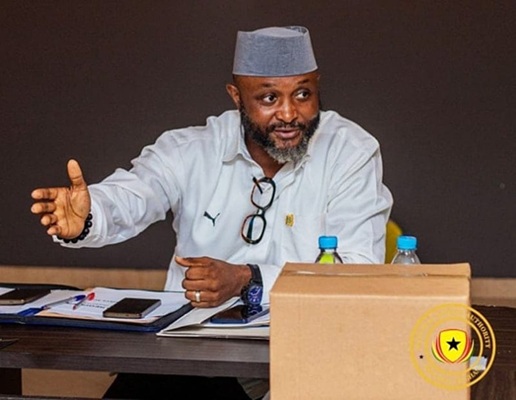
Lawyers for suspended National Sports Authority (NSA) Director-General, Yaw Ampofo Ankrah, say he will not appear before Parliament for now because matters concerning him are currently under investigation by the Criminal Investigations Department (CID) of the Ghana Police Service.
In a statement issued on behalf of Mr Ampofo Ankrah, his legal counsel, Jerry Avenorgbor of Brookman Amissah & Associates, said the sports administrator has cooperated and will continue to cooperate with the police as they work to establish the facts.
The lawyers said Mr Ampofo Ankrah and his representatives would refrain from making detailed public comments on the allegations while the investigation is ongoing.
They urged the media and the public to exercise restraint and avoid presenting allegations, speculation or unverified information as established facts.
The lawyers stressed that the existence of an investigation does not, by itself, amount to a finding of wrongdoing against Mr Ampofo Ankrah or any other person.
On calls for Mr Ampofo Ankrah to appear before Parliament, his lawyers said it would be “imprudent” for him to do so while the CID investigation remains active and he is under suspension.
According to them, appearing before Parliament at this stage could create complications for the investigation and potentially affect the process through which the facts are being established.
Mr Ampofo Ankrah has therefore decided to defer any appearance until the investigation has been concluded and the circumstances surrounding his suspension have been determined by the appropriate authorities.
His lawyers, however, stressed that the decision should not be interpreted as a refusal to submit to lawful processes or to account to Parliament or any other constitutionally mandated institution.
They explained that the position is intended to protect the integrity of the ongoing investigation and prevent any action that could potentially interfere with it.
The lawyers further indicated that if his suspension is lifted and he is restored to his position as Director-General of the NSA at the discretion of the Office of the President, he will respond appropriately to any lawful request to appear before Parliament or another competent institution.
Mr Ampofo Ankrah and his legal representatives are expected to respond to the findings of the investigation and address any issues requiring clarification once the appropriate authorities have completed their work.
They have meanwhile called for patience and respect for the ongoing investigative process.
By: Jacob Aggrey