Sports
Hasaacas must be rewarded for their blond effort

- /home/u249204778/domains/spectator.com.gh/public_html/wp-content/plugins/mvp-social-buttons/mvp-social-buttons.php on line 27
https://spectator.com.gh/wp-content/uploads/2022/10/Hasaacas.jpg&description=Hasaacas must be rewarded for their blond effort', 'pinterestShare', 'width=750,height=350'); return false;" title="Pin This Post">
- Share
- Tweet /home/u249204778/domains/spectator.com.gh/public_html/wp-content/plugins/mvp-social-buttons/mvp-social-buttons.php on line 72
https://spectator.com.gh/wp-content/uploads/2022/10/Hasaacas.jpg&description=Hasaacas must be rewarded for their blond effort', 'pinterestShare', 'width=750,height=350'); return false;" title="Pin This Post">
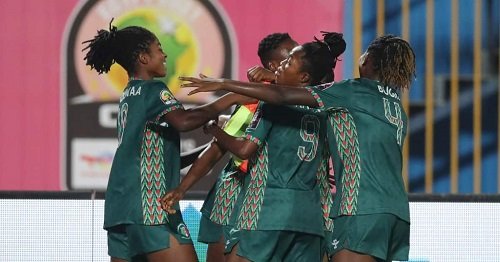
● Hasaacas players celebrating a goal during last year’s Women CAF Champions League
tournament
For two reasons, Ghana’s most accomplished women club side, Hasaacas Ladies, must have punched their hands in the air in celebration when they dazzled all to reach the final stage of the maiden Women’s CAF Champions League last year.
Firstly, they were thrilled for being one of the two clubs on the continent to steer their path to the competition’s finale, and secondly, the transport of joy may have been triggered by an expectation of good cash to come with the momentous feat.
It is sad to say that almost a year (November 19, 2021) after playing in the grand finale and losing to Mamelodi Sundowns 2-0, nothing had come in reward for the Ghanaians – who continued to hang on hope.
That hope got burnt out last week when the former Ghanaian champions were told in plain language that their efforts would not be complemented with cash rewards for their 2021 Women’s Champions League feat, having won the WAFU Zone B edition in Cote d’Ivoire earlier.
“On prize money, CAF spent hundreds of thousands of dollars on the first edition. There was no prize money announced. When the discussion came after the tournament, the President said it wasn’t fair to announce prize money after the competition. This was the correct approach, of course,” a piece of the CAF statement, read.
It is just unfortunate. This is highly unfair. How do you expect a team to play at this level without any monetary returns? We hear Hasaacas were even told not to showcase any product on their jerseys. What does that mean? This is simply atrocious! How do you organise a continental competition at this level without any budget for it? Playing for free in this age and time? This is simply crazy!
The players, technical team and management have worked very hard to walk away with something. It seems as if CAF may have capitalised on the naivety of Haasacas. The Ghanaian club may have decided to pull out if they were told there was not going to be anything for them.
This weird decision by CAF has the propensity of having a calamitous effect on women football if clubs are treated in this manner by the same institution that wants the local FAs to fight for the female game.
CAF President Dr Patrice Motsepe says women are playing a pivotal role in shaping the future of African football and the socio-economic development and growth of the African Continent. This was part of his remarks to mark the International Women’s Day on Tuesday, March 8. Can he be serious, really?
Chief Executive of Hasaacas Ladies, Evelyn Nsiah, is not convinced.
“We as a club are very disappointed in CAF because they requested our bank details after the tournament, which was provided. So if they didn’t have a budget, what did they need our bank details for? Can this happen in men’s football?
“We are disappointed and sad. In fact, they have to come again. We haven’t accepted it; we believe they will have a change of mind,” she told JoySports recently.
Is the CAF President aware Hasaacas Ladies are yet to get a farthing after participating in the tournament? If yes, then his so-called commitment to women football development is questionable – very problematic.
On this note, it is high time the Ghana Football Association (GFA) led by Kurt Okraku got stirred to fight the just cause of the Ghanaians ladies. The GFA President himself has said several times that women football is on top his agenda; and this is the time now for him to accentuate that assertion more than ever.
For now, CAF cannot be serious with its loyalty to the women’s game and they must sit up before it is too late.
PlainTalk with John Vigah


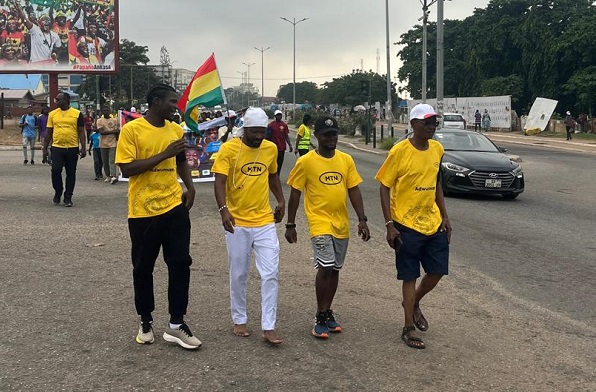
Students and management staff were joined by keep fit enthusiasts to partake in the 2026 edition of the Street Academy annual health walk held last Saturday.
It was held on the theme: “Feet on the Street, Hope in Motion.”
The event also brought opinion leaders from some of the Ga communities, sports men and women including former world boxing champion, Joseph Agbeko, and children from the academy and neighbouring communities.
The event was originally slated for July 18 but postponed due to President John Dramani Mahama’s declaration of July 17-18 as National Clean-up Day.
That development did not affect the event in any way as participants, mostly cladded in yellow outfits, turned up in their numbers.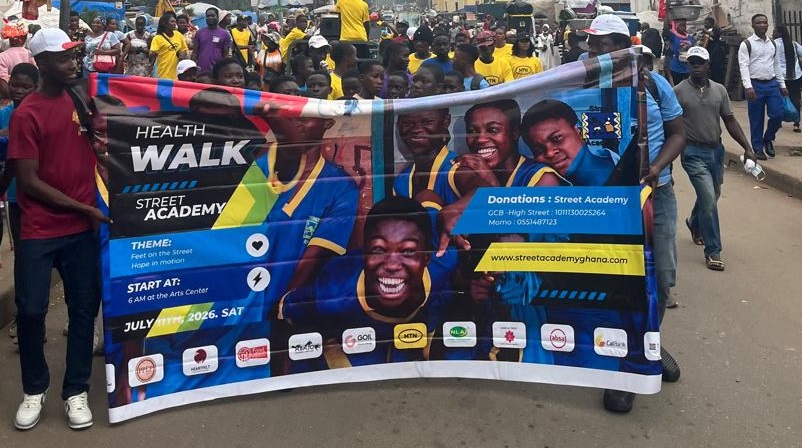
Spurred on by brass band music, the walk went through some of the principal streets of the capital, drawing more crowds from the communities it went through before returning to the Accra Arts Centre, the starting point.
Participants then went through another exhaustive aerobic session before they were refreshed.
Addressing the participants, Dr Ataa Lartey, the Founder and Executive Director of the Academy, commended them for turning out in their numbers for the walk, which he described as an event to enable the children and other guests to exercise.
Secondly, the event, he stated, was also to raise awareness about the plight of needy and underprivileged children, promote healthy living, and advocate the importance of basic education.
By Spectator Sports Reporter
Usually, when a coach is tasked to build a formidable national team for a major tournament, he does so with the best players available to him, with a special focus on local talents.
But where such local talents are not available or are unconvincing, the coach is allowed to supplement with foreign based players.
In this case, these players scouted beyond the borders of the country must be in top form and prove beyond reasonable doubt that they are far better than the locals.
Again, such players must also show some commitment and dedication to the national call.
A coach can however, decide to ignore this system in cases where there is insufficient time for the exercise, when there is a policy that forbids him from inviting certain crop of players, or if he finds himself in a position where he has no say on the players selected for him to use.
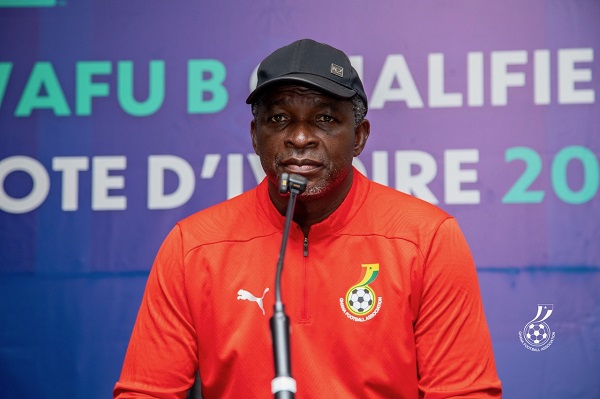
Recently, Coach Maxwell Konadu was tasked to build a Black Satellites team for the ongoing WAFU B U-20 championship in Cote d’Ivoire, a tournament which also serves as a qualifier for the 2027 Africa U-20 Championship which Ghana is hosting.
With that status, the Black Satellites become automatic candidates and rightfully, the focus should have been on a team to be groomed for the ultimate.
The sub-regional tournament did not actually oblige Konadu to rely on foreign based players, most of who are on pre-season assignments with their respective clubs.
Also, Konadu was under no misperception about quotas to allot local or foreign based players. It was very clear that the tourney was for the locals.
With this background, he is believed to have selected the players that formed the team that represented Ghana at the championship.
Sadly, Konadu and his boys disappointed woefully at the championship, failing to march his words against performance on the field.
Exiting just after the group stage came with little surprise. That has been the pattern for the national juvenile teams in their respective championships for now.
What left tongues wagging, however, was Konadu’s claim that lessons from the championship would help build a “stronger and more competitive squad for next year’s TotalEnergies CAF U-20 Africa Cup of Nations.”
The confusion lied in his admission that “the squad which competed in Côte d’Ivoire is unlikely to be the same one that represents Ghana at the 2027 TotalEnergies CAF U-20 Africa Cup of Nations.”
It would have made a lot of sense to rather build a team that uses the WAFU B Championships as a platform to prepare for the main championship next year, than selecting a team that in his own words is unlikely to compete.
This is a very common feature in other jurisdictions. The English FA, for instance, would have used an Under-18 team for the WAFU B, knowing the impact that experience would have on the team.
So clearly, the experience and lessons Konadu spoke about would be non-existent and would not help the team in anyway because if he happened to be in charge of the Ghana 2027 championship team, he would be supervising an entirely new team.
From where I sit, Konadu and whoever played any role in assembling this team got everything wrong and must be reminded that there would be no assurances that the next team would excel in the championship.
By Andrew Nortey

 News1 week ago
Prof. Kwabena Twerefou holds inaugural lecture; calls for better stewardship of Ghana’s natural resources
- News1 week ago
Prez Mahama to visit Jamaica to strengthen ties and advance reparations agenda
- News1 week ago
Ahanta Heritage Month: Diplomats, youth tour forts, Cape Three Points and historic sites