News
Ghanaian patriotism on full display on National General Cleaning Day


- /home/u249204778/domains/spectator.com.gh/public_html/wp-content/plugins/mvp-social-buttons/mvp-social-buttons.php on line 27
https://spectator.com.gh/wp-content/uploads/2026/07/Police-personnel-collecting-some-of-the-rubbish.jpg&description=Ghanaian patriotism on full display on National General Cleaning Day', 'pinterestShare', 'width=750,height=350'); return false;" title="Pin This Post">
- Share
- Tweet /home/u249204778/domains/spectator.com.gh/public_html/wp-content/plugins/mvp-social-buttons/mvp-social-buttons.php on line 72
https://spectator.com.gh/wp-content/uploads/2026/07/Police-personnel-collecting-some-of-the-rubbish.jpg&description=Ghanaian patriotism on full display on National General Cleaning Day', 'pinterestShare', 'width=750,height=350'); return false;" title="Pin This Post">
The Ghanaian patriotism was at full glare last Friday and Saturday when hundreds hit the streets as part of the National General Cleaning Days to clean their various communities.
The two days were declared by the President, John Dramani Mahama after the last flooding that submerged parts of the capital and recorded many deaths.
Leading by example, President John Mahama, his vice Prof. Naana Jane Opoku- Agyemang and government officials were seen joining the masses to clean some of the worse affected areas.

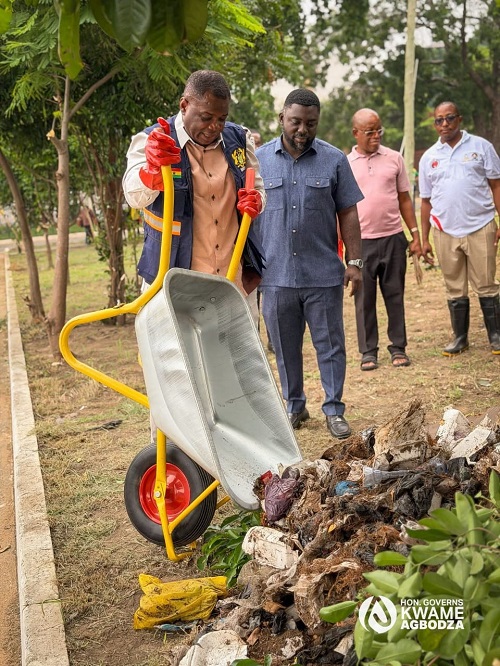
The focus was on clearing refuse, gutters and clear every obstacle that hinders the free flow of flood waters.
The exercise also drew a number of sanitation workers, security services, community leaders, students, and volunteers who cleaned streets, markets, drains, beaches, and other public spaces.
Addressing the media, the President after taking part in cleaning the Alajo area emphasized that maintaining a clean environment was a shared responsibility and called on Ghanaians to make cleanliness a daily habit.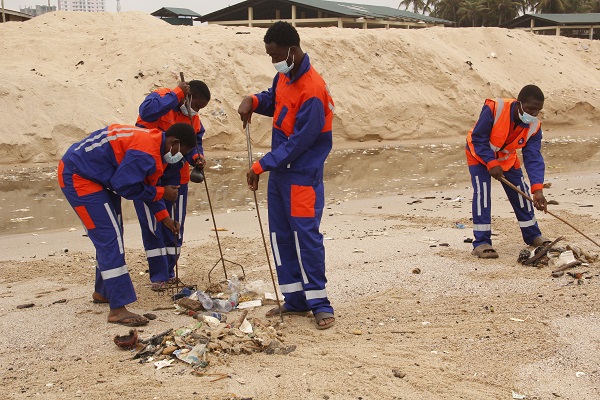




The clean-up exercise reflects the government’s commitment to promoting environmental cleanliness and encouraging collective action to ensure a healthier Ghana.










Traditional postpartum practices that keep nursing mothers indoors to eat excessively, gain weight and ‘look good’ could increase their risk of developing type 2 diabetes and hypertension, a medical doctor has cautioned.
The practice, which is intended to help mothers recover from childbirth and regain their strength, encourages women to eat more while engaging in little or no physical activity.
According to Dr Elliot Koranteng Tannor, a Consultant Nephrologist at the OKomfo Anokye Teaching Hospital and Founder of Kidney Health International, excessive calorie intake coupled with physical inactivity after childbirth could result in continuous weight gain, particularly when mothers fail to shed pregnancy-related weight before subsequent pregnancies.
He said although pregnancy naturally resulted in weight gain to support the growth and development of the baby, some of the weight should gradually reduce after delivery as the baby and placenta were no longer in the mother’s body.
Dr Eliot said the problem comes when nursing mothers were encouraged to eat excessively on the assumption that they needed large quantities of food to produce sufficient breast milk.
He said while mothers needed adequate nutrition during breastfeeding, excessive eating without corresponding physical activity could result in a cycle of weight gain.
He illustrated that a woman who gained 4kg during her first pregnancy but failed to lose it, and subsequently gain the same after delivery, could enter her next pregnancy carrying eight additional kilogrammes.
The doctor cautioned that repeated weight accumulation could increase the risk of diabetes, hypertension and other cardiovascular conditions.
He urged families to change the perception that a woman must become visibly bigger after childbirth to prove that she was healthy and well cared for.
He added that the three-month period before the naming ceremony should instead be used to support mothers to recover healthily, eat balanced meals and gradually become physically active.
Dr Eliot recommended brisk walking and other appropriate physical activities after mothers had adequately recovered from childbirth.
He said mothers who had undergone Caesarean sections should allow their bodies to heal and follow medical advice before engaging in strenuous exercise, but simple walking could eventually form part of their recovery.
“A nursing mother does not go anywhere. You are on maternity leave, you are just sitting at home, eating, breastfeeding and sleeping. Obviously, your chances of gaining more weight increase,” he said.
He advised mothers to monitor their weight and blood sugar, particularly women with a family history of diabetes or those who had experienced gestational diabetes during pregnancy.
Dr Elliot explained that gestational diabetes could improve after delivery, but some women continued to have elevated blood sugar and could subsequently develop diabetes.
He therefore urged families to support nursing mothers with nutritious food without pressuring them to overeat, stressing that a mother did not need to become visibly heavier for people to recognise that she was healthy.
The doctor also advised mothers to maintain a healthy weight between pregnancies, saying preventing excessive weight accumulation could reduce their long-term risk of diabetes and hypertension.
He said cultural practices could be maintained as part of Ghanaian family life, but they should not compromise the health of mothers who had just gone through pregnancy and childbirth.
From Ama Tekyiwaa Ampadu Agyeman, Koforidua

A TV presenter, AI Consultant and Trainer, Ms Akua Barden, has urged young people without formal backgrounds in technology to embrace Artificial Intelligence (AI) and learn how to use it to improve their productivity.
She said AI was not the preserve of technology professionals and that people from different backgrounds could use the technology to improve their work and create new opportunities.
Ms Barden made the call in an interview on the second day of the Beyond AI Workshop, dubbed “Nyansa Futures 2026”, held at the Academic City University, Haatso, Accra.
The workshop was held on the theme: “From Adoption to Ownership, Shaping Africa’s AI Future.”
Ms Barden said she became interested in AI after becoming curious about the rapid pace at which technology was transforming the world.
She said although she was not a professional technology expert, she decided to learn about AI after encountering the technology and recognising its potential.
According to her, the early versions of some AI tools produced poor images and inaccurate responses, but she remained interested because she believed the technology represented an important part of the future.
She said her continued learning and use of AI had changed her perception of what the technology could achieve.
Ms Barden said AI could help individuals reduce their workloads, improve efficiency and accomplish more within shorter periods.
She said people who learned how to use AI effectively could gain a significant advantage in their respective fields.
“I’m not a tech person. I’m just a media girl who reads, goes on TV and does what I have to do on radio. But now I use AI and I teach people how to use it because I know the benefits of using AI,” she said.
She said AI had the potential to make work systems smoother and help people produce more value in less time.
According to her, AI could also help individuals develop their ideas quickly by assisting them in moving from the conceptual stage to implementation.
Ms Barden encouraged young people to stop allowing the absence of technical qualifications to prevent them from exploring AI.
She said her own experience showed that people did not necessarily need to attend an IT school before learning how to use AI.
She therefore urged young people from the media, business, creative industries and other sectors to identify AI tools that could improve their work and deliberately learn how to use them.
Ms Barden said one of the most important lessons from the growth of AI was that the technology could be useful to almost everyone, regardless of their profession.
She encouraged young people to attend workshops, engage with AI communities and continuously experiment with the technology.
She said learning AI should not be viewed as something exclusively for computer scientists or software developers.
Rather, she said, the technology should be seen as a productivity tool that could complement existing skills.
She therefore called for greater awareness and practical training to ensure that young people were not left behind in the rapidly changing digital environment. –ICNghana.com