Sports
Ghana Black Stars’ call-up… Can we ever bridge gap between local, foreign-based?


- /home/u249204778/domains/spectator.com.gh/public_html/wp-content/plugins/mvp-social-buttons/mvp-social-buttons.php on line 27
https://spectator.com.gh/wp-content/uploads/2022/07/Ghana-1.jpg&description=Ghana Black Stars’ call-up… Can we ever bridge gap between local, foreign-based?', 'pinterestShare', 'width=750,height=350'); return false;" title="Pin This Post">
- Share
- Tweet /home/u249204778/domains/spectator.com.gh/public_html/wp-content/plugins/mvp-social-buttons/mvp-social-buttons.php on line 72
https://spectator.com.gh/wp-content/uploads/2022/07/Ghana-1.jpg&description=Ghana Black Stars’ call-up… Can we ever bridge gap between local, foreign-based?', 'pinterestShare', 'width=750,height=350'); return false;" title="Pin This Post">
• Princeton-Owusu Ansah, a resilient
former AshantiGold and Ghana defender
Would the home-based players ever enjoy their moments in the senior national team, Black Stars, as they used to do in the 80s and the 90s? This is one question that has been dangling on the lips of local fans for some time now.
Getting a decent number of the so-called locals in the Black Stars, is one of the most contentious issues in Ghanaian football circles – and has over the years generated a gamut of controversy.
In West Africa, especially, the senior national teams are fully dominated by players who ply their trade outside of the country, especially in Europe.
Painfully or frustratingly somehow, this has come to stay. Question: Is it the right way to go?
Indeed, as far back as the 1990s, there was a strong agitation from the public; in fact, supporters virtually badgered on the FA at the time to include local players in the national team. Their contention was that some of the locals were streets ahead of their foreign counterparts.

The issue was even raised at one of the FA Congresses after which the FA decided to give about a 40 per cent slot to the locals, whilst their foreign colleagues had 60 per cent of the composition. This was evidenced at the 1992 African Cup of Nations tournament where the Black Stars paraded not less than nine home-based players.
We had goalkeepers Edward Ansah (Asante Kotoko), Salifu Ansah (Hearts of Oak) and Abukari Damba (Great Olympics). Also on board were Nii Darko Ankrah (Great Olympics), Emmnauel Ampiah (Asante Kotoko), Kwesi Appiah (Asante Kotoko), Frimpong Manso (Asante Kotoko), Emmanuel Armah (Hearts of Oak) and Mohammed Gargo (RTU).
In subsequent years, other locals like Obuasi Goldfields’ Princeton Owusu Ansah, goalkeeper Sammy Adjei, RTU’s Hamza Mohammed, Hearts’ utility player Sam Johnson and many others featured for the Stars.
But do not forget, too, that those were the halcyon days where we had some marquee names at the local scene – who week-in, week-out were attracting the crowd to the stadia with feet that tantalizingly drew gorgeous patterns on the pitch.
Later, we can also easily recollect names like Shamo Quaye, Joe Debrah, Ablade Kumah, Charles Taylor, Emmanuel Osei Kuffuor, Ishmael Addo (name them) that glowed the local scene to stupor.
Today, let us be honest with ourselves, how many locally-based materials do we have that can fiercely challenge the overseas-based players for their shirts? How many players out there in the league are gorgeously attractive enough to pull many to the stadium? Truth is that a good number of fans go to the stadium today not really because they are going to watch a superlative, swash-buckling performance from the locals, but attend games because of the emotional attachment to their clubs.
Sadly, even in situations where we are fortunate to have one or two dazzling performers in the local league, they jump to the next available ‘exodus bandwagon’ to seek greener pastures elsewhere – making it easy for the GFA or the national team coach to rely on the foreign legion, which are their preferred choice, anyway.
Evidently, it is against this backdrop that the Confederation of African Football (CAF) in their own wisdom decided to introduce the Championship of African Nations (CHAN) tournament for the home-domiciled players, at least to encourage them to stay around and give the local league some thrill and excitement.
Latest Black Stars invitation
Indeed, there has been a whole lot of hullabaloo with regard to players who had recently switched nationality to play for the Black Stars. Personally, one does not see anything wrong about it. Question: Are they Ghanaians, yes! Are we looking to take a formidably winsome team to the World Cup in Qatar? Yes! Do we dream to go beyond quarter final in Qatar? Yes! So, what are we saying?
Though we qualified for Qatar, we must be honest enough to accept the fact that we do not have a very strong team, especially as regards our attacking unit and there is absolutely nothing wrong or unfair if that department is augmented? It is the reason many were thrilled that the football authorities were able to convince Inaki Williams, especially, to play for nation.
Some have argued that it is not fair for players, who did not take part in Ghana’s qualification journey, to shove off the main actors and make the Qatar cut. Well, there may be nothing to do about it. The world itself is unfair! Can we say all the players who qualified the Black Stars to their first World Cup in Germany 2006 – and the subsequent ones, got the opportunity to be in those tournaments.
See, we shall be the first people to condemn the FA if we go to the World Cup in Qatar with a ramshacle team and get flushed out in the very first round. We should not be sentimental about it, at all. Certainly, knowing the repercussions of what an early exit would mean to them, the FA may have decided to fall on those players to switch nationality.
Let us not forget that we are in a very tight group with Uruguay, South Korea and Portugal – and we need tested players for the Himalayan battles ahead.
Bridging the gap
The GFA may have to revisit its policy where a few slots of the local contingent would have a place in the Black Stars. So, in this vein, the FA Technical Team will be tasked to select, let us say the Most Potent Striker, Best Defender, Best Midfielder and Best Goalkeeper in the league to either fight for a place or be given an automatic choice.
It must be hammered home that sometimes, the kind of players we see in the Black Stars leaves much to be desired – and it is the reason many people think that the locals must be offered a slot.
BY JOHN VIGAH


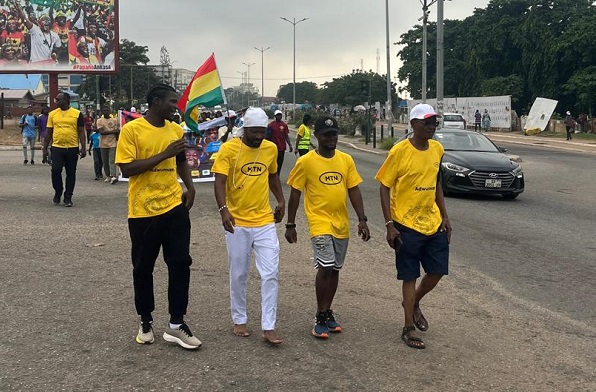
Students and management staff were joined by keep fit enthusiasts to partake in the 2026 edition of the Street Academy annual health walk held last Saturday.
It was held on the theme: “Feet on the Street, Hope in Motion.”
The event also brought opinion leaders from some of the Ga communities, sports men and women including former world boxing champion, Joseph Agbeko, and children from the academy and neighbouring communities.
The event was originally slated for July 18 but postponed due to President John Dramani Mahama’s declaration of July 17-18 as National Clean-up Day.
That development did not affect the event in any way as participants, mostly cladded in yellow outfits, turned up in their numbers.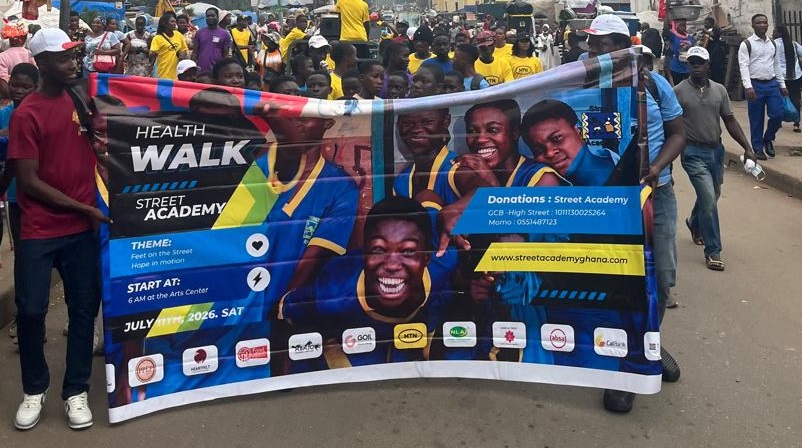
Spurred on by brass band music, the walk went through some of the principal streets of the capital, drawing more crowds from the communities it went through before returning to the Accra Arts Centre, the starting point.
Participants then went through another exhaustive aerobic session before they were refreshed.
Addressing the participants, Dr Ataa Lartey, the Founder and Executive Director of the Academy, commended them for turning out in their numbers for the walk, which he described as an event to enable the children and other guests to exercise.
Secondly, the event, he stated, was also to raise awareness about the plight of needy and underprivileged children, promote healthy living, and advocate the importance of basic education.
By Spectator Sports Reporter
Usually, when a coach is tasked to build a formidable national team for a major tournament, he does so with the best players available to him, with a special focus on local talents.
But where such local talents are not available or are unconvincing, the coach is allowed to supplement with foreign based players.
In this case, these players scouted beyond the borders of the country must be in top form and prove beyond reasonable doubt that they are far better than the locals.
Again, such players must also show some commitment and dedication to the national call.
A coach can however, decide to ignore this system in cases where there is insufficient time for the exercise, when there is a policy that forbids him from inviting certain crop of players, or if he finds himself in a position where he has no say on the players selected for him to use.
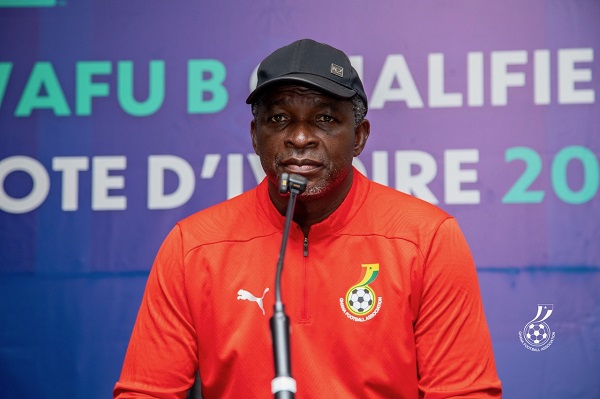
Recently, Coach Maxwell Konadu was tasked to build a Black Satellites team for the ongoing WAFU B U-20 championship in Cote d’Ivoire, a tournament which also serves as a qualifier for the 2027 Africa U-20 Championship which Ghana is hosting.
With that status, the Black Satellites become automatic candidates and rightfully, the focus should have been on a team to be groomed for the ultimate.
The sub-regional tournament did not actually oblige Konadu to rely on foreign based players, most of who are on pre-season assignments with their respective clubs.
Also, Konadu was under no misperception about quotas to allot local or foreign based players. It was very clear that the tourney was for the locals.
With this background, he is believed to have selected the players that formed the team that represented Ghana at the championship.
Sadly, Konadu and his boys disappointed woefully at the championship, failing to march his words against performance on the field.
Exiting just after the group stage came with little surprise. That has been the pattern for the national juvenile teams in their respective championships for now.
What left tongues wagging, however, was Konadu’s claim that lessons from the championship would help build a “stronger and more competitive squad for next year’s TotalEnergies CAF U-20 Africa Cup of Nations.”
The confusion lied in his admission that “the squad which competed in Côte d’Ivoire is unlikely to be the same one that represents Ghana at the 2027 TotalEnergies CAF U-20 Africa Cup of Nations.”
It would have made a lot of sense to rather build a team that uses the WAFU B Championships as a platform to prepare for the main championship next year, than selecting a team that in his own words is unlikely to compete.
This is a very common feature in other jurisdictions. The English FA, for instance, would have used an Under-18 team for the WAFU B, knowing the impact that experience would have on the team.
So clearly, the experience and lessons Konadu spoke about would be non-existent and would not help the team in anyway because if he happened to be in charge of the Ghana 2027 championship team, he would be supervising an entirely new team.
From where I sit, Konadu and whoever played any role in assembling this team got everything wrong and must be reminded that there would be no assurances that the next team would excel in the championship.
By Andrew Nortey

 News1 week ago
Prof. Kwabena Twerefou holds inaugural lecture; calls for better stewardship of Ghana’s natural resources
- News1 week ago
Prez Mahama to visit Jamaica to strengthen ties and advance reparations agenda
- News1 week ago
Ahanta Heritage Month: Diplomats, youth tour forts, Cape Three Points and historic sites