Gender
Galamsey threatening spike in breast cancer cases — Breast Society warns

THE Breast Society of Ghana has sounded the alarm on a looming surge in the incidence of breast cancer in Ghana as the menace of illegal mining (galamsey) continues to ravage many communities across the country.
It indicated that an average of 5,000 women were diagnosed with the disease every year out of which 2,500 died, but the situation could deteriorate if the galamsey onslaught did not cease immediately.
Prof. Martin Morna, an Associate Professor with the School of Medical Sciences (SMS) of the University of Cape Coast (UCC) and member of the Society, warned that mercury, lead, arsenic and other chemicals introduced into water bodies and the soil were carcinogenic and could increase the susceptibility of women to breast cancer.
The Society issued the warning when it held a grand durbar on breast cancer awareness in Cape Coast, sensitising mostly second cycle students to the fatal disease and mounting a strong advocacy against stigmatisation.
The durbar highlighted the devastating dangers of the breast disease and called for love and support for victims, instead of stigma and ostracisation.
The mammoth gathering was held under the Society’s Empowerment Project as part of its 13th Oguaa Breast Cancer Campaign on the theme: “Breast cancer: Stop the stigma and be supportive.”
Prof. Morna underscored the dangers of the disease noting that cancer cells could invade other organs and parts of the body including the bone, brain and liver and cause them to fail.
He said the disease could happen to anybody but factors such as age, gender, race, family history, smoking, null parity, contraception, and delaying first birth until 30 years increased the risk of getting it.
He said early signs of the disease included bloody or blackish discharge from the breast, adding that the early signs were usually not painful or bothersome.
“Anyone who goes beyond 40 years should quickly see the doctor if they find a lump in their breast,” he said.
“It is good to do screening regularly; do it once every two years if you are at average risk, and once every year if you are at high risk,” he added.
Prof. Akwasi Anyanful, Former Vice President of the Society and Associate Professor with UCC SMS, painted a global picture of the breast cancer disease, noting that 2.3 million cases were recorded in 2022 alone out of which 665,000 succumbed.
He observed with worry that the incidence of breast cancer was higher among Caucasians, but mortality was higher among blacks.
He also observed that breast cancer could also affect men, adding that men died faster when affected.
Mrs Georgina Kumah-Dzagah, a survivor of breast cancer, shared her experience with the disease and how she suffered stigma at the hands of friends and family.
She said she had gone through all the stages of the disease including lumpectomy, mastectomy, radiotherapy, hormonal therapy, and chemotherapy even though she detected the disease at the early stage.
“The deepest wound doesn’t come from the cancer but how people respond to it. I was 31 years when I was diagnosed, and my world changed in an instance.
“I didn’t just lose my breast, I lost friends. Social gatherings became more painful because people looked at my chest instead of my face,” she recounted.
She emphasised that breast cancer was real but not contagious, urging people to be more supportive to patients.
—GNA
Join our WhatsApp Channel now!
https://whatsapp.com/channel/0029VbBElzjInlqHhl1aTU27

A training and capacity-building workshop was held on Thursday for the media to intensify coverage on gender-based issues to support women’s participation in leadership and governance in Accra.
The workshop, held under the theme ‘Strengthening Advocacy for the Implementation of Ghana’s Affirmative Action (Equity) Law, 2024 – The Case of the Media’, brought together journalists from selected media houses.
The Convener of the Affirmative Action (AA) Law Coalition, Ms Sheila Minka-Premo (Esq.), stressed that the media has a critical responsibility to educate the public on the importance of the Affirmative Action Act, noting that sustained and informed reporting would strengthen advocacy and support the effective implementation of the law.
While commending both the Legislature and the Executive for the passage and presidential assent of the Affirmative Action Bill into law, the AA Law Coalition Convener appealed to government to address existing gaps. These include the constitutional provision of 30 per cent women’s representation in politics, inadequate policy frameworks to advance affirmative action, and weak compliance by state institutions.
She charged the media to highlight and promote the role of women in leadership and to actively support a smooth and effective implementation process of the Act.
In her welcome address, Executive Director of ABANTU for Development, Dr Rose Mensah-Kutin, said the training sought to strengthen journalists’ advocacy skills to enable them to educate the public on the provisions and significance of the law.
Dr Mensah-Kutin commended ActionAid Ghana for supporting the advocacy efforts, urging the media to prioritise the law to ensure its sustainability.
The Affirmative Action (Gender Equity) Act, 2024 (Act 1121) was passed by Parliament in July 2024 and received presidential assent in September 2024, following years of sustained advocacy by women’s rights organisations, gender activists, and other stakeholders.
By Linda Abrefi Wadie
Join our WhatsApp Channel now!
https://whatsapp.com/channel/0029VbBElzjInlqHhl1aTU27

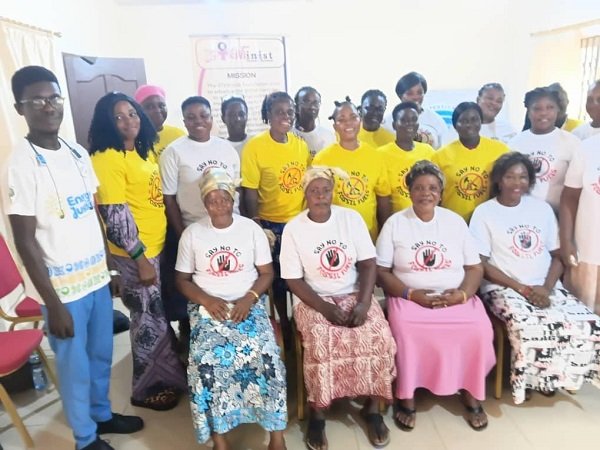
STEMINIST Foundation, Ghana, a Non-Governmental Organisation (NGO) with support from Keta Ramsar Centre has trained about 25 women selected from the Keta Municipality on the rights of women and how to use them for their voices to be heard in their communities.
STEMinist Foundation, Ghana, is a network of women advocating equal opportunities through excellent representation of women in Science, Technology, Engineering and Mathematics (STEM).
The women, mostly fishmongers and other self-styled workers, were taken through topics such as Understanding Energy and Climate Justice, Fossil Gas Expansion, Livelihoods’ Care Work and Health, Women Leadership, and Power Building among others.
Mrs Nerissa Edem Anku, Gender Justice Transition Advisor of the Foundation, noted that the theme “Energy Justice: Empowering Women with Power, Rights and Dignity,” was chosen for the women to reconnect, reflect, and look ahead in shaping their rights as women.
She stated that women have been relegated to the background in the communities when it comes to decision making, stressing the need to correct that for them to know they have rights to fight for themselves.
Mrs Nerissa Edem Anku further noted that women in fishing communities wanted to see real and tangible improvements in their living conditions, spearheaded by government to prevent unhealthy confrontations with the local people.
She assured that the NGO would continue to strengthen its programmes to ensure that women were empowered to contribute meaningfully to the socio-economic development of their families, communities, and the nation.
Miss Portia Adu-Mensah, Facilitator, Community Mobilisation Communicator, on her part added that all stakeholders have to adopt more innovative steps to build an environment in which women can thrive. That, she said, would win the confidence of the women and promote more inclusive partnerships.
The Assemblywoman for Dzelukope, Ruby Adukpoh, on behalf of the women thanked the NGO for the gesture and reaffirmed their commitment to strengthening their collective voices and influence in shaping policies that will affect them.
From Kafui Gati, Keta
Join our WhatsApp Channel now!
https://whatsapp.com/channel/0029VbBElzjInlqHhl1aTU27