Editorial
Don’t demand sex from teenage girls when you support them

Some teenage girls are becoming increasingly concerned about men requesting sex from them in return for the support they provide.
The girls have urged for intervention to address their predicament, claiming that the demand for sex by men in exchange for assistance frequently leads to teenage pregnancies among them.
The girls voiced these concerns when the United Nations Children’s Fund (UNICEF) conducted a study in three locations with over 200 adolescents, 80 percent of whom were girls.
The initiative forms part of the larger West and Central Africa strategy to ensure a better future for girls and is a component of Ghana’s national priorities for the welfare of teenage girls.
Participants were selected from the Greater Accra, Ashanti, and Upper West regions, including Wa, Kumasi, and Tema.
In collaboration with the government, the consultations were conducted to establish safe spaces where girls between the ages of 10 and 19 may discuss their goals and concerns and propose solutions.
The girls said that “some of us are willing to work, but there are very few opportunities available” and described their situation as a terrible reality that is having a significant impact on them.
They also bemoaned the fact that “we would gladly take jobs if we had access to them so that we can move away from this harmful lifestyle.”
Even more disturbing is the abusers’ use of their social status, influence, and power to coerce, manipulate, exploit, or threaten these defenseless girls. Some victims may feel pressured to comply with the abuser’s demands, making it difficult for them to report the abuse or escape, which causes emotional distress.
Experts in emotional therapy say that serious mental trauma, such as anxiety, sadness, and post-traumatic stress disorder (PTSD), can result from feeling helpless and exploited.
The Spectator advises parents to be responsible, mentor, and assist teenagers in making decisions about their sexual health. They should also establish private, open avenues for sex education discussions in order to allow their children to ask questions about sex, puberty, and relationships,
By empowering victims, holding perpetrators accountable, creating safe environments, and fostering education and awareness we can work towards preventing sexual abuse and help reduce the high rate of teenage pregnancies.
The Spectator applauds UNICEF for promising to keep turning these realisations into tangible action by strengthening programmes that empower adolescent girls and provide them with the opportunities needed to thrive.
We also implore the government and all other stakeholders to take action in order to invest in teenage girls’ potential, promote gender equality, and provide a better future for them.
Join our WhatsApp Channel now!
https://whatsapp.com/channel/0029VbBElzjInlqHhl1aTU27

Dear Editor,
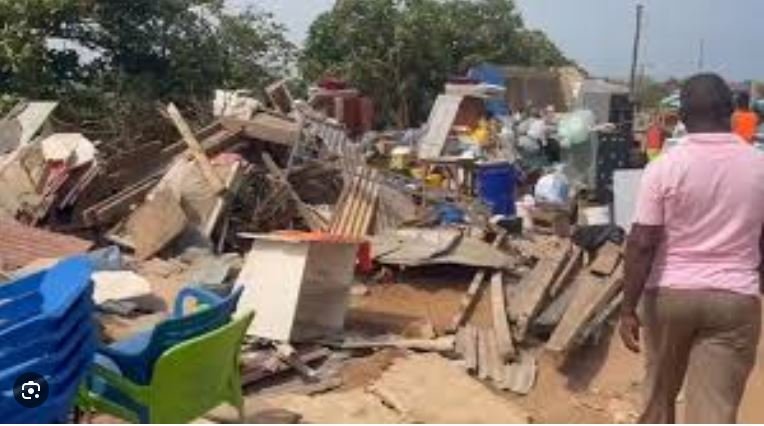
I wish to use this esteemed platform to urge the traditional councils of Osu and La to call for independent investigation into the recent demolition exercise at Kaajaano.
The exercise rendered hundreds homeless.
Information about the reason for the demolition has been scanty with those desiring to know feeding heavily on social media posts.
One particular name –Jato, has been associated with it but under whose instruction the exercise was carried is also not known.
Sadly, instead of getting to know who ordered the demolition and for what reasons, traditional authorities of Osu and La have been embroiled in a tug-of-war over ownership of the said land.
This is premature. At this moment, they should call for investigation into the exercise to know the people behind it.
When that is done, then discussions about the owners of the site can begin. That would end the posture of the two neighbouring town which has the potential to turn into something else.
Ataa Osa Mensah,
Osu
Dear Editor,
I wish to use your respected platform to draw the attention of the Bank of Ghana (BoG) to the behaviour of traders and some drivers about the use of lower denomination coins, specifically the 20 and 10 pesewas.
About two weeks ago, I read in your sister newspaper, The Ghanaian Times about this problem and the caution that followed from the BoG and some economic analysts.
The warning they gave was that the continuous rejection of the notes could create pricing problems which can eventually affect inflation.
I thought that would put to bed that practice or refusal to accept the coins when given out as change or use to pay for particular service.
Unfortunately, the problem still persist among traders, drivers, customers and passengers alike. Only last week, there was as altercation in the Accra Central area where a woman refused to accept five 20 pesewas note totaling one cedi.
As the argument continued, the trader decided not to sell to the customer again after by-standers explained to her that it was still a legal tender and those that refused it could become offenders.
This is an issue the BoG and other regulatory agencies must go and explain to the people and let them know that it is unlawful not to accept a currency that is still in use.
It nothing was done, it could create a much more serious problems.
Mary Osei Badu,
Swedru