News
Bill to remove 15% sanitary pad tax introduced


- /home/u249204778/domains/spectator.com.gh/public_html/wp-content/plugins/mvp-social-buttons/mvp-social-buttons.php on line 27
https://spectator.com.gh/wp-content/uploads/2023/09/c69ad0c9-2a78-4a60-9782-37e3802b8dc4.jpeg&description=Bill to remove 15% sanitary pad tax introduced', 'pinterestShare', 'width=750,height=350'); return false;" title="Pin This Post">
- Share
- Tweet /home/u249204778/domains/spectator.com.gh/public_html/wp-content/plugins/mvp-social-buttons/mvp-social-buttons.php on line 72
https://spectator.com.gh/wp-content/uploads/2023/09/c69ad0c9-2a78-4a60-9782-37e3802b8dc4.jpeg&description=Bill to remove 15% sanitary pad tax introduced', 'pinterestShare', 'width=750,height=350'); return false;" title="Pin This Post">
A private member’s bill proposing an amendment to remove the 15 per cent Value Added Tax (VAT) on menstrual hygiene products has been introduced to Parliament.
The proposed bill seeks to amend the VAT (Amendment) Act, 2022 (Act 1082) to remove the VAT on sanitary pads and tampons.
It will also push for the reclassification of the 20 per cent import tax on final consumer goods to zero-rated essential social goods and proscribe future taxation of such essential social goods.
The National Democratic Congress (NDC) Member of Parliament (MP) for Madina, Francis-Xavier Sosu, presented the proposed bill to the Clerk to Parliament last Thursday.
Justification
Providing the justification for introducing the bill in a memorandum accompanying the bill, the human rights lawyer said globally many women and girls faced challenges in managing their menstruation.
Mr Sosu explained that menstrual hygiene management (MHM) was defined as the practice of using clean materials to absorb menstrual blood that can be changed privately, safely, hygienically and as often as needed for the duration of the menstrual cycle.
In his view, often, the failure to address the menstrual hygiene needs of women and girls could have far-reaching consequences for basic hygiene, sanitation and reproductive health, ultimately affecting the country’s progress towards the Sustainable Development Goals one, three, four, five, six and 10.
Goal one covers no poverty, three on good health and wellbeing; four on quality education; five on gender equality, six on clean water and sanitation, and 10 on reduced inequalities.
“Despite the fact that about a quarter of the world’s population menstruates, 500 million people have been left without access to menstrual hygiene products, leading to period poverty”.
“Period poverty, thus refers to the struggle to afford menstrual products, and the increased economic vulnerability menstruating people face due to the financial burden posed by menstrual supplies,” the MP, who is also one of the legislators who sponsored the Criminal Offences (Amendment) Bill, 2022 which was passed to scrap the death penalty and criminalised accusation of anyone as witchcraft.
Discriminatory tax
Quoting authoritative sources globally, Mr Sosu said inadequate knowledge of menstrual issues among schoolgirls, unsuitable water, sanitation and hygiene (WASH) facilities; limited access to sanitary kits and cultural barriers were some of the major factors hindering proper menstrual management among schoolgirls in low-and middle-income nations.
He added that globally, women were twice as likely as men to report any discrimination they suffered based on their sex.
With women making up the majority of Ghana’s population — 15.6 million representing 50.7 per cent of the population per the 2021 Population and Housing Census, and 85 per cent of women reported to be using sanitary pads as their main MHM material, he said the imposition of taxes on sanitation did not serve their interest.
“Imposing taxes on sanitation pads which is as a result of their menstrual cycle which is a natural phenomenon is unfair, discriminatory and violates both national law (Article 17 of the 1992 Constitution) and various international laws and treaties such as Article 2 of the African Charter on Human and Peoples’ Rights, Articles 24(1) and 26 of the International Covenant on Civil and Political Rights (ICCPR), the Convention on Rights of Children, and the Convention on the Elimination of All forms of Discrimination against Women, among others,” Mr Sosu said.
It is possible to remove tax
The MP cited how some countries had taken the lead and shown that it was possible to take the tax off menstrual products.
Mr Sosu said in 2020, Scotland became the first country in the world to offer free sanitary products to all women.
Also, Kenya became the first country in the world to remove the tax on imports of sanitary products in 2004, the Madina MP pointed out.
He also mentioned Canada, Australia, India, Jamaica, Nicaragua, Nigeria, Lebanon, Malaysia, Colombia, South Africa, Namibia and Rwanda as other countries that had all put in measures to remove taxes on “period products”.
Unconscionable tax
On June 23, this year, the Speaker of Parliament, Alban Sumana Kingsford Bagbin, expressed strong abhorrence at the imposition of taxes on sanitary pads in Ghana.
He described the passage of laws by Parliament to impose the tax on sanitary pads as “unconscionable and a cardinal sin.”
“This House should not have allowed it at all.
You know the impact of that law on human resource development and the development of this country is immeasurable.
“Why should we pass a law imposing tax on sanitary pads?
We have to take immediate action to prevent whoever is the minister and is proposing it to take it off,” Mr Bagbin said.
The Speaker expressed those sentiments to members of the House when he informed the House of a petition he had received from civil society groups and non-profit organisations that called themselves the Socialist Movement of Ghana who had picketed the premises of Parliament on June 23, 2023.
The group members, clad in red attire and armbands, carried placards emphasising the need to suspend taxes on sanitary pads.
Some of the placards read: “You cannot tax my period”, “We are already bleeding. Don’t tax our period”, “Don’t consider sanitary pads as luxury products,” and “It is unfair and discriminatory to tax bleeding young girls.”
Goal one covers no poverty, three on good health and wellbeing; four on quality education; five on gender equality, six on clean water and sanitation, and 10 on reduced inequalities.
“Despite the fact that about a quarter of the world’s population menstruates, 500 million people have been left without access to menstrual hygiene products, leading to period poverty”.
“Period poverty, thus refers to the struggle to afford menstrual products, and the increased economic vulnerability menstruating people face due to the financial burden posed by menstrual supplies,” the MP, who is also one of the legislators who sponsored the Criminal Offences (Amendment) Bill, 2022 which was passed to scrap the death penalty and criminalised accusation of anyone as witchcraft.
Discriminatory tax
Quoting authoritative sources globally, Mr Sosu said inadequate knowledge of menstrual issues among schoolgirls, unsuitable water, sanitation and hygiene (WASH) facilities; limited access to sanitary kits and cultural barriers were some of the major factors hindering proper menstrual management among schoolgirls in low-and middle-income nations.
He added that globally, women were twice as likely as men to report any discrimination they suffered based on their sex.
With women making up the majority of Ghana’s population — 15.6 million representing 50.7 per cent of the population per the 2021 Population and Housing Census, and 85 per cent of women reported to be using sanitary pads as their main MHM material, he said the imposition of taxes on sanitation did not serve their interest.
“Imposing taxes on sanitation pads which is as a result of their menstrual cycle which is a natural phenomenon is unfair, discriminatory and violates both national law (Article 17 of the 1992 Constitution) and various international laws and treaties such as Article 2 of the African Charter on Human and Peoples’ Rights, Articles 24(1) and 26 of the International Covenant on Civil and Political Rights (ICCPR), the Convention on Rights of Children, and the Convention on the Elimination of All forms of Discrimination against Women, among others,” Mr Sosu said.
It is possible to remove tax
The MP cited how some countries had taken the lead and shown that it was possible to take the tax off menstrual products.
Mr Sosu said in 2020, Scotland became the first country in the world to offer free sanitary products to all women.
Also, Kenya became the first country in the world to remove the tax on imports of sanitary products in 2004, the Madina MP pointed out.
He also mentioned Canada, Australia, India, Jamaica, Nicaragua, Nigeria, Lebanon, Malaysia, Colombia, South Africa, Namibia and Rwanda as other countries that had all put in measures to remove taxes on “period products”.
Unconscionable tax
On June 23, this year, the Speaker of Parliament, Alban Sumana Kingsford Bagbin, expressed strong abhorrence at the imposition of taxes on sanitary pads in Ghana.
He described the passage of laws by Parliament to impose the tax on sanitary pads as “unconscionable and a cardinal sin.”
“This House should not have allowed it at all.
You know the impact of that law on human resource development and the development of this country is immeasurable.
“Why should we pass a law imposing tax on sanitary pads?
We have to take immediate action to prevent whoever is the minister and is proposing it to take it off,” Mr Bagbin said.
The Speaker expressed those sentiments to members of the House when he informed the House of a petition he had received from civil society groups and non-profit organisations that called themselves the Socialist Movement of Ghana who had picketed the premises of Parliament on June 23, 2023.
The group members, clad in red attire and armbands, carried placards emphasising the need to suspend taxes on sanitary pads.
Some of the placards read: “You cannot tax my period”, “We are already bleeding. Don’t tax our period”, “Don’t consider sanitary pads as luxury products,” and “It is unfair and discriminatory to tax bleeding young girls.”
Credit: Graphic.com.gh


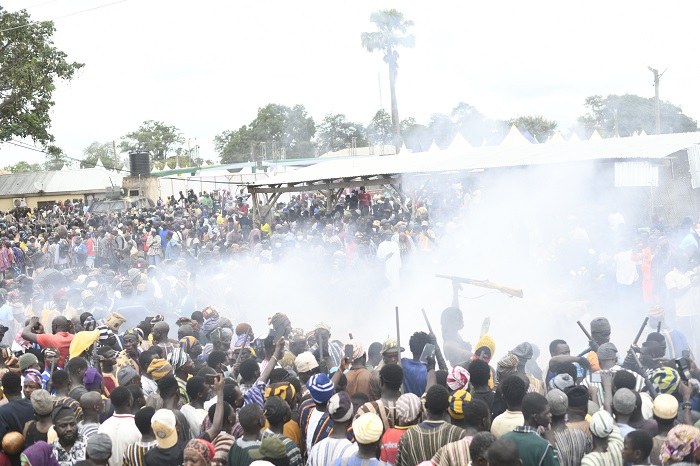
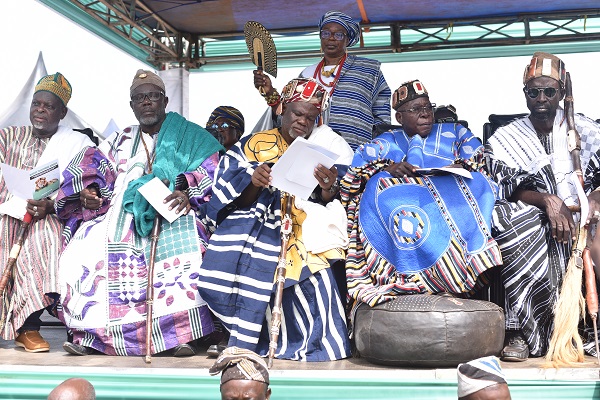
The Dagbon Kingdom on Friday witnessed another defining moment in its centuries-old history as Kampakuya Naa Yakubu was formally enskinned as Regent following the passing of the Overlord of Dagbon, Ndan Ya-Na Abukari II.
The traditional ceremony, steeped in the customs and heritage of the Dagomba people, took place at the historic Gbewaa Palace in Yendi in an atmosphere of grief, reverence and hope.
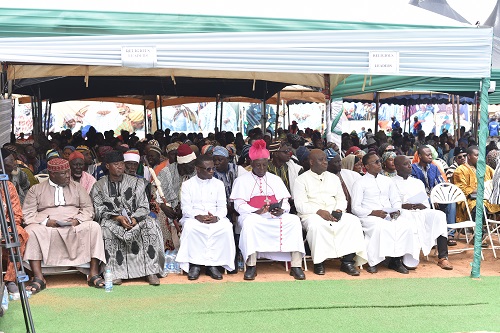
In attendance was President John Dramani Mahama, who in his tribute described the late Overlord as a distinguished traditional ruler whose leadership strengthened peace, unity and development in Dagbon.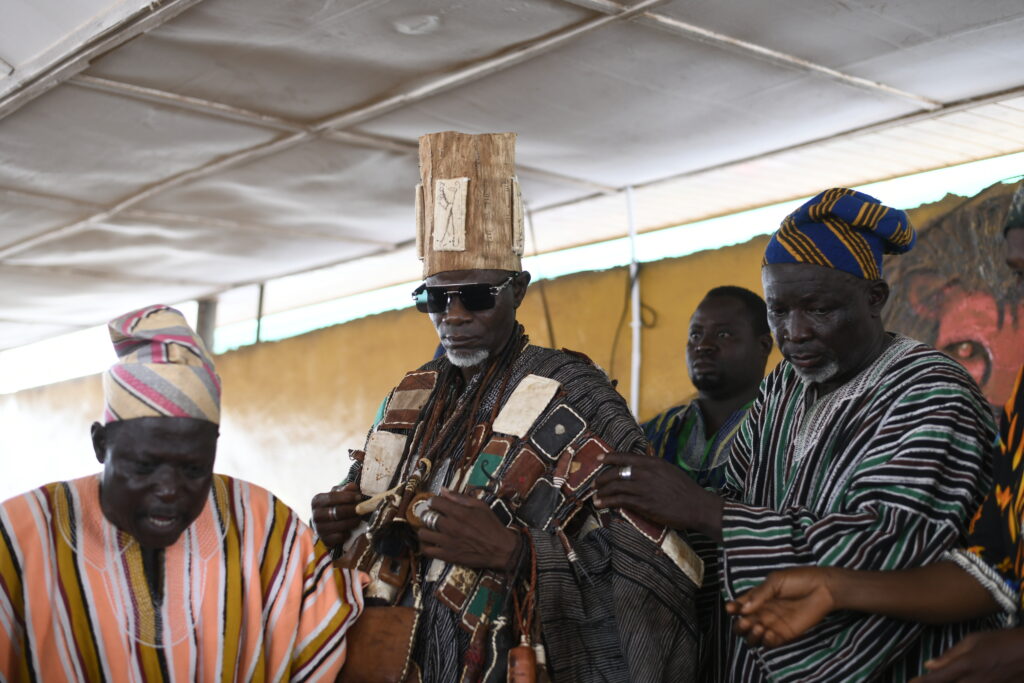
Former Vice President Dr Mahamudu Bawumia also conveyed his condolences to the people of Dagbon.
Also in attendance were chiefs, queen mothers, elders, royal family members, religious leaders and thousands of mourners gathered to witness the installation.
The enskinment of the Kampakuya Naa as Regent is one of the most significant stages in the transition of leadership in the Dagbon Kingdom. It ensures continuity of authority and the preservation of the kingdom’s customs until a substantive Ya-Na is selected by the kingmakers in accordance with Dagbon tradition.
Friday’s ceremony reflected the resilience of one of Ghana’s oldest traditional kingdoms, where centuries-old customs continue to guide leadership transitions with dignity and order.
The late Ya-Na, Ndan Abukari II, who ascended the skin in 2019, is widely remembered for consolidating peace, unity and reconciliation in Dagbon following years of chieftaincy disputes.
Throughout Yendi, the mood remained solemn as residents lined the streets while traditional drumming, chanting and customary rites echoed through the ancient capital. Men, women and children, mostly dressed in black, paid their respects to a monarch whose reign restored confidence in the kingdom’s future.
The installation of Kampakuya Naa Yakubu as Regent now places upon him the sacred responsibility of overseeing the affairs of Dagbon during the mourning period while ensuring that the customs and traditions of the kingdom are faithfully upheld ahead of the enskinment.
After a successful enskinment, attention now turns to the traditional processes that will eventually culminate in the selection and enskinment of a new Overlord. Until then, the Regent will serve as the custodian of the Dagbon Kingdom, ensuring that the customs, authority and dignity of one of Africa’s oldest traditional kingdoms remain intact.
From Geoffrey Buta, Yendi
The Ghana Health Service, with UNICEF support, has trained 100 healthcare providers on adolescent-friendly maternal healthcare services as it expands its Safety Net Intervention programme to 44 additional health facilities in the Central Region.
The one-day training, held in two sessions, equipped midwives, community health nurses, health information officers and district focal persons with the knowledge and practical skills needed to implement the initiative effectively and improve pregnancy outcomes among pregnant adolescents.
The Safety Net Intervention is a special initiative that seeks to address health and social challenges associated with adolescent pregnancy with a comprehensive service including antenatal and postnatal care, skilled delivery services, postpartum family planning, home visits and connections to education and social support services.
By this intervention, the GHS and UNCEF are seeking to mitigate the incidence of adolescent pregnancy, maternal deaths among adolescent girls, neonatal deaths among babies born to adolescent mothers, and child marriage.
They are also seeking increased uptake of postpartum family planning among adolescent mothers and improved educational continuity and economic resilience for adolescent girls.
Mrs Emma Delali Foli, the Central Regional Focal Person for the Safety Net Intervention, explained that pregnant adolescents often faced heightened health risks and limited social support, highlighting the need for specialised healthcare and social interventions.
She said the intervention was introduced in six districts in the Central Region in 2020 and had expanded steadily over the years to 16 of the region’s 22 districts.
Following the addition of the 44 new facilities, the programme was now being implemented in 176 health facilities, with a goal of covering all 22 districts in the short possible time, she added.
Mrs Foli noted that since its introduction, the programme had benefited more than 5,000 pregnant adolescents in the Central Region, while strengthening collaboration with institutions such as the Department of Social Welfare, the Ghana Education Service, the National Youth Authority and the Domestic Violence and Victim Support Unit (DOVVSU).
The intervention, she said, had also contributed to increased uptake of postpartum family planning, stronger referral systems, greater access to social protection services and enhanced involvement of caregivers throughout pregnancy and childbirth.
Mrs Foli indicated that the newly trained health workers were expected to replicate the training at their respective facilities to ensure that other members of the healthcare team were adequately equipped to implement the intervention.
“This is new to them and so they have been trained on the concepts, objectives and goals of the Safety Net Intervention. The components of the intervention, as well as the importance of documentation and reporting, have also been emphasised,” she said.-GNA

 News1 week ago
Prof. Kwabena Twerefou holds inaugural lecture; calls for better stewardship of Ghana’s natural resources
- News1 week ago
Prez Mahama to visit Jamaica to strengthen ties and advance reparations agenda
- News1 week ago
Ahanta Heritage Month: Diplomats, youth tour forts, Cape Three Points and historic sites