Profile
Trailblazer: The woman who found purpose in her roots


- /home/u249204778/domains/spectator.com.gh/public_html/wp-content/plugins/mvp-social-buttons/mvp-social-buttons.php on line 27
https://spectator.com.gh/wp-content/uploads/2026/06/Mrs-Osei-Bonsu-514x600.jpg&description=Trailblazer: The woman who found purpose in her roots', 'pinterestShare', 'width=750,height=350'); return false;" title="Pin This Post">
- Share
- Tweet /home/u249204778/domains/spectator.com.gh/public_html/wp-content/plugins/mvp-social-buttons/mvp-social-buttons.php on line 72
https://spectator.com.gh/wp-content/uploads/2026/06/Mrs-Osei-Bonsu-514x600.jpg&description=Trailblazer: The woman who found purpose in her roots', 'pinterestShare', 'width=750,height=350'); return false;" title="Pin This Post">
“We are always told what it is that we can’t do, but we must not allow the limitations placed on us to define who we are as women”- Mrs Lynn Osei-Bonsu
For many children raised in diplomatic homes, the world becomes a familiar territory where they easily get accustomed to. Countries change, schools change, friends change and home itself becomes fluid like a traversing stream.
However, for Mrs Lynn Osei Bonsu, one of Ghana’s foremost female communications strategist and philanthropist, life’s most defining lesson would come not from the polished streets of New York, where she spent part of her childhood, but from the quiet town of Jirapa in the Upper West Region.
Today, she leads uNuru Communications Group, a strategic communications firm delivering not just for its clients, but also helping in shaping the brand Ghana.
She also heads Trailblazers, a non-profit organisation committed to supporting women and children.
Yet behind the polished corporate image is a deeply human story of identity, sacrifice, resilience and purpose.
A childhood between worlds
Born to Mr Hilary K. Ziniel, a diplomat father and Mrs Rose Ziniel a teacher mother, from Goziir in the Nandom District of the Upper West Region, she spent much of her early life outside Ghana due to her father’s regular postings with the Ministry of Foreign Affairs.
“My first memories are not growing up in Ghana,” she told The Spectator with utmost fondness.
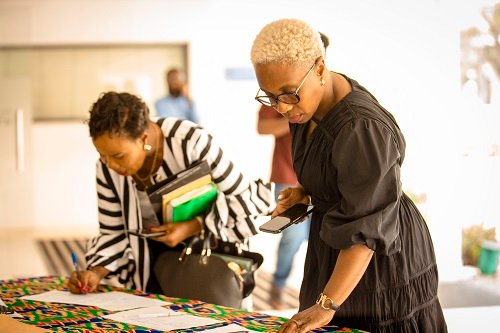
But while her childhood stretched across countries and cultures, her father remained determined that his children would never lose sight of where they came from, as result when the family returned to Ghana after his postings in New York, he made a decision about Lynn’s education that initially devastated her.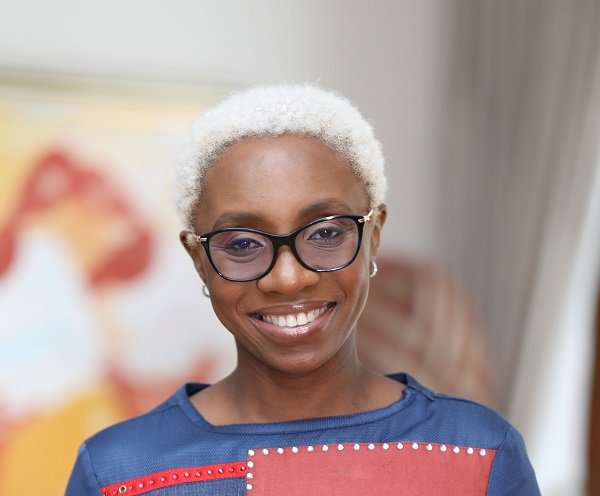
Instead of enrolling her in one of the prestigious schools in Accra, he sent her to St. Francis Girls’ Senior High School in Jirapa. “He said I needed to know where I came from,” she recalls.
Harsh transition
Moving from New York to Ghana and immediately being dispatched to Jirapa for her secondary education came with what she describes as a “huge culture shock.”
There was limited electricity, no running water and a pace of life completely different from anything she had known. “At the time, I thought he was punishing me,” she says with a laugh.
Years later, however, that painful transition would become one of the greatest gifts of her life. “If my father were alive today, I would thank him every single day for that decision,” she says quietly.
The experience, she explains, grounded her. It taught her humility, resilience and gratitude. More importantly, it gave her a deeper appreciation of sacrifice.
“It gave me a different outlook on life and a greater appreciation for my parents and everything they did for us.”
After secondary school and sixth form education, she gained admission to Carleton University in Canada. At the time, studying abroad was considered a major achievement for many Ghanaian families, especially for children from internationally exposed homes. But once again, her father encouraged her to think beyond prestige.
“He told me that if I wanted to live and work in Ghana, then I needed to build my network here,” she says.
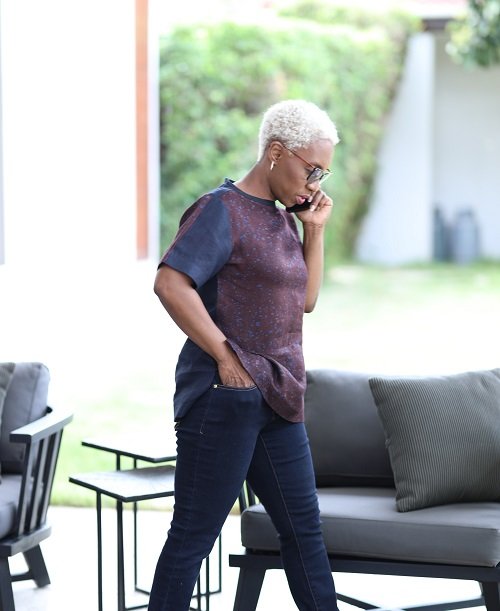
Shelving dream of becoming a diplomat
After her first degree, she dreamed of joining Ghana’s Foreign Service and had even written the Public Services Commission examination. Then, unexpectedly, her path changed.
While awaiting for the results from the Public Services Commission, she came across an advertisement in the Daily Graphic announcing admissions into the School of Communication Studies. “It just jumped at me,” she recalls.
She applied and was admitted into the postgraduate communication programme — a decision that would eventually shape the rest of her career. Around the same time, she also came to an important personal realisation.
“Being a foreign service child meant moving every four years,” she says. “I realised I actually wanted stability. I wanted roots.” It was a powerful discovery for someone who had spent most of her life constantly moving.
Building a career, rebuilding self
Her professional journey began in 1999 at Japan Motors where she worked as a Public Relations Officer. Four years later, she moved to Societe Generale Bank following the bank’s acquisition of SSB Bank.
Again, after four years, she joined GTBank Ghanaghana.gtbank.com as Head of Corporate Affairs. Looking back, she now finds humour in the pattern. “It was much later that I realised it reflected how often we moved during my father’s diplomatic postings,” she explains.
Eventually, motherhood changed her priorities and she decided to leave corporate life behind to focus more on family and pursue entrepreneurship.
The decision initially frightened her. Walking away from the security of a monthly salary into the uncertainty of business was not easy. But with savings, planning and the support of her husband, she took the leap.
“He has been very supportive emotionally, financially and professionally,” she says.
In 2010, she established her own communications and advertising agency. The early years tested her patience and resilience. “It wasn’t easy because nobody really knew us at the beginning,” she says.
Her first breakthrough came when Koala Super Market gave her company an opportunity. From there, the business gradually expanded through referrals, relationships and consistency. Over the years, the company weathered economic downturns and survived the COVID-19 pandemic.
“We’ve had ups and downs, but by God’s grace, we are still standing,” she says.
Trailblazer is birthed
Even while building her business, one thing remained constant; her desire to help others. Mrs Osei-Bonsu traces that instinct directly to her father. “My father was very big on education and helping females in particular,” she says.
For years, she quietly supported people through payment of school fees and personal assistance. But during the COVID-19 pandemic, after volunteering with several organisations, she felt compelled to formalise her efforts.
This decision she explained led to the birth of Trailblazers in 2020. The organisation focuses on supporting women and children through education, skills development and empowerment initiatives. It has worked with schools, orphanages and vulnerable women, while also supporting organisations such as Street Girls Aid.
For her, philanthropy is not charity. It is responsibility even though she admits the work comes with challenges. “One of the biggest difficulties is funding,” she explains. “Many organisations are all trying to access limited resources.”
Yet despite the obstacles, she remains deeply committed to the mission and this is because for her, success was not measured only by titles or professional accomplishments, but by impact.
Coming full circle
Today, she looks back on her journey with gratitude.
The young girl who once arrived in Jirapa angry, uncomfortable and homesick now understands that those difficult years shaped the woman she would become.
Her story is ultimately one of rediscovery — a journey back to identity, purpose and service. “I now understand why my father insisted so much on where we came from,” she says.
And perhaps that is the most powerful lesson of all: sometimes the roots we resist the most are the very ones that anchor our lives.
By Cliff Ekuful


For Leonora Adjin-Tettey, acting is more than standing before the camera or playing different characters. It is a platform to tell stories, inspire change and create opportunities for others.
Over the years, she has steadily built a reputation not only as an actress but also as a communications professional, entrepreneur, creative director, philanthropist and beauty queen whose influence continues to extend beyond Ghana’s entertainment industry.
Born on April 1, 1995, in Kpong, Leonora’s journey is one of resilience, determination and purpose. She is the daughter of Mr Jasper Adjin-Tettey, a Ga, and Madam Joyce Amanatey from Ada.
At the age of seven, she moved to Accra, where she was raised by her aunt in Abossey Okai. Growing up in the bustling community exposed her to life’s realities at an early age and helped shape the discipline, humility and perseverance that have become the hallmarks of her success.
Her academic journey reflects her belief that education is an essential tool for personal growth. After completing Holy Family R/C Junior High School and Nifa Senior High School in 2013, she obtained a Bachelor of Arts degree from the University of Education, Winneba. She later pursued a Master of Arts in Development Communication at the Ghana Institute of Management and Public Administration (GIMPA), equipping herself with the knowledge to use communication as a tool for development and social transformation.
Leonora discovered her passion for acting at the age of 12 through the drama ministry of Lighthouse Chapel International. What began as church performances soon developed into a professional career that has seen her feature in more than 50 film productions in Ghana and beyond.
Her performances in productions such as SEVSU, Queen of Accra and Office Crush have earned her admiration for her versatility and professionalism. Even before becoming a professional actress, her talent had already been recognised with Best Actress awards during her Senior High School and university years.
Since then, she has received several nominations in Ghana’s film and entertainment awards, affirming her growing influence in the industry.
Away from the movie set, Leonora has also made her mark as a commercial model, appearing in television commercials and nationwide billboard campaigns for brands such as Fortune Rice and Madar Detergent.
Driven by an entrepreneurial spirit, she founded LNORE, a creative brand that focuses on storytelling, branding, fashion and visual communication. Through the brand, she continues to explore innovative ways of using creativity to solve problems and tell compelling stories.
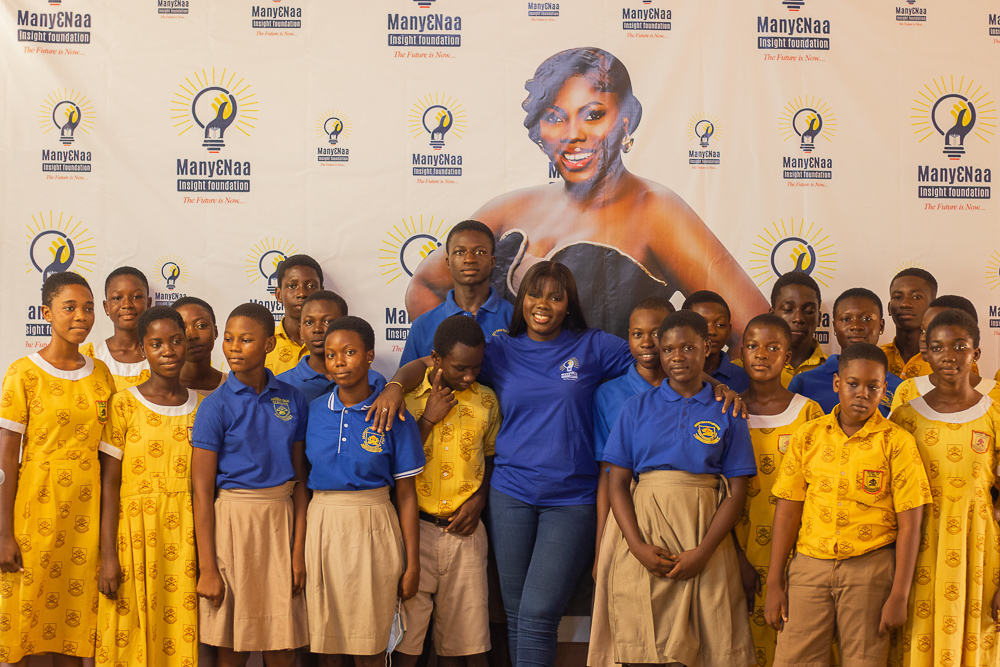
Her passion for helping others also led to the establishment of the Manyenaa Insight Foundation, a non-governmental organisation dedicated to education, health advocacy, youth empowerment and community development. Through the foundation, she continues to support initiatives that inspire hope and create opportunities for vulnerable communities.
Leonora’s leadership qualities have equally been recognised on the pageantry stage. She was crowned Miss Health Ghana in 2014, represented the Greater Accra Region in Ghana’s Most Beautiful in 2018 and later won the Miss Global International Ghana title in 2019.
These platforms have enabled her to champion public health awareness, women’s empowerment and community development.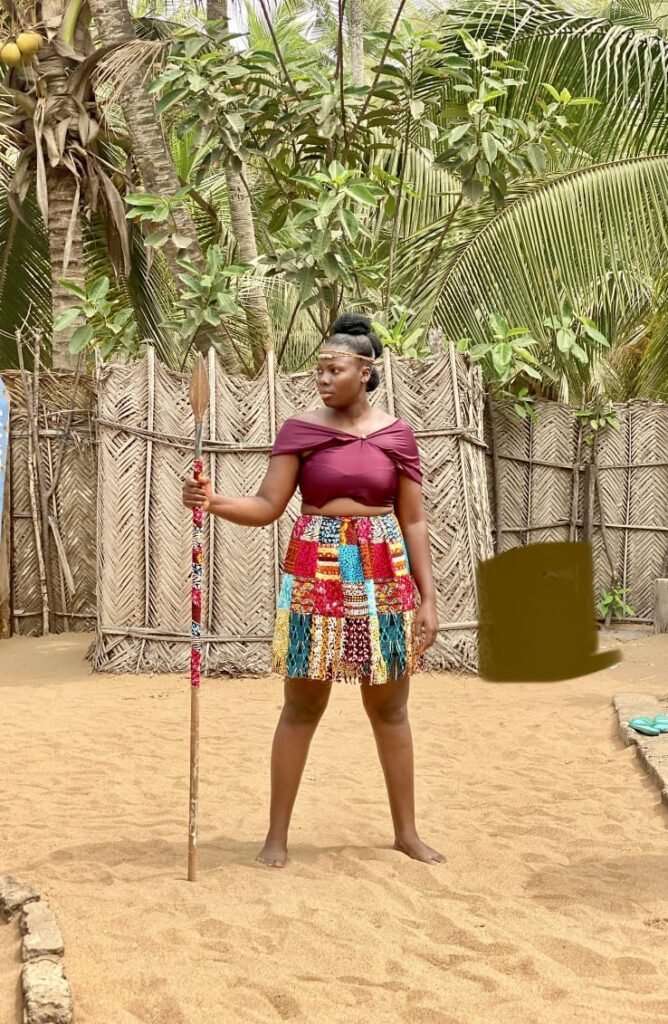
Despite her achievements, Leonora remains grounded. She enjoys reading, travelling, fashion, mentoring young people and engaging in charitable activities. She believes that success becomes meaningful when it is used to inspire others and improve lives.
Looking ahead, she hopes to expand her acting career into Nollywood and Hollywood while continuing to tell authentic African stories to global audiences.
Through her work in film, business and philanthropy, she is determined to project Ghana positively on the world stage and leave behind a legacy of excellence, service and impact.
By Esinam Jemima Kuatsinu


When Rev. Seth Kwame Ativor lost his sight at the age of two, few would have imagined that he would one day make history as the first visually impaired minister to be ordained in the Presbyterian Church of Ghana (PCG).
Through determination, faith and unwavering resilience, he has overcome numerous barriers to become an educator, minister and advocate for inclusion.
Born in 1981 at Afife in the Volta Region, Rev. Ativor grew up in a family whose spiritual journey would later influence his own path.
His father was a traditional priest who later converted to Christianity and joined the Evangelical Presbyterian Church.
As a young child, Rev. Ativor suddenly lost his sight. Although the exact cause was never established, the condition changed the course of his life.
The loss of vision brought educational and social challenges at a time when support systems and learning materials for visually impaired students were limited.
Despite these obstacles, he remained focused on his education. He attended Okuapeman Secondary School, where he successfully completed his secondary education before gaining admission to the University of Cape Coast (UCC), where he obtained his first degree.
His passion for learning did not end there. He furthered his studies at the University of Education, Winneba (UEW), earning two master’s degrees.
He is currently pursuing a Doctor of Philosophy (PhD), demonstrating his commitment to lifelong learning and personal development.
Today, Rev. Ativor serves as an Information and Communication Technology (ICT) teacher at Okuapeman Senior High School, where he continues to impact the lives of students through education and mentorship.
Although deeply involved in church activities, Rev. Ativor never envisioned himself becoming a minister.
His journey into ministry began after joining Christ Congregation of the Presbyterian Church of Ghana in 2002. It was during his time in the church that he felt a strong conviction that God was calling him into pastoral ministry.
Initially, he resisted the call.
“I never dreamt of becoming a minister. There was no pastoral background in my family and nothing in my life suggested that I would one day enter the ministry,” he recounted.
The challenge was not only personal. At the time, questions arose about whether a totally blind person could effectively serve as an ordained minister in the church.

Following extensive consultations and discussions among church leaders, Rev. Ativor was eventually granted the opportunity to sit for the church’s entrance examinations and interviews for ministerial training.
He excelled and was admitted to the Presbyterian theological training programme.
After years of theological education and preparation, he was ordained on July 15, becoming the first visually impaired minister in the history of the Presbyterian Church of Ghana.
Rev. Ativor’s ordination marked a significant milestone in the church’s efforts towards inclusion.
He explained that the Presbyterian Church has, over the years, made deliberate efforts to create opportunities for groups that were previously marginalised, including women and persons with disabilities.
For him, becoming the first visually impaired minister is not merely a personal achievement but a symbol of what is possible when institutions embrace diversity and equal opportunity.
“My prayer is that I will not remain the first. I hope many more persons with disabilities will be given the opportunity to serve God and society according to their gifts and calling,” he said.
As both an ICT teacher and minister, Rev. Ativor relies heavily on assistive technology to perform his duties.
Using specialised computer software, he is able to access the Bible, theological books, commentaries and other educational materials independently. Technology enables him to prepare sermons, conduct research and perform many of his responsibilities effectively.
He also acknowledges the support of his family, church members and colleagues who assist him when necessary.
His wife, children and siblings have been a constant source of encouragement throughout his educational, professional and ministerial journey.
According to Rev. Ativor, one of the greatest lessons blindness has taught him is humility.
While he values independence, he has learned that accepting help is sometimes necessary and that collaboration makes it possible to achieve greater things.
His experience has also deepened his understanding of the barriers faced by persons with disabilities.
“It is not blindness itself that disables me. It is inaccessible environments, inaccessible information and negative attitudes that create disability,” he emphasised.
He believes society must shift from viewing persons with disabilities as dependent individuals to recognising them as people with talents, skills and the capacity to contribute meaningfully to national development.
Rev. Ativor’s message to young people living with disabilities is to never allow limitations to define their future.
He encourages them to discover their talents, pursue education and remain determined despite challenges.
“Disability does not mean inability. God has given every person unique abilities and a purpose. Focus on what you can do and strive to make a difference,” he advised.
He also called on parents, schools, churches, policymakers and communities to create inclusive spaces that enable persons with disabilities to thrive.
By Esinam Jemima Kuatsinu

 News1 week ago
Prof. Kwabena Twerefou holds inaugural lecture; calls for better stewardship of Ghana’s natural resources
- News1 week ago
Ahanta Heritage Month: Diplomats, youth tour forts, Cape Three Points and historic sites
 News1 week ago
Wa West MP calls for calm, impartial probe into suspect’s death