Features
Health, worry and the human stomach

- /home/u249204778/domains/spectator.com.gh/public_html/wp-content/plugins/mvp-social-buttons/mvp-social-buttons.php on line 27
https://spectator.com.gh/wp-content/uploads/2026/01/Piles-is-now-a-national-disease-in-Sikaman.jpg&description=Health, worry and the human stomach', 'pinterestShare', 'width=750,height=350'); return false;" title="Pin This Post">
- Share
- Tweet /home/u249204778/domains/spectator.com.gh/public_html/wp-content/plugins/mvp-social-buttons/mvp-social-buttons.php on line 72
https://spectator.com.gh/wp-content/uploads/2026/01/Piles-is-now-a-national-disease-in-Sikaman.jpg&description=Health, worry and the human stomach', 'pinterestShare', 'width=750,height=350'); return false;" title="Pin This Post">

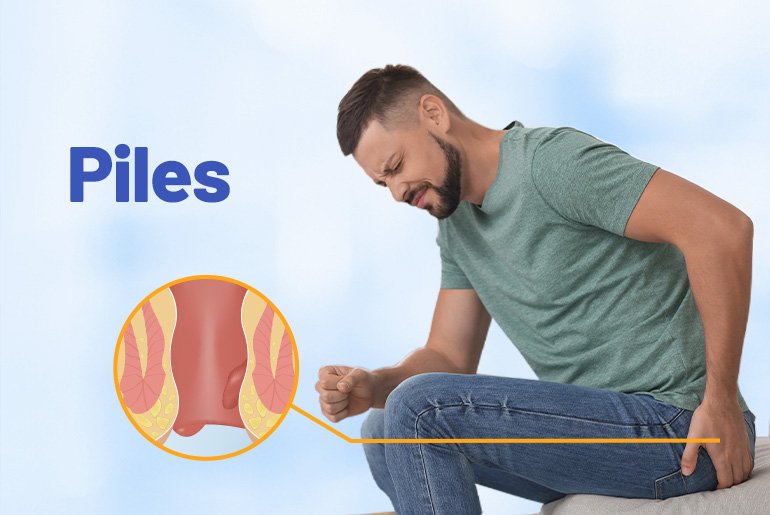
SIKAMAN is gradually becoming a health-conscious nation because piles is now a national disease. Some natives claim that piles, alias kooko, has gone on strike and has attacked different parts of their bodies — buttocks, forehead, inner ear, inner nose, lips, and hair. Now they do not know where next it would attack, and soon a petition would be sent to Parliament to declare piles a national tragedy.
It is interesting when you consider the way people assume that even common malaria is caused by kooko. Well, the medical authorities have come out to say that piles is a disease of only the last end of the alimentary canal. It has a name. Go and check the name in your biology textbook, or ask the nearest herbalist.
The health consciousness of the average Sikaman native is not limited to kooko, though. People are becoming very much aware of their pot-bellies. They can’t be carrying it all their lives, taking into consideration that half the time, it is laden with gallons of beer.
Even Kwame Alomele is gradually trying to unload the burden that precedes him. “I no longer have the stamina to carry a pot. I am now health-inclined and want to be a slim-macho, doing a sport. I am applying to be a member of a golf club and hope to do wonders with the tiny ball. Fact is I want to be up-and-doing like Gordon Avernogbor, the Grandmaster of GBC fame.”
The media have helped to carry this health idea far. Ghana Television does weekly health programmes, and the FM stations have various programmes and tit-bits on health. Radio Gold is on a Diabetes Month health beat, and patients are made to acquire some knowledge about what they may be suffering from and how they can manage their conditions.
In the print media, the Weekly Spectator has singlehandedly launched a powerful health crusade, and the sky is the limit. In fact, the Spectator has been hailed in medical circles as one of the papers that have zealously carried the health mantle aloft in recent times. The Mirror also runs a health column with my good friend Dr. Anyah in the chair.
Tune in to any of the FM stations and you’re likely to hear a health tit-bit that can be useful to you. You’ll hear something like, “if you eat too much yorke gari, you’ll develop coccidiosis, which is a fowl disease. So check the level of gari and beware of zorzor.”
COCKROACH DIET
Well, healthy living in general has to do with healthy eating. At least, that is what the nutritionists say. And the cockroach has been the most qualified nutritionist in the world. The reason is that the common cockroach is so health-conscious that it eats only a balanced diet — anything from rotten fruit to human excreta. It doesn’t reject food.
The experts say fruits and vegetables, which are alkaline in nature, are good for the human body. There is some truth in this. The silver-back bear, perhaps the most powerful animal in the world, is a vegetarian. It can uproot a tree almost effortlessly, and the power in its arms is attributed to its vegetarian diet.
Anyhow, man cannot continue eating fruits and vegetables perpetually as the main diet. The stomach would get bored, the tongue will revolt, and the human body will subconsciously start crying for banku and okro soup plus giant crabs.
Ideally, a balanced diet — carbohydrates, protein, fats and oils, vitamins and minerals — in their correct quantities are enough to ensure healthy living. It means that you can’t fare well when you eat bread in the morning, bread in the afternoon, and kenkey and shito for supper. There would be a traffic jam in your intestines. And believe me, the traffic lights will also go off.
The killer menu is maintained for three days, and you’ll have what is termed as “treasonable constipation,” a sin against your body. No purgative can save you unless rice and okro soup. That combination is the best purgative in town. In 1983, it used to be one of the famous diets in Legon when famine besieged Sikaman. Students had to abandon lectures and stay close to the WC. Anything can happen. You can’t trust your own stomach.
Exercise also begets health, and brisk walking is the golden rule. I have a friend who is a positive thinker, and he told me walking is no problem to him. He once walked from Osu Christianborg to Circle to Abeka and back to Christiansburg.
No ice-water. No one gave him an award, but I congratulated him. Not that the guy is broke and can’t fix himself up in a trotro or taxi. Walking is his hobby. And his health is always excellent, his appetite ever-ready — no need for bitters. As for his sex life, your guess is as good as mine. He can deliver more than AK-47.
Exercise is good, but it must not wear you down. Do not over-exert. What about sex? Research has shown that excessive indulgence in sex is harmful to the central nervous system because it drains the body of its vitality.
Sex is basically for reproduction, but Ghanaman thinks quite differently. Some experts say twice a week or less is just what the body can cope with. Others say abstain and live long.
But what is the body’s most formidable adversary? It is WORRY. Worry has killed many more people than the Second World War did. About 90% of the population are chronic worriers. People are so addicted to worrying that even when there is nothing to worry about, they worry that there is nothing to worry about.
Worry causes hypertension and its attendant complications of heart disease, stroke, renal failure, and mental illness. The question is, how can man stop worrying? There is a formula by which you can stop worrying.
Make a date with Sikaman Palava in the coming weeks and get your formula for longevity, your life without worry.
This article was first published on Saturday, August 16, 1997.


GHANA’S Parliament is a peaceful one. The arguments on the floor of the House can be fierce, but the House doesn’t catch fire. Ghana’s democracy has passed the acid-test of constitutional pluralism, and her legislature is a model of democratic beauty others are learning from.
Sometimes it is edifying following proceedings in Parliament and you are likely to catch the voice of Honourable Alban Bagbin in full flight. He doesn’t talk much. His English vocabulary does the talking.
Last week, I heard another MP talking on bad dressing, and I must congratulate him on his brilliant exhibition of vocabulary, delivered in Westminster tradition.
Such explosive delivery titillates the floor of the House and brings joy to members and Mr Speaker.
In the parliament of some countries, there is no need for such niceties. The floor of the House is regarded as a battle ground. Others, including lady members, see it as a boxing ring, where the spoken word is often jettisoned and supplanted with punches and upper-cuts.
PART-TIME
So the average parliamentarian trains part-time as a boxer, in case boxing skills will be needed in the House to iron out knotty points.
The ladies’ pedicure and manicure are carefully designed to fulfil a dual purpose. One is to showcase trendiness and the other is to scratch the faces of opponents in the House whether they are ladies or gentlemen.
Sometimes, the Speaker has to keep shouting and banging for well over 15 minutes as a recalcitrant MP dashes across and grabs the tie of another MP, thus precipitating a free-for-all brawl. Some MPs return home with a half nose, a missing left ear and a double forehead.
None of the offending parties is sanctioned because brawling in parliament is seen as a democratic process, since some MPs are so stubborn that only a sidekick to the ribs can mellow them. Meanwhile, a free-for-all is good exercise for the MPs, some of whom have grown too fat due to over-feeding.
Fortunately, the parliament of Sikaman has a civil democratic culture and debates get fierce but punches are not unleashed. For comic relief however, MPs do some break dancing once in a while.
When ROPAB was passed into law, some MPs caused a stir by bursting into song and dance. Mr. Speaker was be wildered, but obviously pleased that his announcement of the passage of the bill had brought joy to the House.
Others were not happy, though. The bill and the debates had caused them enough distress. As for the passage, it was like cutting their throats. They groaned in their hearts. No punches, no karate. That is democracy in its maturing stage. It is tempered with reason and civility. One day, it will be their turn to laugh and dance.
Now, the MP who spoke on bad dressing did a good job by all standards and added value to his delivery by going highfalutin. He wanted a law to be enacted against bad dressing, because it was not good for society.
What constitutes bad dressing? That is a very difficult question. Judging what is good or bad as far as dressing is concerned will obviously depend on the setting or context.
For example, going virtually naked on a holiday beach is considered good dressing. But when a man and his wife storm a church room in their birth-time suits (naked) the pastor and his deacons will surely take cover. It means a sartorial revolution has precipitated and only the Holy Spirit can hold tempers at bay.
STYLISH
In the streets of Sikaman, a lady with a very short skirt is admired by some as trendy and stylish. Others would think she is indecent and a bad influence. But the question that arises ultimately is this: Don’t people have the right to wear what they want to wear, so long as the unseemly parts of their bodies are not laid bare?
Certainly, nobody will go totally naked in the streets, unless the person is either in-sane or is a Black Stars supporter painted in the national colours. Even then, he’d be in what is called ‘pioto,’ with his ‘instrument’ well-positioned. That is called proper dressing.
So in the streets, this kind of dressing will be considered good or bad depending on the setting and the extent of exposure of the private parts (breasts, thighs, lower back, buttocks, etc).
Personally, I feel the churches should be very scrupulous about the dressing of those who go in to worship. The ushers should be tasked with ushering away badly-dressed worshippers. Incidentally, they are the worshippers who like the front pews, and the pastor is so distracted he can’t preach any meaningful sermon.
However, a law on dressing is something I won’t advocate, for the simple reason that, first, there is no clear definition of what is bad dressing and second, society must be left to evolve its own dress culture so that fashion and creativity in fashion design will not be stifle Any law to regulate dressing will kill such creativity.
This article was first published on Saturday July, 2006
Most people think stress is just in your head. When you feel overwhelmed, overworked, or emotionally drained, you might think you just need a good night’s sleep or a quick mental break.
However, science and biology show us something entirely different. Chronic, long-term stress is not just an emotion—it is a full-body physical condition. When you live in a constant state of survival mode, pushing past your limits without real rest, your body pays a very heavy physical price.
Here is a clear, step-by-step look at how ongoing stress physically breaks down the human body, explained simply.
Step 1: The endless flood of stress chemicals
What happens normally: When you face a sudden emergency, your body releases stress hormones like adrenaline and cortisol. They give you a quick burst of energy, speed up your heart, and help you react fast. This is a great survival tool for short bursts.
How stress breaks you down: If you never truly relax, your body never turns off that alarm. Your bloodstream stays flooded with cortisol and adrenaline day after day. Over time, having these chemicals constantly sloshing around acts like a slow poison. It damages your blood vessels, raises your blood pressure, messes with your metabolism, and even wears down your DNA, making you age faster.
Step 2: The silent internal fire (Chronic Inflammation)
What happens normally: When your brain senses danger or stress, it assumes you might get hurt, so it tells your immune system to cause inflammation (swelling and heat) to fight off germs and heal injuries.
How stress breaks you down: When stress lasts for months or years, your immune system gets confused and leaves that “fire” burning permanently. Instead of healing an injury, this silent internal inflammation starts attacking your healthy cells, joints, and organs. Over time, it paves the way for serious health issues, heart trouble, and total body fatigue.
Step 3: Turning your muscles into armor (Fascial Hardening)
What happens normally: Your body is wrapped in a web of strong connective tissue called fascia that holds your muscles, bones, and organs together. When you face pressure or trauma, that tissue automatically tightens up to protect you like a suit of armor.
How stress breaks you down: If you stay tense for years, that tissue never softens back up. It freezes in place, creating tight, painful physical knots (often called emotional lesions). Blood and oxygen can’t flow easily through those locked-up areas, leaving you stiff, aching, and physically unable to truly let go of tension.
Step 4: Burning out your body’s engine (Nervous System Overdrive)
What happens normally: Your nervous system has two main gears:
The Gas Pedal (fight-or-flight mode for dealing with emergencies).
The Brake Pedal (rest-and-digest mode for healing and repairing your body).
How stress breaks you down: Chronic stress forces your foot down hard on the gas pedal 24/7. Your heart beats faster than it should, your digestion shuts down, and your body is denied the deep rest it needs to repair itself. Eventually, your heart and nervous system run completely out of fuel from sheer exhaustion.
Reclaiming your health and sovereignty
Chronic stress wears you down slowly by keeping your body chemically toxic, inflamed, and locked-up in physical armour, and running on empty.
By understanding that stress is a physical breakdown rather than just a bad mood, you can stop glorifying endless endurance. It allows you to recognise when your body is screaming for a reset, helping you shift away from burnout and back toward true physical calm, balance, and sovereignty.
SKIP THE QUEUE, TAP THE NEWS
You can now read the Ghanaian Times and The Spectator newspapers from the comfort of your device via TimesNewsPlus.
Join our WhatsApp Channel: https://whatsapp.com/channel/0029VbBElzjInlqHhl1aTU27

 News1 week ago
Ghanaian journalist celebrates Texas town’s ‘Eden of the Far West’ tag after mayor’s nod
- News3 days ago
48 Engineer Regiment to be major sub-contractor on Accra-Kumasi Expressway, $2bn ready- Prez Mahama
- Entertainment6 days ago
Fiifi Coleman Productions adapt ‘I Told You So’ stage play into feature film