News
Brassieres, Deodorants Not Causes of Breast Cancer — Health Expert

- /home/u249204778/domains/spectator.com.gh/public_html/wp-content/plugins/mvp-social-buttons/mvp-social-buttons.php on line 27
https://spectator.com.gh/wp-content/uploads/2025/10/Mr-Samuel-Agyekum.jpg&description=Brassieres, Deodorants Not Causes of Breast Cancer — Health Expert', 'pinterestShare', 'width=750,height=350'); return false;" title="Pin This Post">
- Share
- Tweet /home/u249204778/domains/spectator.com.gh/public_html/wp-content/plugins/mvp-social-buttons/mvp-social-buttons.php on line 72
https://spectator.com.gh/wp-content/uploads/2025/10/Mr-Samuel-Agyekum.jpg&description=Brassieres, Deodorants Not Causes of Breast Cancer — Health Expert', 'pinterestShare', 'width=750,height=350'); return false;" title="Pin This Post">
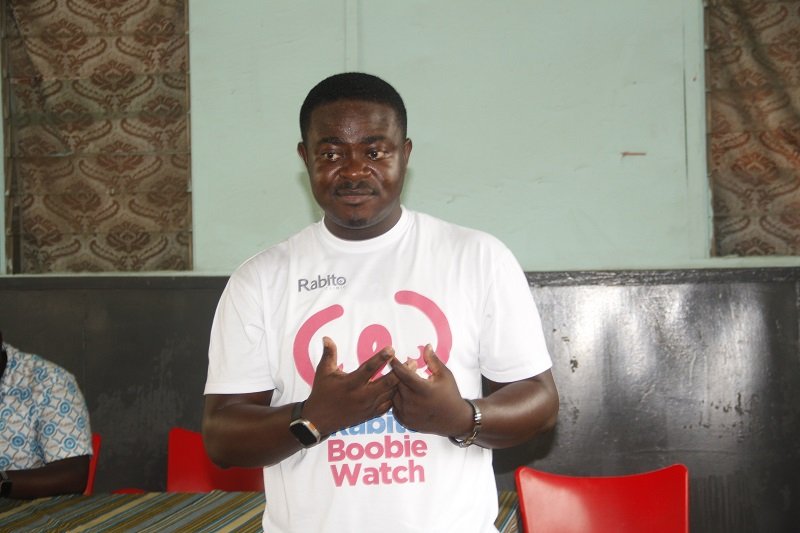
An Occupational Health Manager, Mr Samuel Agyekum, has dismissed widespread belief that wearing brassieres or using deodorant sprays causes breast cancer, stating that such claims are false and unscientific.
“The kind of bra you wear cannot give you breast cancer. At most, it may cause a minor skin irritation — that is if it’s too tight — but not cancer,” he explained.
Mr Agyekum made the clarification on Wednesday at a seminar with staff of the New Times Corporation (NTC) that preceded a staff screening, as part of activities to commemorate this year’s breast cancer month observation.
The screening was organised by Rabito Clinic, in collaboration with the Communication for Development and Advocacy Consult (CDA Consult). It was under the theme: ‘Female Journalist, Your Story Matters: Don’t Let Breast Cancer Silence You.’
According to Mr Samuel Agyekum, an officer from the Rabito Clinic, there was no research outcome that supports the claim that brassieres or deodorants trigger breast cancer. Rather, he attributed some of the triggers to sedentary lifestyles, consumption of ‘junk’ foods, smoking, drinking, among others.
Mr Agyekum urged women, especially, to prioritise self-breast examination (SBE) and go for regular medical checkups, explaining that early detection greatly improves the chances of survival.
He demonstrated practical steps in checking for unusual changes in breast size, shape, or colour, as well as lumps or nipple discharge. “If you don’t know your own body, you may miss important signs. Everyone should learn to look and feel,” he advised.
He further encouraged breastfeeding mothers to nurse their babies as long as possible, stating that breastfeeding provides significant health benefits to both mother and child. “Breastfeeding reduces a mother’s risk of developing breast cancer; it helps the uterus return to normal after childbirth,” he added.
Mr Banguu Delle, Chief Executive Officer of Rabito Clinic, indicated that the initiative was to empower female journalists to take charge of their health and continue to tell impactful stories.
“Increasing awareness and promoting self-examination among women will transform society and empower them to take control of their lives,” he stated, urging participants to “get screened and not allow breast cancer to silence their voices.”
Mr Francis Ameyibor, Executive Director of CDA Consult, said the outreach was extended to the NTC and four other media outlets to make screening accessible to more female journalists.
“You must first be healthy to report healthy news. Don’t only cover breast cancer stories, take part in them,” he emphasised.
According to the World Health Organisation (WHO), breast cancer is the most common cancer among women, affecting more than 2.1 million women annually.
By Beatrice Princess Kpeglah & Theresa Dzifa Tsetse
Join our WhatsApp Channel now!
https://whatsapp.com/channel/0029VbBElzjInlqHhl1aTU27






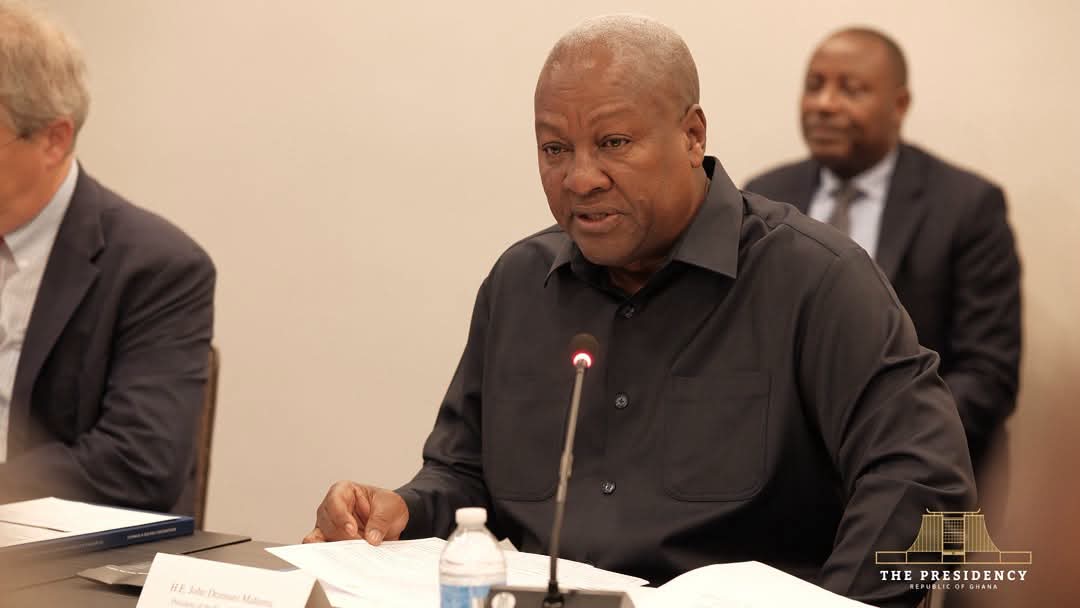
President John Dramani Mahama has called for stronger domestic capacity, effective institutions and sustainable financing as countries in the Global South continue to face growing debt pressures and disruptions in the international development landscape.
Speaking at a Presidential Roundtable organized by the Open Society Foundation in New York on Monday, on the sidelines of the 81st UN General Assembly, President Mahama said the priority for developing nations must be to create jobs, improve public services, build infrastructure and expand opportunities, particularly for young people.
“When I speak about sovereignty in this context, I am speaking about the capacity to act,” President Mahama stated.
He further stressed the need for stronger coordination across government, greater domestic resource mobilisation, sound financial management and institutions capable of delivering measurable results.
“Where an approach proves successful, the next step should be its adoption into public systems, local delivery institutions, and long-term financing models,” he added.
The high-level roundtable brought together presidents and chief executives of major global foundations to discuss sustainable development, financing and strengthening institutions across the Global South.
By Edem Mensah-Tsotorme
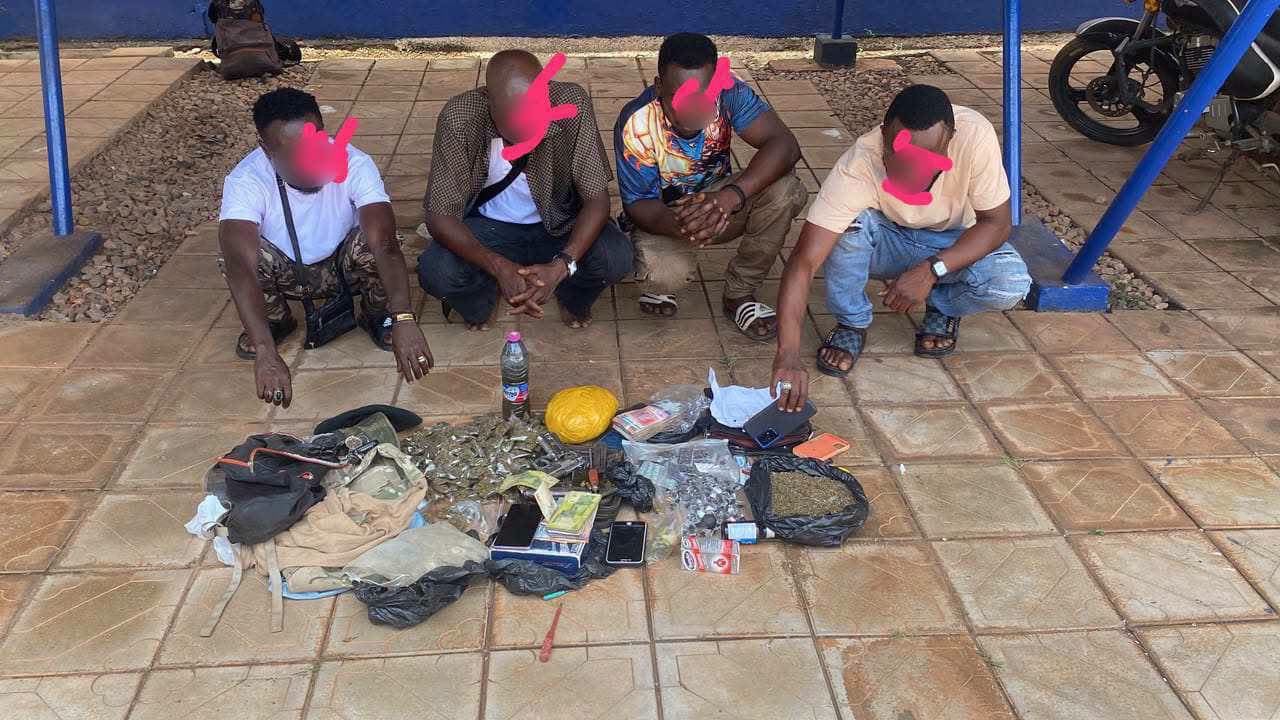
The Northern Regional Police Command has arrested five people during an operation at the Aboabo scraps area in Tamale, where two pistols, ammunition, suspected narcotics and cash were recovered.
The operation was carried out on Monday, September 21, 2026, at about 11:30 a.m. by the Special Operations Team, known as RED MARIA, as part of efforts to clamp down on drug peddling, drug use and other criminal activities in the Tamale Metropolis.
According to the police, the team acted on credible information and proceeded to the Aboabo scraps area, near the forest, where they arrested five suspects.
They were identified as Ibrahim Issahaku, 39; Mohammed John, 28; Mohammed Nawas, 25; Mohammed Osman Awal, 41; and Kwame Boateng, 28.
The police said a search at the residence of Ibrahim Issahaku led to the recovery of two foreign made pistols, two rounds of 9mm ammunition, one parcel of suspected Indian hemp and GH¢1,880 in cash.
The police also found GH¢18,825 concealed inside the motorcycle of Kwame Boateng at the ghetto. The money is suspected to be proceeds from the sale of narcotic drugs.
Other items recovered included 123 wraps of suspected Indian hemp, 12 sachets of 1mg Rohypnol, seven sachets of 250mg Tramadol, 111 wraps of suspected ashes and three motorbikes.
In a statement issued on Tuesday, September 22, 2026, the Northern Regional Police Commander, DCOP Wisdom Lavoe, said the suspects and the exhibits had been handed over to the Regional Drug Law Enforcement Unit for further investigation and the necessary action.
He added that the Regional Command would continue to conduct intelligence led operations to disrupt drug related activities and other criminal activities in the region.
By: Jacob Aggrey

 Entertainment1 week ago
Rhythms On Da Runway returns November 28 with 16th edition themed ‘Unbound’
- News1 week ago
48 Engineer Regiment to be major sub-contractor on Accra-Kumasi Expressway, $2bn ready- Prez Mahama
- Entertainment1 week ago
Ohemaa Mercy’s Tehillah Experience outfit was priestly regalia, not costume – Management clarifies