News
Stakeholders call for deeper consultation on Ghana’s national energy transition framework

- /home/u249204778/domains/spectator.com.gh/public_html/wp-content/plugins/mvp-social-buttons/mvp-social-buttons.php on line 27
Warning: Trying to access array offset on false in /home/u249204778/domains/spectator.com.gh/public_html/wp-content/plugins/mvp-social-buttons/mvp-social-buttons.php on line 27
&description=Stakeholders call for deeper consultation on Ghana’s national energy transition framework', 'pinterestShare', 'width=750,height=350'); return false;" title="Pin This Post">
- Share
- Tweet /home/u249204778/domains/spectator.com.gh/public_html/wp-content/plugins/mvp-social-buttons/mvp-social-buttons.php on line 72
Warning: Trying to access array offset on false in /home/u249204778/domains/spectator.com.gh/public_html/wp-content/plugins/mvp-social-buttons/mvp-social-buttons.php on line 72
&description=Stakeholders call for deeper consultation on Ghana’s national energy transition framework', 'pinterestShare', 'width=750,height=350'); return false;" title="Pin This Post">
Participants in renewable energy and efficiency have called for deeper consultation on Ghana’s national energy transition framework to avoid dire financial consequences on local economies.
For them, energy transition was important as the whole world was moving towards that and Ghana could not be left out, however, there were a lot of implications in the quest to move towards cleaner energy.
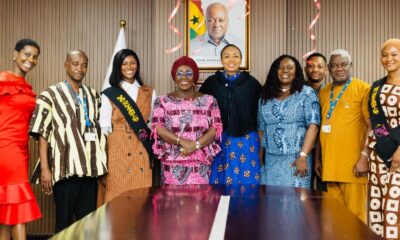
In a day’s youth participation in energy transition and domestic resources mobilisation workshop organised by the Strategic Youth Network Development (SYND), they indicated that the energy transition model used by developed countries could not be used for African countries that were still struggling to grow.
Dr Robert Bright Mawuko Sogbadji, leading expert in Nuclear physics and renewable energy explained that Ghana’s National Energy Framework seeks to minimise energy related indoor air pollution and its related illnesses but Ghana was reliant on the oil and gas industry and that if we say we were going to hastily transition, it meant that we were going to lose out on revenue.
For instance, he said Ghana raked in $1.6 billion from petroleum revenue in 2022 and, therefore, any rush in energy transition would create financial loss to the country.
He said it was important for all countries in Africa to strive to achieve energy access because failure to do so would affect sustainable development.
In doing so, he said efforts must be made to put in place improved infrastructure along the value chain from generation to distribution.
Dr Sogbadji also said that even as African countries strived for the right financing for sustainable energy transition, there must be the political will to push through policies that would help to achieve net zero.
“The various governments must also ensure that there is ease of doing business, aside from implementing policies that will attract private capital,” she added.
Denis Gyeyir, Senior Programmes of Natural Resource Governance Institute (NRGI) said the energy sector was one of the high emitting sectors which was key if Ghana was to achieve its net zero ambitions.
This, he said, would have a significant impact on women and children who are the main gatherers of firewood.
However, he said limitations such as challenging investment climate, uncertainty of available resources, limited technology capacity, insufficient experience in renewable energy development, human and socio-economic challenges and information gap were some barriers to renewable energy development in the country.
He called for an information labelling to display information to be available to customers to help encourage energy efficiency in the country.
BY BENEDICTA GYIMAAH FOLLEY



From policy to practice: Making productivity a national movement in Ghana- Part 1
Management Development and Productivity Institute (MDPI), Ghana
Productivity is not a corporate buzzword. It is the bedrock of national transformation. Until Ghana moves productivity from the language of policy documents into the lived reality of every worker, farmer, entrepreneur, and public servant, our development aspirations will remain aspirations.
Introduction: A Nation with Ambition but an Execution Gap
Ghana has never suffered from a shortage of ambition. From the bold industrialisation dreams of the Nkrumah era to the Ghana Beyond Aid agenda and successive medium-term development frameworks, the country has produced visionary policy blueprints that articulate what a prosperous, self-reliant Ghana should look like. Yet a persistent and troubling gap remains between policy design and policy delivery — between what is promised and what is practised.
Ghana’s labour productivity, while growing in pockets, continues to lag behind peers in sub-Saharan Africa and falls far short of what is required to accelerate structural transformation. According to the Africa Productivity Report, productivity growth on the continent remains constrained by low technology adoption, weak institutional frameworks, and limited investment in human capital. Ghana is not immune to these forces.
The question before us, therefore, is not whether Ghana needs a productivity revolution. It plainly does. The question is: how do we move from policy intent to national practice? How do we turn productivity from a technical concern of economists and planners into a movement that every Ghanaian owns and champions?
Why policy alone is not enough
Ghana has had a National Productivity Policy. It has had the Ghana Shared Growth and Development Agenda. It has the Coordinated Programme of Economic and Social Development Policies. These are serious, well-intentioned frameworks. So why does the average Ghanaian worker not feel them?
The answer lies in what management scholars call the implementation deficit — the widening chasm between policy as written and policy as lived. Several structural weaknesses deepen this gap in Ghana. First, our productivity agenda has remained largely top-down, conceived by technocrats and rolled out through bureaucracies without sufficient grassroots ownership.
Second, institutions mandated to drive productivity, including the Management Development and Productivity Institute (MDPI), the Ghana Enterprise Agency (GEA), and sector-specific agencies, have historically been under-resourced relative to their mandates. Third, the culture of measurement is weak: what is not measured is rarely improved, and in many of our workplaces and public institutions, productivity is neither tracked nor rewarded.
There is also the matter of culture. Productivity is ultimately a behavioural phenomenon. It thrives where there is discipline, accountability, a sense of urgency, and institutional trust. Building that culture in Ghana requires more than new policies. It requires sustained leadership, behavioural change, and a shift in what we celebrate as a society.
Lessons from the Kaizen Philosophy: Small changes, big results
One of the most instructive case studies in translating productivity policy into national practice comes from an unlikely source, Japan’s post-war reconstruction. Faced with the ruins of industrial capacity and a shattered economy, Japan did not simply craft more ambitious plans. It changed the way every worker, manager, and citizen thought about their daily work. The Kaizen philosophy, meaning “change for the better,” spread from factory floors to hospitals, schools, government offices, and eventually entire supply chains.
The Africa Kaizen Initiative (AKI), championed by the African Union Development Agency-NEPAD and supported by Japan’s International Cooperation Agency (JICA), has begun introducing these principles to the African continent, including Ghana. The approach is deliberate: start with enterprises and individuals, embed a culture of continuous improvement at the operational level, and then allow that culture to scale upward into sectors, value chains, and national systems.
The lesson Ghana should draw is powerful: national productivity movements do not begin with national policies. They begin with the person at the desk, the farmer in the field, the nurse on the ward, the teacher in the classroom, deciding that today, they will do their work a little better than yesterday. Policy creates the enabling environment. But the movement must be human.
Five pillars for making productivity a national movement
Drawing on global best practices and Ghana’s specific development context, I propose five pillars for transforming productivity from a policy commitment into a national movement.
1. Embed productivity in education and early career development
No nation sustains a productivity culture without instilling its values from the earliest stages of human development. Ghana’s educational curriculum at the basic, secondary, and tertiary levels must give explicit attention to time management, work ethic, quality consciousness, problem-solving, and continuous improvement. Technical and Vocational Education and Training (TVET) programmes should become rigorous schools of craft excellence, not holding grounds for those who could not access universities. Employers, universities, and TVET institutions must collaborate to define what “productive work” looks like in Ghana’s context and ensure graduates are equipped to deliver it.
2. Build a national productivity measurement system
You cannot improve what you do not measure. Ghana needs a robust, regularly updated national productivity database that tracks productivity across sectors, enterprises, and regions. The Ghana Statistical Service, MDPI, and sector ministries must collaborate to develop key productivity indicators, including output per worker, total factor productivity, and process efficiency ratios, and to report on them publicly. This data should inform budget allocation, incentive design, and policy adjustments. Transparency about where Ghana stands and which sectors are improving fosters accountability and healthy competition.
By Ethel Ansah-Antwi
It will be interesting to check the number of times the phrase “plans are far advanced” and the other one “it is in the pipeline” appear in responses of politicians to questions from their constituents and their public releases.
It appears they are taught this in special classes organised for them in how to respond to questions during public interactions like town hall meetings etc. Whenever you hear someone speaking on TV or Radio and using such phrases, the probability of him or her being a politician, a government spokesman or an official of some sort is very high.
They know they are lying to you but they will still use such language to make you believe that the issues that are of concern to you are being addressed. The worst of them are those with the title Government Spokesman. They will tell you lies with a straight face and attempt to defend the indefensible.
It reminds me of a cartoon someone sent to me. It showed a woman seriously admonishing his little boy and saying to him “If you do not stop this lying, you will grow up to become a Government Spokesman.”
A very interesting observation from the lady but it is a factual statement. How many times have we not heard statements from government spokesmen, only for us to realise as they say, a few moments later, that they were a pack of lies or to be charitable, a pack of misleading statements.
This attitude is so entrenched in our society, irrespective of the government in power. What worries me is that, these persons, would still go to church on Sundays and mosques on Fridays. They may even be leaders in those churches and mosques. How they are able to live with their conscience, is something worth researching into.
We may have to design a system that will compel politicians to be transparent so that these political statements that seek to deceive the public, can be reduced if not completely eradicated. The funny thing is that, they never say how long the pipe is. All they say is that, it is in the pipeline.
The integrity of the political leaders, must be evident for people to trust in the democratic experiment we have embarked on in this Fourth Republic. The culture in other places is that, leaders who are found to have lied, resign voluntarily.
This is where we have to become deliberate in pushing for such a culture to be adopted and entrenched in our society for good governance to thrive.
Let our political discourse be shaped by language that projects truth and transparency. This is the only way, the citizens will begin to have faith that they have lost in the democracy we are practicing.
Let us do all we can, as a people, to make values of integrity and accountability become part of the values we cherish as a nation, to compel our leaders to aspire to live by them to help all of us.
This is because, should democracy fail in this fourth republic, the consequences will be disastrous. Let us pray for leaders as the Bible instructs so that the deceitful phrases of it is in the pipeline and plans are far advanced, when those declaring them know they are lying, will be a thing of the past. God bless.
By Laud Kissi-Mensah