News
The fusion of sport and music and the opportunities for economic benefits in Africa


- /home/u249204778/domains/spectator.com.gh/public_html/wp-content/plugins/mvp-social-buttons/mvp-social-buttons.php on line 27
https://spectator.com.gh/wp-content/uploads/2023/08/Untitled1.png&description=The fusion of sport and music and the opportunities for economic benefits in Africa', 'pinterestShare', 'width=750,height=350'); return false;" title="Pin This Post">
- Share
- Tweet /home/u249204778/domains/spectator.com.gh/public_html/wp-content/plugins/mvp-social-buttons/mvp-social-buttons.php on line 72
https://spectator.com.gh/wp-content/uploads/2023/08/Untitled1.png&description=The fusion of sport and music and the opportunities for economic benefits in Africa', 'pinterestShare', 'width=750,height=350'); return false;" title="Pin This Post">
There aren’t many things in this world that hold as important a place in so many people’s hearts – that captivates, inspires, and brings people together in community and celebration – like both sports and music does.
More than just a sound, music connects us to one another, to our culture, our heritage and tells our stories. It allows us to share how we’re feeling, gives us an outlet to express ourselves, and makes our lives more vibrant. And more than just a game, sports can bind people from different backgrounds, cultures, and beliefs in support of their favourite club or team. Through sport we form bonds with one another by watching our team overcome all odds, achieve something new, grab victory from the jaws of defeat or fall short of the win. It helps us feel like we are a part of something bigger than ourselves. Most importantly, both sports and music are simply just fun.
Music has always resonated with sports. From as far back as the 1992 Olympics when the song, Barcelona by Freddie Mercury and Montserrat Caballé was featured as the theme song, to the 2006 Germany World Cup, The Time of Our Lives theme song by Il Divo and Toni Braxton, music has always acted as a catalyst that enables sports stick. In Africa, songs like Jerusalema by Master KG and Nomcebo Zikode, Wavin’ Flag by K’NAAN, Waka Waka by Shakira and Issa Goal by Naira Marley, Lil Kesh and Olamide have also been associated with soccer. African soccer legends like Drogba, Eto’o and Okocha have also been known to be quoted in the lyrics of songs. Recently, Burna Boy’s performance at the Champions league final this year also reinforces the obvious bond between music and sports.
Very much two sides of the same coin, it’s no surprise then that when we bring sports and music together, it can have a powerful impact. Together, they can strengthen communities, fuel political processes, and drive socio-cultural and economic change. This is especially true in Africa which boasts the youngest population in the world, at more than 400 million individuals aged between 15 and 35. Spotify data shows that listeners aged between 18-24 created the most playlists with the word ‘sport’ in them, followed by 25-29 year olds, a clear indication that Africa’s youth is on the pulse of the synergy between music and sports.
This young population continues to grow rapidly while African talent across both spheres of music and sports is booming in abundance. This is demonstrated by the rise in popularity and proliferation of African genres like Amapiano and Afrobeats internationally; Spotify data shows that African music’s Year on Year growth in international markets rivals that of KPOP. Its leading artists such as Burna Boy, Davido, Tiwa Savage, Rema, DJ Maphorisa, Uncle Waffles and Black Coffee are taking over global stages. Meanwhile, many African athletes are key players for international clubs across sports such as basketball, football and rugby.
With Africa’s music market expected to show an annual growth rate of 11.32% between now and 2027, resulting in a projected market volume of US$47 million by 2027 and total revenue in the sports market on the continent expected to grow at an annual rate of 9.02% between now and 2027, resulting in a projected market volume of $8 million by 2027, it’s clear then that the fusion of sport and music offers substantial potential to help drive economic growth and development.
We can already see this impact realised through partnerships such as the collaboration between Spotify and European football club F.C. Barcelona. Under the first-of-its-kind partnership, the two worked together to bring the worlds of music and football together by giving a global stage to players and artists and building new opportunities to connect with fans at the home of Barcelona’s fans, Spotify Camp Nou. Some of the African artists who have been featured in the 99,000 seat stadium’s advertising board include Firebody DML, CKay, Omah Lay and DJ Spinall. This is in line with Spotify’s aim to leverage F.C. Barcelona’s global fan base to fuel discovery and engagement with artists in turn creating more opportunities for those artists to live off of their art.
The US National Basketball Association (NBA) also took advantage of the collaborative power of sport and music during its All-Star Weekend this year by bringing artists like Burna Boy, Tems, and Rema together as performers for its halftime show.
Spotify has also partnered with youth basketball non-profit organisation Giants of Africa, for the inaugural Giants of Africa Festival between 12 – 19 August in Kigali, Rwanda. Since 2003, Giants of Africa has positively impacted over 40,000 African youth across 17 countries providing access to basketball courts, camps and clinics. By joining forces, the two will bring together the best of African youth, basketball, music, culture, and entertainment on the continent and beyond to showcase a shared vision for Africa’s future. Playlists with the word ‘basketball’ on Spotify have increased by over 1,300% since 2020, so this partnership is happening at the opportune moment.
The Giants of Africa festival will culminate in a closing ceremony, presented by Spotify, where some of the biggest African artists like Davido, Tiwa Savage, Tyla and Bruce Melodie will perform. These artists’ core listeners on Spotify are aged between 18-29, further underlining Giants of Africa and Spotify’s shared commitment to investing in African youths.
With such a vast pool of particularly young sport and musical talent to be found on the African continent, it’s clear that investment in their development to compete on an international level will drive socio-economic and cultural impact across communities on the continent. By leveraging the connective power of both sport and music together, we can not only create a platform for this young talent but also attract much-needed investment into our local sports and music industries which would help us to discover, nurture and develop the artists and athletes of the future.
By Jocelyne Muhutu-Remy, Spotify Sub-Saharan Africa Managing Director


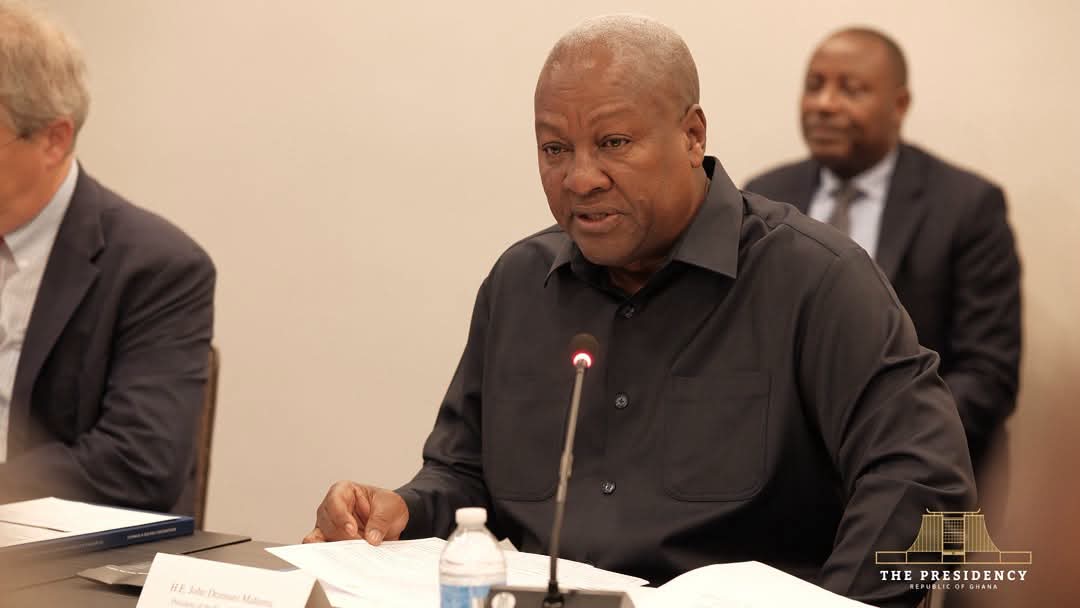
President John Dramani Mahama has called for stronger domestic capacity, effective institutions and sustainable financing as countries in the Global South continue to face growing debt pressures and disruptions in the international development landscape.
Speaking at a Presidential Roundtable organized by the Open Society Foundation in New York on Monday, on the sidelines of the 81st UN General Assembly, President Mahama said the priority for developing nations must be to create jobs, improve public services, build infrastructure and expand opportunities, particularly for young people.
“When I speak about sovereignty in this context, I am speaking about the capacity to act,” President Mahama stated.
He further stressed the need for stronger coordination across government, greater domestic resource mobilisation, sound financial management and institutions capable of delivering measurable results.
“Where an approach proves successful, the next step should be its adoption into public systems, local delivery institutions, and long-term financing models,” he added.
The high-level roundtable brought together presidents and chief executives of major global foundations to discuss sustainable development, financing and strengthening institutions across the Global South.
By Edem Mensah-Tsotorme
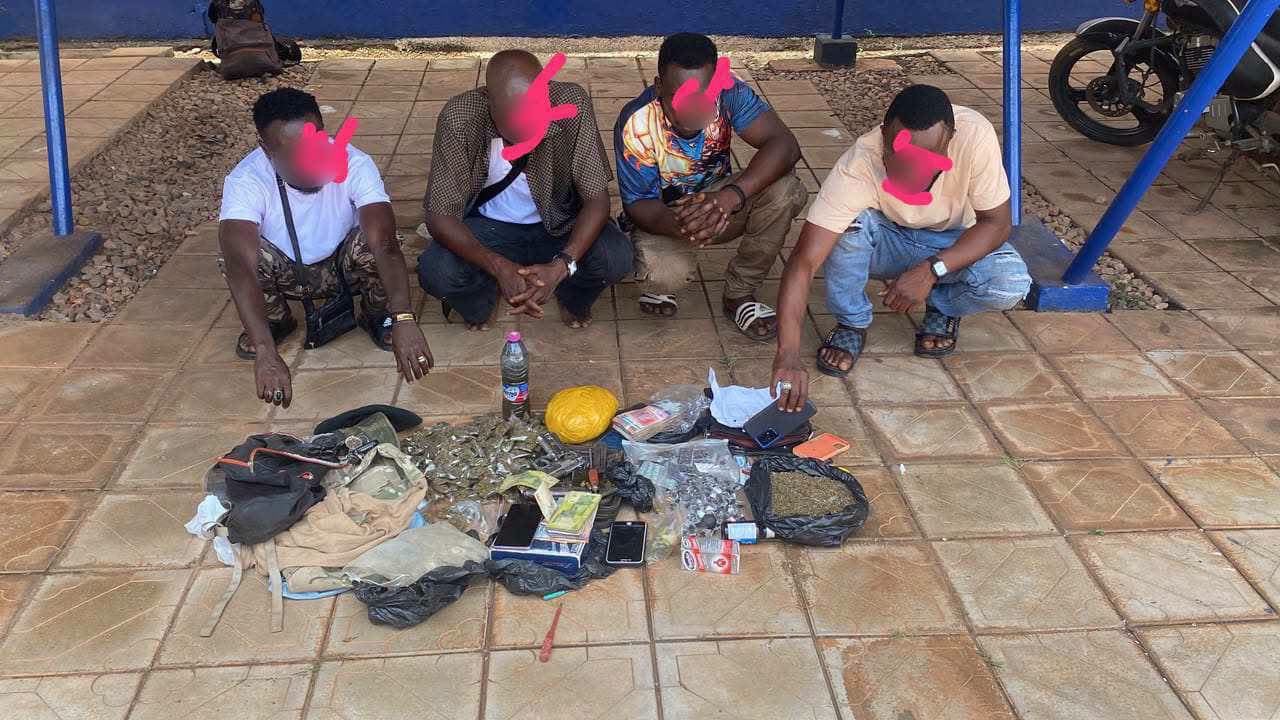
The Northern Regional Police Command has arrested five people during an operation at the Aboabo scraps area in Tamale, where two pistols, ammunition, suspected narcotics and cash were recovered.
The operation was carried out on Monday, September 21, 2026, at about 11:30 a.m. by the Special Operations Team, known as RED MARIA, as part of efforts to clamp down on drug peddling, drug use and other criminal activities in the Tamale Metropolis.
According to the police, the team acted on credible information and proceeded to the Aboabo scraps area, near the forest, where they arrested five suspects.
They were identified as Ibrahim Issahaku, 39; Mohammed John, 28; Mohammed Nawas, 25; Mohammed Osman Awal, 41; and Kwame Boateng, 28.
The police said a search at the residence of Ibrahim Issahaku led to the recovery of two foreign made pistols, two rounds of 9mm ammunition, one parcel of suspected Indian hemp and GH¢1,880 in cash.
The police also found GH¢18,825 concealed inside the motorcycle of Kwame Boateng at the ghetto. The money is suspected to be proceeds from the sale of narcotic drugs.
Other items recovered included 123 wraps of suspected Indian hemp, 12 sachets of 1mg Rohypnol, seven sachets of 250mg Tramadol, 111 wraps of suspected ashes and three motorbikes.
In a statement issued on Tuesday, September 22, 2026, the Northern Regional Police Commander, DCOP Wisdom Lavoe, said the suspects and the exhibits had been handed over to the Regional Drug Law Enforcement Unit for further investigation and the necessary action.
He added that the Regional Command would continue to conduct intelligence led operations to disrupt drug related activities and other criminal activities in the region.
By: Jacob Aggrey

 Entertainment1 week ago
Rhythms On Da Runway returns November 28 with 16th edition themed ‘Unbound’
- News1 week ago
48 Engineer Regiment to be major sub-contractor on Accra-Kumasi Expressway, $2bn ready- Prez Mahama
- Entertainment1 week ago
Ohemaa Mercy’s Tehillah Experience outfit was priestly regalia, not costume – Management clarifies