News
Use multi-dimensional approach to tackle poverty – Prof. Kumi Boateng

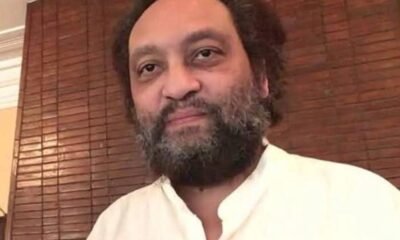
The Dean of the Faculty of Planning and Quality Assurance, at the University of Mines and Technology (UMaT) at Tarkwa in the Western Region, Professor Bernard Kumi-Boateng, says a multi-dimen¬sional approach is key to analyse data to tackle Ghana’s poverty divide.
Prof. Kumi-Boateng made the dec¬laration at a lecture at UMaT, on the topic ‘Mapping the poor in Ghana: A geospatial multi-dimensional poverty index approach.’
Prof. Kumi-Boateng said that, accurate data provided a very good platform for planning and implemen¬tation of poverty alleviation pro¬grammes.
He said poverty issues had gained the attention of policymakers, academics and non-governmental or-ganisations, adding that, successive governments, over the years, had developed and implemented sever¬al development policy frameworks for poverty reduction, such as the Ghana Poverty Reduction Strategy 1, School Feeding Programme and the Capitation Grant.
However, he noted that the country was still faced with several poverty-related challenges, includ¬ing high levels of inequality, low human development, and regional disparities.
He said, the most recent data from the Ghana Statistical Service (GSS) showed there was a decline in poverty levels across the nation, and that, the international poverty rate was estimated at 20.5 per cent of the population in 2022.
He also revealed that in 2023, an estimated 2.9 million people in Gha¬na were living in extreme poverty, majority being male with 1.5 million of the number living on less than 1.9 dollars daily.
“In many developing countries, such as Ghana, the definition of pov ¬erty remains rooted in questionable assumptions, with the use of income as a determinant. It is problematic; it does not provide a full picture of the command of resources that an individual or household possesses,” Prof Kumi-Boateng said.
He explained that, using a multi-faceted approach, could de¬termine the number of children who go to school, people with drinking water, and child mortality, reveal¬ing that, “we have the capability to map them to help policymakers and target areas which are endemic.”
He, therefore, called on the poli¬cymakers not to assume that Accra was rich, because most indicators on overcrowding and drinking water showed “Accra is multi-dimensional¬ly poor.”
He urged policy analysts not to always think about income as the single source to determine those who were poor or rich.
The five northern regions record¬ed the highest poverty incidence ranging from 65 per cent to 80 per cent with poverty head counts (inci¬dence) in Volta Region, also remain¬ing high (52 per cent).
From Clement Adzei Boye, Tarkwa

News
GES directs Ashanti Regional, Obuasi Municipal Education Directors to step aside over Obuasi SHTS scandal

The Management of the Ghana Education Service (GES) has directed the Ashanti Regional Director of Education, Dr. William Amankrah Appiah, and the Obuasi Municipal Director of Education, Mr. Kwamena Owusu-Nketiah, to step aside with immediate effect.
The directive forms part of ongoing investigations into allegations of sexual misconduct involving the headmaster of Obuasi Senior High Technical School (SHTS), Mr. Zakaria Abdulai.
According to GES, the decision is intended to ensure that the investigations proceed without potential interference, nor the perception of it.
The two directors are to hand over their offices and all state property in their possession to the Deputy Ashanti Regional Director of Education, Mr. Thomas Kwame Boateng.
Management added that the headmaster, Mr. Zakaria Abdulai, also remains interdicted and therefore urged the public to ignore any news circulating that he has been cleared.
Management is calling for calm, support and cooperation as thorough investigations into the matter continue.
By Edem Mensah-Tsotorme
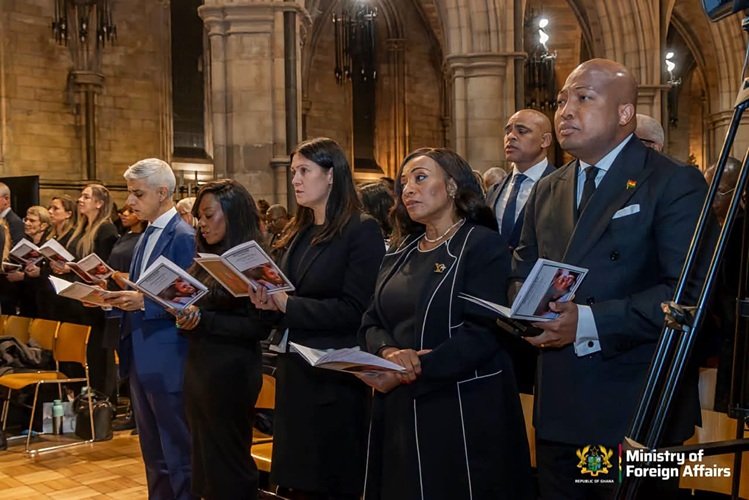
The Minister for Foreign Affairs, Samuel Okudzeto Ablakwa, has joined the family of the late Professor Jason Atta Kwei Arday, the Ghanaian community in the UK, and other dignitaries for a memorial service in Southwark, UK.
In a post, Mr. Ablakwa described the service as deeply moving and unforgettable, held in honour of the late professor’s memory.
According to him, in keeping with the government’s pledge, he joined the family, Ghana’s High Commissioner to London, British MPs, Ministers, the Mayor of London, Cambridge scholars, Prof. Arday’s students and loved ones to pay respects and honour his inspiring legacy.
Mr. Ablakwa noted that Prof. Arday’s accomplishments as the youngest Black professor appointed at the University of Cambridge and his widely appreciated charitable contributions will continue to inspire generations.
“The Government and People of Ghana will continue to stand by our compatriots everywhere they are in the world. As we do so, we profess our commitment to justice, equality and the creation of a new world,” he said.
He prayed for fortitude for the family in what he described as an extraordinarily difficult time.
“We shall always remember Prof. Arday for his response when asked what he will wish to do to change the world: ‘I would take a thread and a needle, and I’d interweave love into our society’,” Mr. Ablakwa added.
By Edem Mensah-Tsotorme