News
Religious institutions urged to engage sign language interpreters

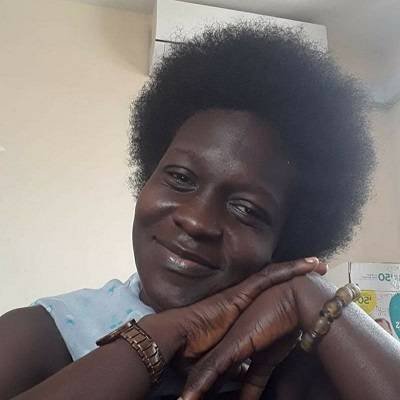
Ms Nukunu Akushika Deku, an Advocate for Persons who are Deaf
An advocate for the deaf, Ms. Nukunu Akushika Deku, has asked religious institutions to engage the services of sign language interpreters to make their meetings friendly for the hearing-impaired in society.
In an interview with The Specta¬tor on Tuesday, Ms. Deku, pointed out that the deaf have not been fairly treated in this regard and said it was about time every religious institution saw the need for inter¬preters to facilitate communication between the hearing community and the deaf.
The absence of the sign language interpret¬ers in the churches, mosques and religious institutions has for decades, restricted the deaf from joining their events, a situation Ms Deku found as discrimi¬natory.
“Clearly, this de¬feats the purpose for the establishment of these institutions whose messages are supposed to be propagated to all manner of persons, re¬gardless of their physical challenges,” she said.
The deaf, she said, “just like other physically chal¬lenged persons, suffer various forms of discrimination and injustice and to think that the church or the mosque and others which should be places for them to find solace have not addressed these concerns; it leaves much to be desired.”
She recalled as a child how she followed her grandmother to church and there was no sign language interpretation, making her uncom¬fortable because she could not hear to benefit in any way.
Ms. Deku said her grandmother explained that she did not want her to go to churches with interpreters for the deaf because she hoped to hear with time.
She said her ability to follow church proceedings was a huge relief to her and so she could appreciate the inconvenience religious institu¬tions which do not have sign lan¬guage interpreters were taking their members through.
She said if the churches and mosques assisted deaf persons to un¬derstand their sermon and activities, it would encourage more of them to patronise their activities and begin to enjoy that sense of belonging.
Ms. Deku said the current state of affairs made deaf persons feel excluded because every activity obviously was not planned with them in mind.
She questioned how they were supposed to understand readings, teachings, songs and announcements if there were no sign language inter¬pretation.
She said it was about time reli¬gious institutions prioritised the deaf like all other persons by train¬ing sign language interpreters to bridge the gap between the hearing and non-hearing.
She said when the deaf were offered the platform, they would be efficient to enhance growth wherev¬er they find themselves.
She bemoaned the development where decisions or major policies about them can be taken without consulting them and appealed to religious institutions to take the initiative to embrace the deaf com¬munity.
From Dzifa Tetteh Tay, Adjei Kojo

News
GES directs Ashanti Regional, Obuasi Municipal Education Directors to step aside over Obuasi SHTS scandal

The Management of the Ghana Education Service (GES) has directed the Ashanti Regional Director of Education, Dr. William Amankrah Appiah, and the Obuasi Municipal Director of Education, Mr. Kwamena Owusu-Nketiah, to step aside with immediate effect.
The directive forms part of ongoing investigations into allegations of sexual misconduct involving the headmaster of Obuasi Senior High Technical School (SHTS), Mr. Zakaria Abdulai.
According to GES, the decision is intended to ensure that the investigations proceed without potential interference, nor the perception of it.
The two directors are to hand over their offices and all state property in their possession to the Deputy Ashanti Regional Director of Education, Mr. Thomas Kwame Boateng.
Management added that the headmaster, Mr. Zakaria Abdulai, also remains interdicted and therefore urged the public to ignore any news circulating that he has been cleared.
Management is calling for calm, support and cooperation as thorough investigations into the matter continue.
By Edem Mensah-Tsotorme
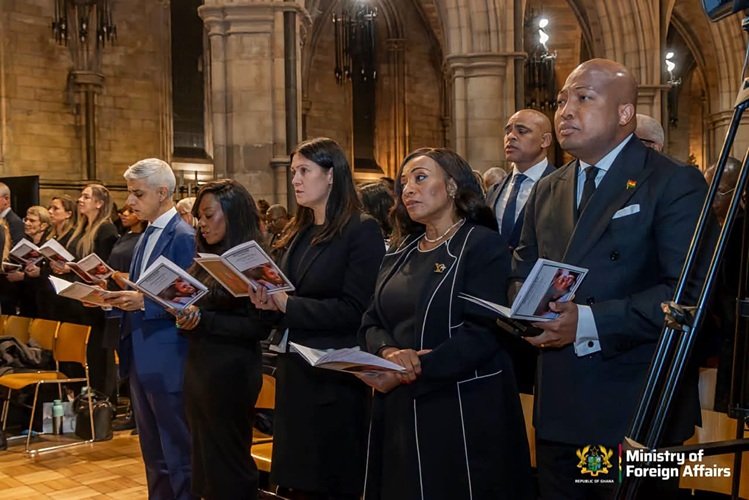
The Minister for Foreign Affairs, Samuel Okudzeto Ablakwa, has joined the family of the late Professor Jason Atta Kwei Arday, the Ghanaian community in the UK, and other dignitaries for a memorial service in Southwark, UK.
In a post, Mr. Ablakwa described the service as deeply moving and unforgettable, held in honour of the late professor’s memory.
According to him, in keeping with the government’s pledge, he joined the family, Ghana’s High Commissioner to London, British MPs, Ministers, the Mayor of London, Cambridge scholars, Prof. Arday’s students and loved ones to pay respects and honour his inspiring legacy.
Mr. Ablakwa noted that Prof. Arday’s accomplishments as the youngest Black professor appointed at the University of Cambridge and his widely appreciated charitable contributions will continue to inspire generations.
“The Government and People of Ghana will continue to stand by our compatriots everywhere they are in the world. As we do so, we profess our commitment to justice, equality and the creation of a new world,” he said.
He prayed for fortitude for the family in what he described as an extraordinarily difficult time.
“We shall always remember Prof. Arday for his response when asked what he will wish to do to change the world: ‘I would take a thread and a needle, and I’d interweave love into our society’,” Mr. Ablakwa added.
By Edem Mensah-Tsotorme