News
Unmasked Mentoring supports Autism Awareness Care & Training


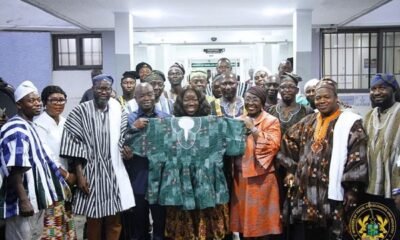
UNMASKED Mentoring, a youth-focused leadership and character development initiative, has donated to the Autism Awareness Care & Training (AACT) as part of its commitment to empathy, service, and inclusive social development.
The presentation, which brought together parents, mentors, mentees, and representatives of AACT, highlighted the growing role of young people in championing social causes, particularly support for children living with autism.
Items donated included six gallons of oil, three bags of rice, bags of washing powder, packs of toilet rolls, paper napkins, and bottled water. The organisation also presented a cheque for GH₵10,000 to the centre.
The founder of Unmasked Mentoring, Mr. Richard Akita, in his address said the initiative was guided by the mantra, “One life, make it count.” He said the organisation’s principle serves as both a philosophy and a responsibility, encouraging young people to live purposefully and positively impact others.
He mentioned that the donation exercise, initially designed as a learning experience for mentees, evolved into a deeper lesson in leadership and compassion.
“The mentees, mostly children and adolescents, are encouraged to understand that leadership transcends age and position, and is rooted in empathy, responsibility and service to others,” Mr. Akita added.
According to Mr. Akita, Unmasked Mentoring acknowledges the immense potential of children living with autism, noting that despite their creativity and unique abilities, many face barriers due to limited awareness and resources. He commended AACT for its tireless efforts in providing care, therapy, education, and dignity to children with autism, often under challenging conditions.
He explained that the donation symbolised the collective efforts of parents who supported the initiative, mentors who guided the process, and mentees who actively chose to serve others as a way of making their lives count.
Receiving the donation, Mr. Abeiku Grant of AACT thanked Unmasked Mentoring, describing the gesture as a meaningful show of solidarity and encouragement that would strengthen their work. He called on other benevolent organisations to come in and support the centre.
By Esinam Jemima Kuatsinu
Join our WhatsApp Channel now!
https://whatsapp.com/channel/0029VbBElzjInlqHhl1aTU27



THE 2026 Akwambo Festival at Gomoa Amoanda in the Ga East District has been held with a call for unity, peace, and collective action towards local development.
The festival, celebrated under the theme: ‘Unity, Peace and Development,’ provided a platform for community leaders and residents to highlight critical challenges affecting health, education, water, and sanitation in the area.
The durbar took place on Saturday at the Town Square of Gomoa Amoanda, attracting chiefs, elders, and residents from across the district.
Addressing the gathering, the Odikro of Gomoa Amoanda, Nana Kofi Budu Sersah IV, appealed for urgent government and stakeholder support to address the lack of a CHPS compound, reliable drinking water, proper school infrastructure, and additional teachers.
He disclosed that land had been allocated for the construction of a CHPS compound and called for support from the government, corporate bodies, and benevolent individuals.


Touching on sanitation, Nana Budu Sersah IV noted that the construction of a public toilet had stalled due to financial constraints and appealed for assistance to complete the project.
Representing the Central Regional Minister, Eduamoah Ekow Panyin Okyere, the District Chief Executive for Gomoa East, Margaret Naana Ackom, pledged government support for key development initiatives.
She announced a donation of 20 bags of cement for the public toilet and assured further assistance for other projects once land was made available.
The Prampimhene of the Awutu Traditional Area in the Central Region, Nana Okromansah Klordey I, who also serves as the Mankrado of Pakro Akuapim in the Eastern Region under the stool name of Nana Ntow Amoah II, expressed concern over rising drug abuse among youth.
By Stephanie Birikorang
Join our WhatsApp Channel now!
https://whatsapp.com/channel/0029VbBElzjInlqHhl1aTU27
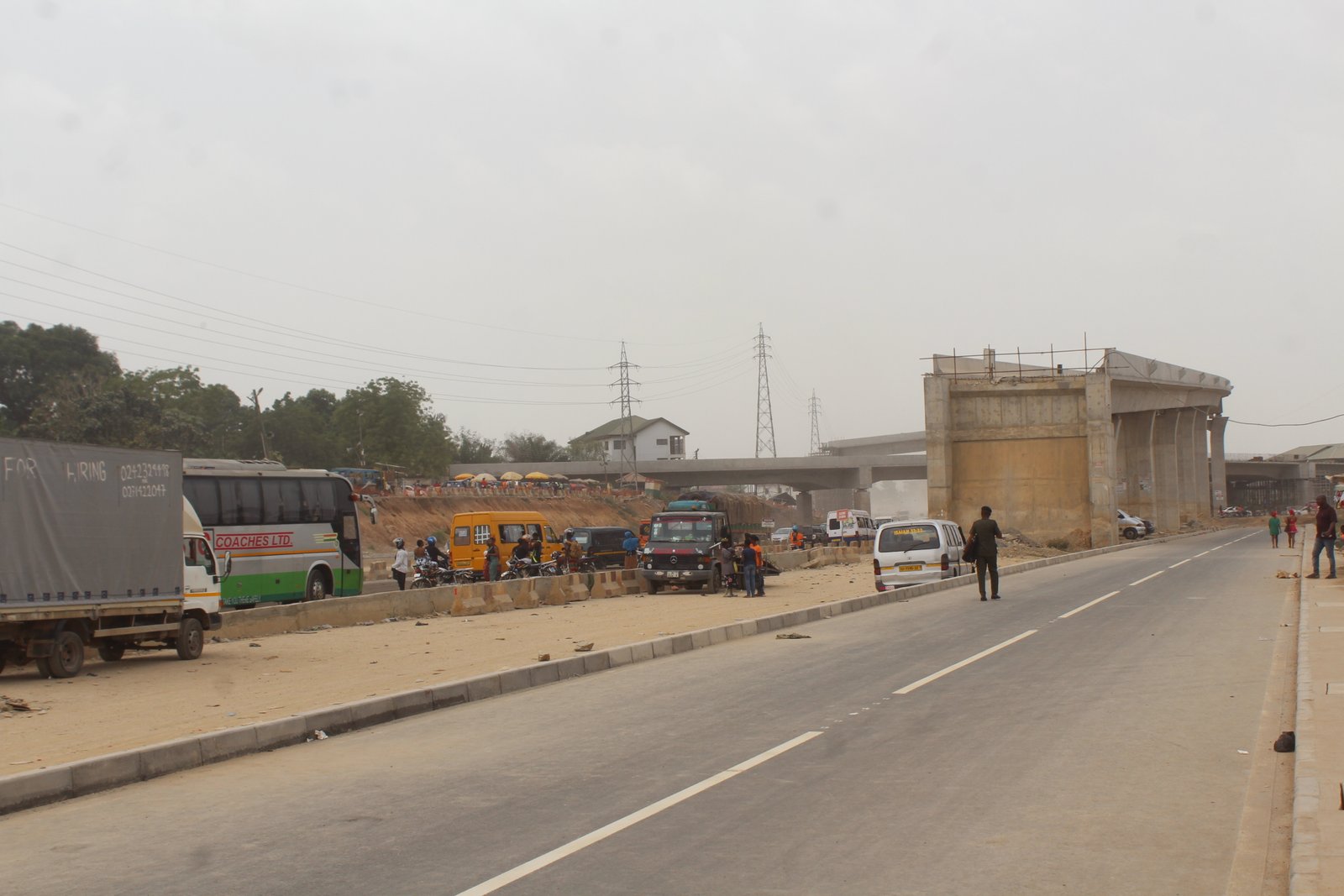
THE Ofankor–Nsawam road commuters appear to have breathe a sigh of relief over the progress of work on the road project which has reached 81 per cent completion.
A visit by The Spectator to the project site revealed that a significant portion of the road had already been asphalted, while most of the storm drains and culverts had been completed.
In addition, the various flyovers and pedestrian footbridges were at different stages of completion.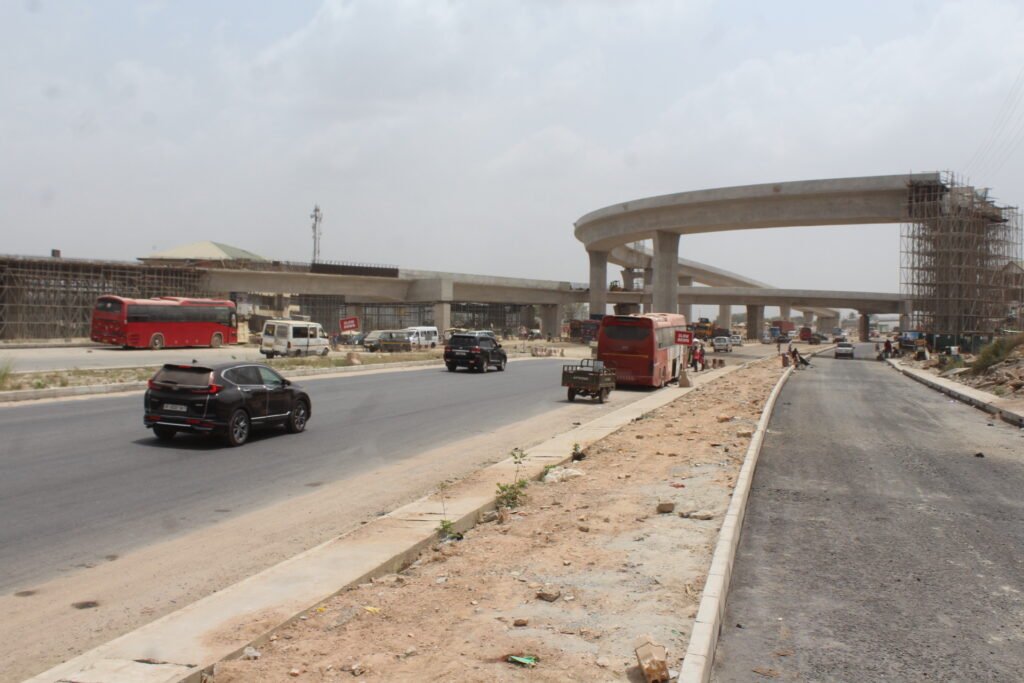


This appears to be the best news for commuters that ply the road daily as information indicated that the project would be completed on schedule.
According to the Chief Resident Engineer, Kwabena Bempong, steady progress had been made across the 33.4-kilometre stretch.
He expressed the hope that the remaining works would be delivered within the revised timeline, subject to the resolution of outstanding land issues at Nsawam Junction.
The Ofankor–Nsawam road forms part of National Route Six (N6), a major arterial highway linking Accra to the northern parts of the country and extending further to the Sahelian regions of West Africa.
The project scope includes the construction of four major interchanges at Amasaman, Pobiman, Medie and Nsawam Junction, alongside service roads and other ancillary facilities and is valued at $346.5 million.
By Kingsley Asare
Join our WhatsApp Channel now!
https://whatsapp.com/channel/0029VbBElzjInlqHhl1aTU27