News
UN marks International Peacekeepers Day

- /home/u249204778/domains/spectator.com.gh/public_html/wp-content/plugins/mvp-social-buttons/mvp-social-buttons.php on line 27
https://spectator.com.gh/wp-content/uploads/2020/05/Peacekeepers-Ghanaian-Female-UN-Peacekeepers.jpg&description=UN marks International Peacekeepers Day', 'pinterestShare', 'width=750,height=350'); return false;" title="Pin This Post">
- Share
- Tweet /home/u249204778/domains/spectator.com.gh/public_html/wp-content/plugins/mvp-social-buttons/mvp-social-buttons.php on line 72
https://spectator.com.gh/wp-content/uploads/2020/05/Peacekeepers-Ghanaian-Female-UN-Peacekeepers.jpg&description=UN marks International Peacekeepers Day', 'pinterestShare', 'width=750,height=350'); return false;" title="Pin This Post">
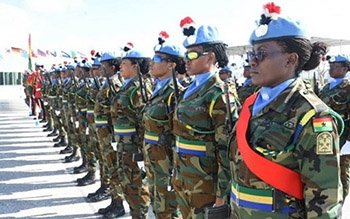
Amidst the global COVID-19 pandemic, a virtual solemn ceremony presided by the UN Secretary, General Antonio Guterres, is being held at the United Nations Headquarters in New York today, to commemorate the International Day of UN Peacekeepers.
It is in memory of those who lost their lives in the course of peacekeeping operations across the globe and also solidarise with the civilians, police, military who serve under the UN flag for their professionalism, dedication, and courage in the global maintenance of peace and security.
The virtual ceremony, in response to the WHO social distancing health protocol following the COVID-19 pandemic, is a departure from the traditional hoisting of flag with military parade as is the practice in many countries, including Ghana.
The UN chief lays a wreath in memory of the slain peacekeepers and awards the Dag Hammarskjold medal to 83 peacekeepers who lost their lives in 2019 in the line of duty.
The Peacekeeping Gender Advocate of the Year award will also be presented to the recipient at the virtual ceremony.
The 72nd anniversary of the peacekeepers day is on the theme “Women in peacekeeping -A key to peace’’ in recognition of the pivotal role of women in promoting sustainable peace and overall peacekeeping performance.
“Women peacekeepers are on the frontline in this fight and we are grateful for their dedication and sacrifice in supporting COVID-19 response efforts as well as in implementing the mission’s mandate within the current constraints and amidst difficult circumstance,” the UN website said.
The day is set aside to commemorate the first UN peacekeeping mission on May 29, 1948 when the UN Security Council authorised the deployment of a number of military observers to the Middle East to form the United Nations Truce Supervision Organisation to monitor the Armistice Agreement between Israel and its Arab neighbours.
Since then, more than one million personnel from troop contributing countries under UN have served in 72 UN peacekeeping operations, impacting the lives of millions of people and saving countless lives.
According to the UN, it has deployed more than 95,000 military, police and civilian personnel to maintain peace and security in 13 hotspots across the globe.
Ghana is recognised as one of the top 10 troop contributing countries, having first deployed troops in 1960, under the United Nations Operation in the Congo to help restore calm and order in that country.
Ahead of the day, the United Nations Information Centre in Accra in partnership with the United Nations Interim Forces in Lebanon (UNIFIL) last Thursday organised a zoom meeting highlighting the contributions and challenges of peacekeepers.
The speakers were Tilak Pokharel, UNIFIL Deputy Spokesperson; Major Damea Acheampong Kusi, Battalion Finance Officer; Major Cynthia Adiasani, GHANBATT Principal Nursing Officer; and Captain Nathanael Asamoah, GHANBATT Public Information Officer.
Other guest speakers were Lieutenant Colonel Prakash Lamichhane, UNIFIL Senior Military Public Information Officer and Lieutenant Dorcas Quaye, Military Police Officer with Cynthia Prah, National Information Officer, UN Information Centre, Accra.
By Salifu Abdul-Rahaman

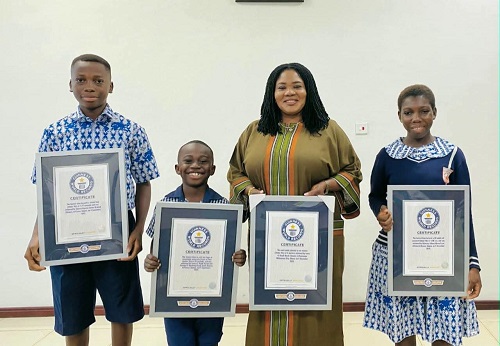
The Minister for Gender, Children and Social Protection, Hon. Dr. Agnes Naa Momo Lartey, has praised four young Ghanaian pupils for setting Guinness World Records, calling their achievement a source of national pride and inspiration for children nationwide.
The Minister made the commendation when the Executive Director of the Sophia Boadi Readathon International Foundation, Ms. Sophia Boadi, led the pupils from Pentecost Preparatory School on a courtesy visit.
Welcoming the team, Dr. Lartey congratulated the children for their outstanding performance and commended their discipline, determination, and commitment to excellence. She said their success proves the enormous potential of Ghanaian children when given the right guidance and opportunities.
Ms. Boadi said the Foundation, through its literacy and talent development programs, identified and trained the pupils to compete in various Guinness World Records categories. According to her, the initiative is focused on promoting education, environmental sustainability, agriculture, cognitive development, and time management, while showcasing Ghanaian talent globally.
She revealed that Isaac K. Boadi Atuah and George K. Kwarteng Boadi set the record for the Fastest Time to Sort Two Bags of Recyclable Materials, beating competitors from the United States. Isaac also set a second record for Most Seeds Planted in One Minute during Ghana’s National Farmers’ Day celebration, highlighting agriculture and environmental care.
Ms. Boadi added that Selorm Dzakah Junior set the record for Fastest Time to Pack a School Bag, while Rebecca Ackron Essel set the record for Fastest Time to Build a 10-Toilet Roll Pyramid. Both feats, she said, demonstrated strong cognitive skills and time management. She noted the pupils underwent intensive training before their successful attempts.
Dr. Lartey congratulated the pupils and their mentor for putting Ghana on the global map. She urged the young record holders to remain focused, humble, and committed to excellence, and said their story should motivate other children to chase their dreams with discipline.
The Minister also applauded the Sophia Boadi Readathon International Foundation for its investment in literacy, talent development, and youth empowerment, noting that such efforts align with government’s agenda on education and child welfare.
In recognition of their feat, Dr. Lartey presented a cash token to the four pupils as a token of encouragement and appreciation.
By Edem Mensah-Tsotorme
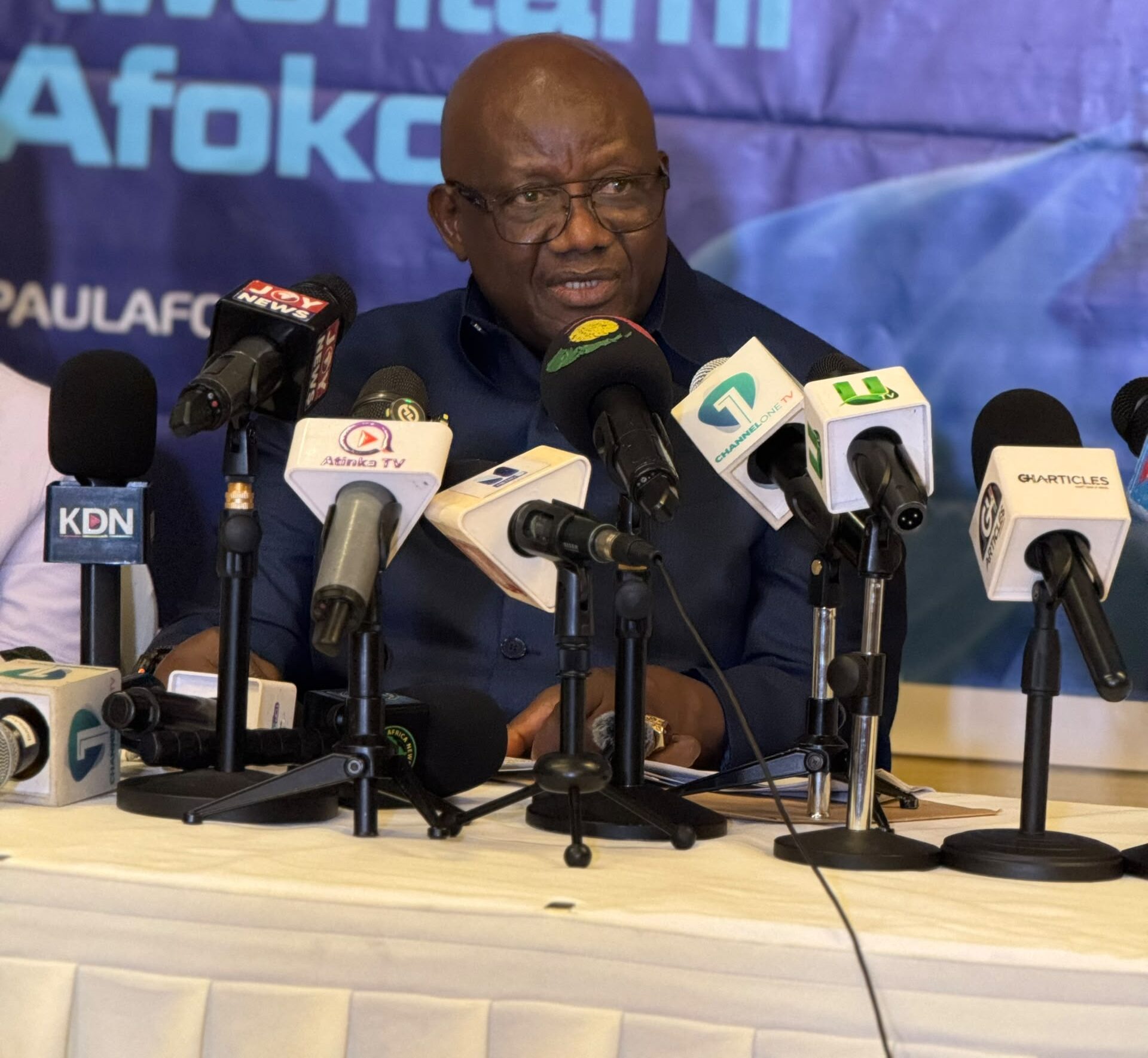
Former National Chairman of the New Patriotic Party (NPP), Paul Awentami Afoko, has officially declared his intention to contest for the party’s National Chairman position, promising to reunite the party, strengthen its structures and lead efforts to return the NPP to power.
Mr. Afoko announced his decision at a press conference in Accra on Tuesday, July 14, 2026, after what he described as months of consultations with key stakeholders across the party.
He disclosed that he had engaged the NPP’s presidential candidate, Dr. Mahamudu Bawumia, former Presidents John Agyekum Kufuor and Nana Addo Dankwa Akufo-Addo, members of the party’s parliamentary caucus, former executives, grassroots members, women, youth, parliamentary candidates and other party faithful before reaching his decision.
Mr. Afoko clarified that the consultations were not part of his campaign, stressing that he would abide by the party’s rules and processes before officially launching his campaign.
He explained that feedback from the engagements revealed disappointment and frustration among party members but also a strong desire to see the NPP recover from its 2024 electoral defeat.
According to him, the party is at a critical stage and requires experienced leadership capable of rebuilding unity and restoring public confidence.
Mr. Afoko said his vision is built around what he described as the “three Rs” — reunite, reorganise and recapture power.
He noted that internal divisions have weakened the NPP and urged members to set aside differences and work together.
“The NPP cannot win when loyal members feel excluded, ignored or pushed aside. We must bring back respect, discipline, tolerance, service and loyalty to the party,” he stated.
The former chairman pledged to bridge divisions across generations, regions and factions within the party, insisting that he was seeking to unite members rather than lead one group against another.
He promised to strengthen the party’s organisational structures from the polling station level to the national leadership.
Mr. Afoko recalled that during his previous tenure as National Chairman in 2014, the party introduced constituency resource accounts, strengthened parliamentary primaries and focused on grassroots support.
He expressed confidence that similar organisational reforms could help prepare the NPP for victory in the next general election.
The aspiring chairman said the NPP must rebuild trust with traders, farmers, businesses, professionals, young people and other groups who felt disappointed by some decisions taken while the party was in government.
He acknowledged that mistakes were made and called on the party to demonstrate humility by listening to Ghanaians and correcting its shortcomings.
Mr. Afoko pledged to prioritise the involvement of women and young people in the party’s leadership and decision-making.
He said women should no longer be treated as an afterthought but should play central roles in party organisation, fundraising, mobilisation and leadership development.
Addressing concerns about regional balance within the NPP leadership, Mr. Afoko rejected suggestions that the party should avoid having both its presidential candidate and national chairman from northern Ghana.
He maintained that the NPP is a national party whose leadership should be determined by competence, commitment and the ability to unite members rather than by geography or ethnicity.
He further appealed to party members to support the NPP’s presidential candidate, Dr. Mahamudu Bawumia, saying no flag bearer could succeed without a united and well-organised party.
Mr. Afoko argued that the party’s defeat in the 2024 general election could not be blamed on one individual, adding that many factors contributed to the outcome.
During a question-and-answer session, he dismissed concerns that his return could revive past divisions within the party.
He disclosed that he had forgiven those involved in his suspension as National Chairman and no longer held bitterness against anyone.
“I was angry at the time because a mandate given to me by the party was taken away. But that is behind me. The state of the party will not allow us to dwell on emotions. There is no more bitterness or anger,” he said.
Mr. Afoko described unity as non-negotiable, saying healthy internal debate should strengthen rather than divide the party.
He also revealed that he had informed several leading figures in the NPP, including Kennedy Agyapong, about his intention to contest the chairmanship.
According to him, his discussions with Mr. Agyapong focused on the need to reunite the party and encourage experienced members to become actively involved again.
Mr. Afoko concluded by calling on party elders, executives, Members of Parliament, women, youth and grassroots supporters to work together to rebuild the NPP ahead of the next general election.
He formally announced his intention to contest for the National Chairman position, subject to the party’s rules and processes, and said he would officially launch his campaign at the appropriate time.
By: Jacob Aggrey