News
Ada women kick against commissioning of mortuary near salt lagoon

- /home/u249204778/domains/spectator.com.gh/public_html/wp-content/plugins/mvp-social-buttons/mvp-social-buttons.php on line 27
https://spectator.com.gh/wp-content/uploads/2020/05/IMG-20200527-WA0002.jpg&description=Ada women kick against commissioning of mortuary near salt lagoon', 'pinterestShare', 'width=750,height=350'); return false;" title="Pin This Post">
- Share
- Tweet /home/u249204778/domains/spectator.com.gh/public_html/wp-content/plugins/mvp-social-buttons/mvp-social-buttons.php on line 72
https://spectator.com.gh/wp-content/uploads/2020/05/IMG-20200527-WA0002.jpg&description=Ada women kick against commissioning of mortuary near salt lagoon', 'pinterestShare', 'width=750,height=350'); return false;" title="Pin This Post">
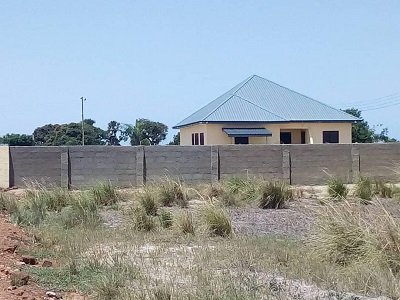
The Association of Women in Salt Mining in Ada-Songor is kicking against the commissioning of a mortuary near the salt lagoon in the community saying the gesture will jeopardise the market for Ada Salt.
The salt miners are, therefore, suggesting that, the facility be converted into a cold store.
The women in the communities kicked against the location of the facility because according to them it is a drainage into the Salt Lagoon and also a cemetery for the Anyamam community.
President of the association, Madam Mary Akuteye blamed traditional leaders and government representatives for turning a deaf ear to the plight of the people.
According to her, it is forbidden to cross the lagoon with a dead body.
She said, “If it happens inadvertently, it demands ritual purification to appease the gods before the lagoon will crystalise salt again. We hold the view that, waste water from the mortuary will seep into the lagoon.”
“We believe that, the location of the mortuary is a danger to the salt market: locally, nationally and internationally.”
Speaking to Mr Woliatse Raymond Abayateye, the chief fisherman of the community who gave the land for the construction of the mortuary, he explained that, several years ago authorities of the Battor Catholic Hospital, consulted the chiefs and people of the coastal communities for a piece of land to establish a hospital but they declined the offer.
“Posterity will judge me if history is repeated. Battor Catholic Hospital management needed a land to construct a mortuary for communities along the Sege coastal communities so I offered them land,” he added.
The demand for a mortuary is due to the increasing number of corpses from the coastal communities.
The Ada District Chief Executive (DCE), Mr Adjoteye Lawerh Akrofi said, “The Environmental Protection Agency (EPA) in the district and regional team has certified and given clearance for the project.”
Their shouts will rather publicise the salt wrongly in the market,” he added.
Meanwhile, , Monica Kuadzo-Gbor, a management member of the Battor Catholic Hospital said, prevention was their priority as a health institution, therefore, measures have been put in place to ensure social, economic and environmental safety.
The salt lagoon was the source of life for many people in the Ada state.
From Lucy Laryea ,Ada


Over 20 structures built within the 50-metre buffer zone of the Kpeshie Lagoon at the Laboma Beach Resort in the La Dade-Kotopon Municipality were on Sunday demolished by the Greater Accra Regional Coordinating Council (GARCC).
Buildings such as single-unit semi-detached under construction and completed chalets at the resort were pulled down while portions of a newly constructed perimeter wall were also demolished. Read More
SKIP THE QUEUE, TAP THE NEWS
You can now read the Ghanaian Times and The Spectator newspapers from the comfort of your device via TimesNewsPlus.
Join our WhatsApp Channel: https://whatsapp.com/channel/0029VbBElzjInlqHhl1aTU27

About 120 golfers from clubs across Ghana participated in an 18-hole competition, dubbed ‘MTN 30th Anniversary CEO Invitational Golf Tournament’ held at the Achimota Golf Club on Saturday.
At the end of the hectic day, Frederick Semenu Duvor won the Men’s Group A event with 39 points, while Julienne Afi claimed the Ladies’ Group A title with the same score.
Yaw Mireku Jnr. won the Men’s Group B with an impressive 45 points, while Kous Louanges Mang took the Ladies’ Group B title with 38 points.
Kofi Mangesi won Men’s Group C with 40 points while Elorm R. Akuash Bonney claimed the Ladies’ version with 42 points.
In the Seniors Division, Jan Vogel emerged winner of the men’s category with 39 gross, while Helen Appah topped the ladies’ category with 44 gross.
Addressing participants, the company’s Board Chairman, Mr Ishmael Yamson, urged the company to approach its next phase with the same resilience, discipline and determination that have defined its success over the past three decades.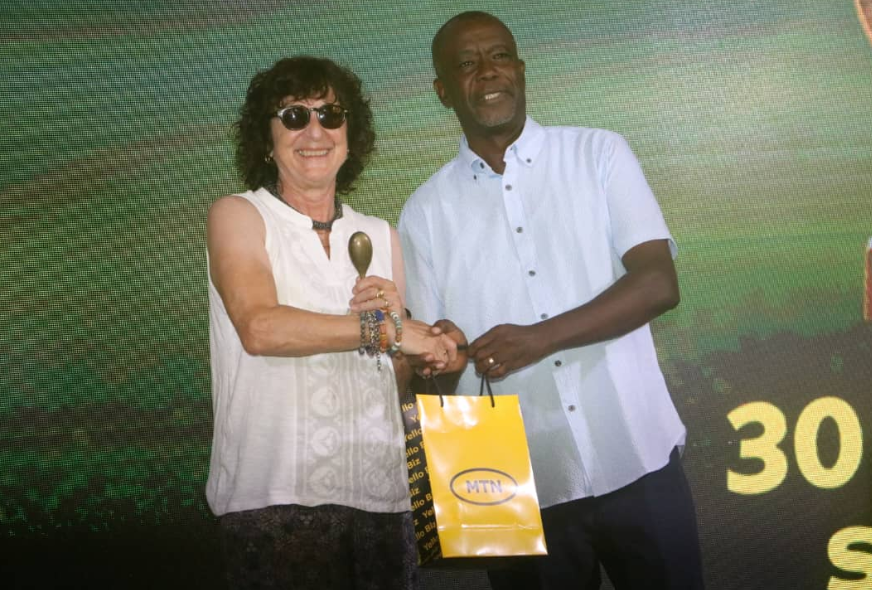
He drew a striking parallel between the game of golf and MTN Ghana’s three-decade journey, describing both as long games in which success depends less on one spectacular moment than on consistency, patience, judgment and the ability to recover from setbacks.
He said, golf had taught him a lesson that extended far beyond the fairways, thus, a round cannot be won on the first hole.

In golfing terms, he said, MTN Ghana had encountered its share of regulatory bunkers, competitive hazards and unexpected storms that had forced the company to pause, reassess and change its approach.
But those challenges, he suggested, were part of the journey rather than reasons to abandon it.
By Andrew Nortey
SKIP THE QUEUE, TAP THE NEWS
You can now read the Ghanaian Times and The Spectator newspapers from the comfort of your device via TimesNewsPlus.
Join our WhatsApp Channel: https://whatsapp.com/channel/0029VbBElzjInlqHhl1aTU27

 Entertainment1 week ago
Fiifi Coleman Productions adapt ‘I Told You So’ stage play into feature film
- News6 days ago
48 Engineer Regiment to be major sub-contractor on Accra-Kumasi Expressway, $2bn ready- Prez Mahama
- News1 week ago
Ghanaian journalist celebrates Texas town’s ‘Eden of the Far West’ tag after mayor’s nod