Features
Disqualified – Part 4

- /home/u249204778/domains/spectator.com.gh/public_html/wp-content/plugins/mvp-social-buttons/mvp-social-buttons.php on line 27
Warning: Trying to access array offset on false in /home/u249204778/domains/spectator.com.gh/public_html/wp-content/plugins/mvp-social-buttons/mvp-social-buttons.php on line 27
&description=Disqualified – Part 4 ', 'pinterestShare', 'width=750,height=350'); return false;" title="Pin This Post">
- Share
- Tweet /home/u249204778/domains/spectator.com.gh/public_html/wp-content/plugins/mvp-social-buttons/mvp-social-buttons.php on line 72
Warning: Trying to access array offset on false in /home/u249204778/domains/spectator.com.gh/public_html/wp-content/plugins/mvp-social-buttons/mvp-social-buttons.php on line 72
&description=Disqualified – Part 4 ', 'pinterestShare', 'width=750,height=350'); return false;" title="Pin This Post">
After returning from work the following evening, Afrakoma and Beesiwa were having supper when there was a knock on the door. She went to open it, and Beesiwa’s parents entered.
They moved awkwardly to the dining table and after a moment’s of hesitation, they both knelt down. ‘Beesiwa and Afrakoma, we have come to beg you. We are not asking for forgiveness.
Beesiwa, we are begging you to find it in your heart to come home, because it will look very disgraceful that our only daughter is living with her friend when her parents are only a few metres away. We beg you in the name of God. Please come home. We will not interfere in any part of your life, going forward. We beg you, Beesiwa’. ‘Daddy and Mummy’, Afrakoma said, ‘you are here begging her to come back home, to avoid disgrace. But do you realize what Sammy has done to her, thanks to your lust for money? Beesiwa was keeping her innocence for the man God has prepared for her.
She made it clear that she was not happy with this man. And he clearly showed his character when he came to your house on both times drunk. You pressurized her to go with him, because you had been taken monies from him. What did you need the money for?
Please allow her to put herself together. Give her some days, then she will take a decision’. The two parents got up and walked away. ‘Many thanks, Afrakoma’, Beesiwa said after they left. ‘You echoed my very thoughts. I don’t know how I can go and live with them again, even though they are my parents.
And Afrakoma, it will take me a very long time before I consider the idea of a relationship with a guy, let along marriage’. ‘I understand you, Beesiwa. But just relax for now. Leave it to God. He will wipe away your tears, and give you a fresh start. Your experience has been horrible, but you will overcome’.
After several discussions which involved elders of the Presbyterian Church and Afrakoma’s parents, it was agreed that Beesiwa would spend her time with Afrakoma and her parents.
Beesiwa took a six month leave without pay from work, and opened a shop selling items for catering events: take-away containers and cutlery, disposable napkins and several other things.
She only made a modest profit, but it offered her a peaceful means of overcoming the trauma she had experienced at the hands of Sammy. She went to church on Sundays, but she avoided any interaction with young ladies and young men.
She firmly rejected any advances from men in the neighbourhood. So when they returned from church one Sunday, three years after the unfortunate event with Sammy Abrokwa, Afrakoma decided to act.
After they had enjoyed Beesiwa’s favourite Fante kenkey and garden egg stew, Afrakoma gently introduced the subject. ‘Beesiwa, you and I are more than sisters. It’s been three years since the unfortunate incident with Sam Abrokwa.
I have been praying, and I think it is time for you to put those unfortunate incident before you, and move forward. You are certainly a very beautiful girl, with a beautiful character.
Many decent young guys would be happy to have you for a partner, and I think you should give someone a chance. You need to get a decent job, and I believe in the process, you will meet a decent young man to marry. ’. ‘Afrakoma, I certainly appreciate what you and your husband Mark have done for me. I agree that it is time I opened up.
I will start exploring job opportunities, and open up to people who show up with enough indication that they are genuine. I am not particularly concerned with wealth, but I would like to meet a genuine person who is husband material. A few guys have approached me, but I am taking my time’.
‘I’m very glad to hear this. But Beesiwa, your own uncle Wofa Kwame came to discuss something with me. He works with a young engineer who is in estate development.
He is quite wealthy and hardworking, but according to Wofa Kwame, he is a very humble person, extremely funny, and he is suggesting that you meet him. He is called Kakraba Forson, and interestingly Wofa Yaw heard him mention that he would like to employ a personal assistant. He runs a small but successful property and Project Company’
‘Well, Afrakoma, I don’t have any problem meeting him. I respect Wofa Yaw, so I know he means well for me. So how do I meet him?’ ‘Let’s speak to Wofa Kwame. I’m sure he will arrange a meeting.

Features
Confronting newborn abandonment in Ghana: When a cry for help is heard in a dustbin – Part 2

The root causes: It is never just one reason
My years of counselling at CPAC show me abandonment is rarely an act of malice. It is the tragic endpoint of seven overwhelming distresses:
1. Severe maternal mental illness —The hidden emergency
a) Clinical Postpartum Depression (PPD): This is far beyond “baby blues.” It is a severe mood disorder that can appear weeks to months after birth. Due to a massive drop in hormones, extreme sleep deprivation, and emotional exhaustion, the mother feels deep sadness, worthlessness, and complete emotional numbness towards her baby. Picture: A new mother sits by her bed all day, staring blankly. Her baby cries for hours, but she cannot lift her hands to carry the baby. She whispers, “This baby would be better off without me.” She does not hate the baby; she feels she has completely failed as a mother.
b) Peripartum Psychosis (Postpartum Psychosis): This is a psychiatric emergency. Rare but extremely dangerous, appearing suddenly within the first 2-3 weeks after delivery. The mother completely loses touch with reality. She hears commanding voices telling her to abandon the baby, or believes the baby is possessed by an evil spirit or is a “spirit child” who will bring a curse. Picture: A mother genuinely believes she heard a voice saying, “Leave this child at the crossroads at midnight or your family will die.” She abandons the baby not out of hatred, but because her broken mind believes she is obeying a higher spiritual order to save her family.
c) Pre-existing untreated Schizophrenia: This is a chronic, severe mental disorder that existed before the pregnancy. The stress of pregnancy and labour shatters her fragile coping. She suffers from paranoid delusions — believing people want to poison her and the baby — flat affect (zero facial expression), and grossly disorganised thinking, making it impossible to plan how to feed or clean a baby. Picture: A young woman whose family called her illness “spiritual attack” instead of taking her for medication wanders away after delivery, completely forgetting she even gave birth, leaving the infant behind.
2. Extreme socio-economic deprivation: For many girls in some parts of Ghana such as Kasoa, Madina, or Bekwai, poverty is not a statistic; it is a daily panic. No money for antenatal care, no money for hospital delivery, no money for baby diapers or formula. When a mother cannot feed herself, the thought of feeding another mouth feels impossible. Some mothers say, “I left her where someone richer would find her, because I could not watch her starve to death in my hands.” It is a distorted act of survival.
3. Intense societal stigma and shame: In Ghana, pregnancy outside marriage, teenage pregnancy, or pregnancy from rape can bring extreme family rejection. The girl is called “spoilt,” beaten, banned from church, or sacked from school. The fear of bringing shame to the family name is heavier than the fear of police. So she hides the pregnancy for 9 months, delivers alone, and abandons in secret to protect her family’s “honour.”
4. Paternal abandonment — The Man Who Ran Away: Behind almost every abandoned baby is a man who vanished. He says, “It is not mine,” or “Abort it,” and switches off his phone. The mother is left utterly isolated — no emotional, financial, or social support. She is criminalised alone, but the abandonment started with him. Psychological research shows paternal denial is one of the strongest predictors of maternal panic and newborn abandonment.
5. Substance abuse disorders: Alcohol, tramadol, and other drug addiction impair the brain’s executive functioning — the ability to plan, judge consequences, and process emotions. A mother struggling with addiction may give birth in a highly intoxicated or withdrawal state, unable to comprehend the needs of the newborn, leading to neglect and eventual abandonment.
6. The spirit child cultural phenomenon and superstition: In some remote pockets of Northern Ghana and even in few parts of Central and Ashanti regions, public health research shows babies born with congenital deformities, severe disabilities, or whose mothers die in childbirth are branded as “spirit children” or cursed. In extreme instances, families, under cultural pressure, mandate that such babies be exposed or abandoned at shrines or bushes. This is not mental illness, but a harmful cultural belief system that still kills.
The invisible wounds
On the baby: Risk of death from hypothermia, sepsis, and infection. Survivors suffer Anaclitic Depression and Failure to Thrive due to lack of touch. As adults, they battle Reactive Attachment Disorder, chronic mistrust, and identity crisis — “Why did my mother leave me in a dustbin?”
On the mother: Lifelong hidden grief, intense guilt, chronic PTSD, depression, and elevated suicide risk. A prison cell does not heal this.
On the nation: Overburdened orphanages like Osu Children’s Home, draining health budgets, and overworked Social Welfare officers.
SKIP THE QUEUE, TAP THE NEWS

You can now read the Ghanaian Times and The Spectator newspapers from the comfort of your device via TimesNewsPlus.
Join our WhatsApp Channel: https://whatsapp.com/channel/0029VbBElzjInlqHhl1aTU27
“There is no one righteous, not even one; there is no one who understands; no one seeks God. But now a righteousness from God, apart from law, has been made known, to which the Law and the Prophets testify. This righteousness from God comes through faith in Jesus Christ, to all who believe. For there is no difference; – Rom. 3:10, 21-22. (NIV)
Introduction
Dictionaries define righteousness as “behavior that is morally justifiable or right.” Such behavior is characterized by accepted standards of morality, justice, virtue, or uprightness. The Bible’s standard of human righteousness is God’s own perfection in every attribute, every attitude, every behavior, and every word. Thus, God’s laws, as given in the Bible, both describe His own character and constitute the plumb line by which He measures human righteousness.
The bad news is that true and perfect righteousness is not possible for man to attain on his own; the standard is simply too high. The good news is that true righteousness is possible for mankind, but only through the cleansing of sin by Jesus Christ and the indwelling of the Holy Spirit. We have no ability to achieve righteousness in and of ourselves. But Christians possess the righteousness of Christ, because “ For He made Him who knew no sin to be sin for us, that we might become the righteousness of God in Him.” – 2 Corinthians 5:21. This is an amazing truth. On the cross, Jesus exchanged our sin for His perfect righteousness so that we can one day stand before God and He will see not our sin, but the holy righteousness of the Lord Jesus.
Establishing our hearts in righteousness
“Keep your heart with all diligence, for out of it spring the issues of life” – Proverbs 4:23
According to the above verse in Proverbs, our heart is the source of our life. Our life flows from our heart. The Holy Spirit resides in the spirit of the born again Christian. So there is a strong influence of the Holy Spirit in the heart of the new-born Christian. But our heart is also comprised of our soul. As Christians we can choose to focus our soul on the Lord, or on evil things. If we focus on corrupt, immoral, and evil things our heart will be affected detrimentally. It will cause our heart to be crooked or wicked, instead of straight or righteous. So the Scripture says to keep, or guard, our heart. It is wise to protect our heart as what we allow to dominate our heart will inevitably become the fruit, or influence the outcome, of our lives.
One way to approach life is to continually ask the question, “How will this decision or action affect my heart?” Everything we do, every thought we entertain, everything we watch, read, or listen to, shapes our heart. Therefore, the future prosperity of our life will flow from how well we care for our heart.
Think of everything you do, every moment of time, as a seed. We have been given responsibility for choosing which seeds to plant in our heart. What will you grow in the garden of your heart? What seeds will you choose? Our heart is our garden, and our life is the fruit of our garden. So next time you are tempted to dwell on a bad thought, think, “Do I want this seed to grow and manifest in my life?” Next time you are tempted to indulge in a sinful action ask yourself, “Do I want the extension, or fruit, of this sinful action to be what I am known for?”
God gives us the freedom to plant whatever we like in our garden. God loves us regardless of the good or bad choices we may make in our lives. You may be reaping the fruit of some poor choices right now. And God is still saying, “I love you.” But He has wise advice for us; He desires we have a good life. He says, “Guard you heart with all diligence.” This Hebrew word translated ‘diligence’ conveys the meanings of: prison and guard (ibid). A superintendant of a prison is very particular as to what goes in and out of his prison. A prison has very tight security. Just as a superintendant watches over his prison, so we should also supervise our heart (our lives). We should exercise meticulous security with regards to what enters into our heart. Actually, even what comes out of it, as the Scripture says, “ Wherefore, my beloved brethren, let every man be swift to hear, slow to speak, slow to wrath” – James 1:19, as “For out of the abundance of the heart the mouth speaks.” –Matthew 12:34b.
If what goes into, and what comes out of, our heart determines the success of our lives, what is the first important principle to establish in our heart? “In righteousness you shall be established;” – Isaiah 54:14
Righteousness is the key foundational truth we need to first establish in our heart. Jesus said, “But seek first the kingdom of God and His righteousness, and all these things shall be added to you.” –Matthew 6:33. Notice Jesus said, “His righteousness”, not our own righteousness. We have to seek and understand God’s righteousness. Isaiah 54:14 says, “Their righteousness is of me, saith the Lord.” God’s righteousness comes from God, not from within us. Humans cannot make themselves God’s righteousness, as all humans have sinned and are therefore inferior to God. God’s righteousness is a gift from God: “ For He made Him who knew no sin to be sin for us, that we might become the righteousness of God in Him.” – 2 Corinthians 5:21
Righteousness, or right standing with God, has been attained for us through the exchange Jesus made on our behalf. Jesus took our sin and gave us His righteousness. God’s righteousness is imparted to us when we are made a new creature in Christ – 2 Corinthians 5:17. This righteousness is a gift from God and undeserved by us: “For if by the one man’s offense death reigned through the one, much more those who receive abundance of grace and of the gift of righteousness will reign in life through the One, Jesus Christ.”- Romans 5:17
Through our faith in Jesus’ blood, shed to remit our sins – Romans 3:25, God imparts righteousness to us by His grace. We actually become a new righteous creation, fully identifying in Jesus’ death, burial, resurrection and ascension. This is the foundational miracle we need to understand and have established in our heart. All the other miraculous promises of God come the same way, by God’s grace through faith. Righteousness must be established in our heart for us to truly have faith to receive our rich inheritance in Christ. Jesus has been made unto us righteousness (1 Corinthians 1:30). We are now “For all the promises of God in Him are Yes, and in Him Amen, to the glory of God through us”. – 2 Corinthians 1:20
Establishing our minds in righteousness
God expects that, when we accept Jesus Christ as our Lord and Savior, we will be radically changed. In Romans 12:2 He tells us, And do not be conformed to this world, but be transformed by the renewing of your mind,
This transformation is to be a metamorphosis, of a magnitude at least comparable to that by which a caterpillar becomes a butterfly. He expects us to become totally different.
Scripture uses many different images to express the change that should occur: We become “a new creation; old things have passed away; behold, all things have become new.“ – 2 Cor 5:17. It is almost as if we become a new species. Scripture speaks of the “first Adam” who was earthly and fell into sin, and the “second Adam” (Jesus Christ) who was sinless and holy – Rom. 5:12-19; 1 Cor 15:44-49.
We are “made new in the attitude of our minds” – Eph. 4:23.
We “put off our old self” and “put on the new self” – Eph. 4:22,24; Col 3:9-10.
We “live by the Spirit” and not by the flesh – Gal. 5:16; Rom 8:13.
We become “instruments of righteousness” rather than “instruments of wickedness” – Rom. 6:13.
Each of these metaphors, in a different way, emphasizes the magnitude of the change that is expected. Each is dramatic and astonishing in itself; their cumulative effect is even more powerful. We are talking about a tremendous transformation. It should be visible to others, but its internal effect should be far greater than what others can perceive.
The goal of this transformation
What is the goal of this metamorphosis? Scripture states it in a number of different ways, which overlap and can be seen as different ways of expressing the same basic concept. Scripture often does this, because our minds are inadequate to comprehend, and our language inadequate to express, the full scope of God’s revelation to us.
To be continued!
Stay blessed!
For further inquiries please contact us on Tel Nos. 0243588467 or 0268130615
Email: saltnlightministries@gmail.com
Website: saltandlightministriesgh.org
SKIP THE QUEUE, TAP THE NEWS
You can now read the Ghanaian Times and The Spectator newspapers from the comfort of your device via TimesNewsPlus.
Join our WhatsApp Channel: https://whatsapp.com/channel/0029VbBElzjInlqHhl1aTU27

 Entertainment1 week ago
Rhythms On Da Runway returns November 28 with 16th edition themed ‘Unbound’
- News1 week ago
48 Engineer Regiment to be major sub-contractor on Accra-Kumasi Expressway, $2bn ready- Prez Mahama
- Entertainment1 week ago
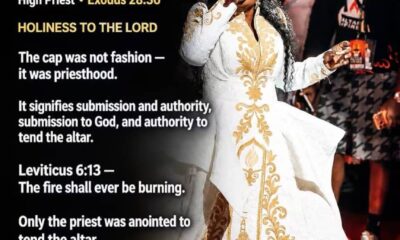
Ohemaa Mercy’s Tehillah Experience outfit was priestly regalia, not costume – Management clarifies