News
UN marks International Peacekeepers Day

- /home/u249204778/domains/spectator.com.gh/public_html/wp-content/plugins/mvp-social-buttons/mvp-social-buttons.php on line 27
https://spectator.com.gh/wp-content/uploads/2020/05/Peacekeepers-Ghanaian-Female-UN-Peacekeepers.jpg&description=UN marks International Peacekeepers Day', 'pinterestShare', 'width=750,height=350'); return false;" title="Pin This Post">
- Share
- Tweet /home/u249204778/domains/spectator.com.gh/public_html/wp-content/plugins/mvp-social-buttons/mvp-social-buttons.php on line 72
https://spectator.com.gh/wp-content/uploads/2020/05/Peacekeepers-Ghanaian-Female-UN-Peacekeepers.jpg&description=UN marks International Peacekeepers Day', 'pinterestShare', 'width=750,height=350'); return false;" title="Pin This Post">
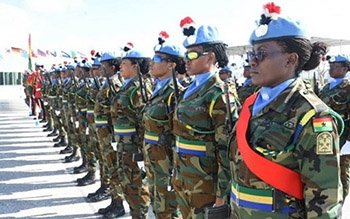
Amidst the global COVID-19 pandemic, a virtual solemn ceremony presided by the UN Secretary, General Antonio Guterres, is being held at the United Nations Headquarters in New York today, to commemorate the International Day of UN Peacekeepers.
It is in memory of those who lost their lives in the course of peacekeeping operations across the globe and also solidarise with the civilians, police, military who serve under the UN flag for their professionalism, dedication, and courage in the global maintenance of peace and security.
The virtual ceremony, in response to the WHO social distancing health protocol following the COVID-19 pandemic, is a departure from the traditional hoisting of flag with military parade as is the practice in many countries, including Ghana.
The UN chief lays a wreath in memory of the slain peacekeepers and awards the Dag Hammarskjold medal to 83 peacekeepers who lost their lives in 2019 in the line of duty.
The Peacekeeping Gender Advocate of the Year award will also be presented to the recipient at the virtual ceremony.
The 72nd anniversary of the peacekeepers day is on the theme “Women in peacekeeping -A key to peace’’ in recognition of the pivotal role of women in promoting sustainable peace and overall peacekeeping performance.
“Women peacekeepers are on the frontline in this fight and we are grateful for their dedication and sacrifice in supporting COVID-19 response efforts as well as in implementing the mission’s mandate within the current constraints and amidst difficult circumstance,” the UN website said.
The day is set aside to commemorate the first UN peacekeeping mission on May 29, 1948 when the UN Security Council authorised the deployment of a number of military observers to the Middle East to form the United Nations Truce Supervision Organisation to monitor the Armistice Agreement between Israel and its Arab neighbours.
Since then, more than one million personnel from troop contributing countries under UN have served in 72 UN peacekeeping operations, impacting the lives of millions of people and saving countless lives.
According to the UN, it has deployed more than 95,000 military, police and civilian personnel to maintain peace and security in 13 hotspots across the globe.
Ghana is recognised as one of the top 10 troop contributing countries, having first deployed troops in 1960, under the United Nations Operation in the Congo to help restore calm and order in that country.
Ahead of the day, the United Nations Information Centre in Accra in partnership with the United Nations Interim Forces in Lebanon (UNIFIL) last Thursday organised a zoom meeting highlighting the contributions and challenges of peacekeepers.
The speakers were Tilak Pokharel, UNIFIL Deputy Spokesperson; Major Damea Acheampong Kusi, Battalion Finance Officer; Major Cynthia Adiasani, GHANBATT Principal Nursing Officer; and Captain Nathanael Asamoah, GHANBATT Public Information Officer.
Other guest speakers were Lieutenant Colonel Prakash Lamichhane, UNIFIL Senior Military Public Information Officer and Lieutenant Dorcas Quaye, Military Police Officer with Cynthia Prah, National Information Officer, UN Information Centre, Accra.
By Salifu Abdul-Rahaman


Over 20 structures built within the 50-metre buffer zone of the Kpeshie Lagoon at the Laboma Beach Resort in the La Dade-Kotopon Municipality were on Sunday demolished by the Greater Accra Regional Coordinating Council (GARCC).
Buildings such as single-unit semi-detached under construction and completed chalets at the resort were pulled down while portions of a newly constructed perimeter wall were also demolished. Read More
SKIP THE QUEUE, TAP THE NEWS
You can now read the Ghanaian Times and The Spectator newspapers from the comfort of your device via TimesNewsPlus.
Join our WhatsApp Channel: https://whatsapp.com/channel/0029VbBElzjInlqHhl1aTU27

About 120 golfers from clubs across Ghana participated in an 18-hole competition, dubbed ‘MTN 30th Anniversary CEO Invitational Golf Tournament’ held at the Achimota Golf Club on Saturday.
At the end of the hectic day, Frederick Semenu Duvor won the Men’s Group A event with 39 points, while Julienne Afi claimed the Ladies’ Group A title with the same score.
Yaw Mireku Jnr. won the Men’s Group B with an impressive 45 points, while Kous Louanges Mang took the Ladies’ Group B title with 38 points.
Kofi Mangesi won Men’s Group C with 40 points while Elorm R. Akuash Bonney claimed the Ladies’ version with 42 points.
In the Seniors Division, Jan Vogel emerged winner of the men’s category with 39 gross, while Helen Appah topped the ladies’ category with 44 gross.
Addressing participants, the company’s Board Chairman, Mr Ishmael Yamson, urged the company to approach its next phase with the same resilience, discipline and determination that have defined its success over the past three decades.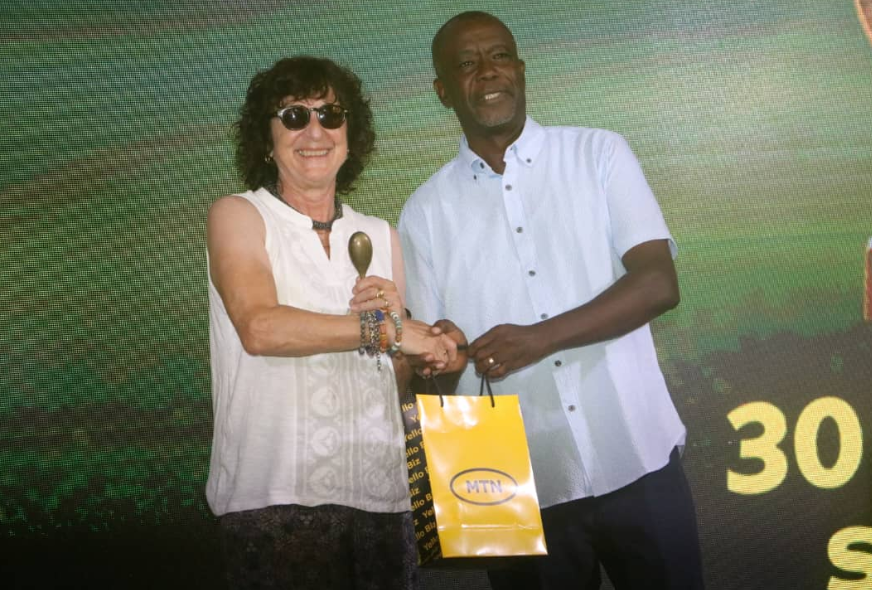
He drew a striking parallel between the game of golf and MTN Ghana’s three-decade journey, describing both as long games in which success depends less on one spectacular moment than on consistency, patience, judgment and the ability to recover from setbacks.
He said, golf had taught him a lesson that extended far beyond the fairways, thus, a round cannot be won on the first hole.

In golfing terms, he said, MTN Ghana had encountered its share of regulatory bunkers, competitive hazards and unexpected storms that had forced the company to pause, reassess and change its approach.
But those challenges, he suggested, were part of the journey rather than reasons to abandon it.
By Andrew Nortey
SKIP THE QUEUE, TAP THE NEWS
You can now read the Ghanaian Times and The Spectator newspapers from the comfort of your device via TimesNewsPlus.
Join our WhatsApp Channel: https://whatsapp.com/channel/0029VbBElzjInlqHhl1aTU27

 Entertainment1 week ago
Fiifi Coleman Productions adapt ‘I Told You So’ stage play into feature film
- News6 days ago
48 Engineer Regiment to be major sub-contractor on Accra-Kumasi Expressway, $2bn ready- Prez Mahama
- Entertainment5 days ago
Rhythms On Da Runway returns November 28 with 16th edition themed ‘Unbound’