News
Training of Girls Under Girls-in-ICT Initiative Kicks Off in Volta Region


- /home/u249204778/domains/spectator.com.gh/public_html/wp-content/plugins/mvp-social-buttons/mvp-social-buttons.php on line 27
https://spectator.com.gh/wp-content/uploads/2025/06/2da2e3e0-dbf4-4d1c-a435-4dde83960fc1.jpeg&description=Training of Girls Under Girls-in-ICT Initiative Kicks Off in Volta Region', 'pinterestShare', 'width=750,height=350'); return false;" title="Pin This Post">
- Share
- Tweet /home/u249204778/domains/spectator.com.gh/public_html/wp-content/plugins/mvp-social-buttons/mvp-social-buttons.php on line 72
https://spectator.com.gh/wp-content/uploads/2025/06/2da2e3e0-dbf4-4d1c-a435-4dde83960fc1.jpeg&description=Training of Girls Under Girls-in-ICT Initiative Kicks Off in Volta Region', 'pinterestShare', 'width=750,height=350'); return false;" title="Pin This Post">
The Ministry of Communication, Digital Technology and Innovations (MOCDTI) has officially commenced the first batch of the Training of Girls (ToG) component under the flagship Girls-in-ICT initiative in the Volta Region.
The training, which began yesterday, is taking place simultaneously across nine districts, namely: North Danyi, Ketu North, Ketu South, Kpando, Afadzato South, Hohoe, Anloga, Akatsi North, and Keta.
This first phase is part of a broader effort to empower 1,000 girls, selected from all 18 districts in the Volta Region, with foundational ICT knowledge and practical digital skills.
The programme is designed to bridge the gender digital divide by equipping girls with competencies in digital literacy, coding, and basic computer operations, while fostering interest in science, technology, engineering, and mathematics (STEM) careers.
The Girls-in-ICT initiative continues to serve as a powerful platform for nurturing talent, reducing gender inequality, and shaping a digitally empowered generation of Ghanaian girls.
Speaking at a brief opening ceremony held at Kpando District, the Member of Parliament (MP), Sebastian Deh, expressed strong support for the Girls-in-ICT programme, describing it as deeply aligned with his personal and political vision for development.
He stated that ICT must be at the core of any meaningful development effort in the constituency.
Mr.Deh emphasized that ICT must be at the heart of all developmental efforts within the constituency.
He acknowledged the contributions of key stakeholders, including the Ministry, the educational managers and GIFEC, and pledged to continue championing ICT advancement at the local level.
“The objective of this programme—empowering girls in ICT—speaks to one of the core reasons I offered myself for public service. If we, as a constituency or a people, wish to truly develop, then ICT must be the foundation of that development,” he remarked.
On his part, the Municipal Chief Executive (MCE), Killian Donkor, highlighted the profound responsibility entrusted to the young trainees. He encouraged them to become leaders among their peers, helping others catch up and learn through their example.
According to him, the training is not just about acquiring knowledge—it’s about becoming vessels of transformation, demonstrating leadership, resilience, and excellence in the field of ICT.
Mr.Donkor also reaffirmed the government’s full commitment to the initiative, in partnership with national and international stakeholders.
He emphasized that this mission extends beyond the local level and aligns with the United Nations’ global agenda for digital inclusion and gender equality. He urged the girls to see themselves as global ICT advocates, capable of shaping the future of their communities and the world.
Speaking at the launch, Mr. Peter Nartey, Zonal Coordinator of the Ghana Investment Fund for Electronic Communications (GIFEC), underscored the importance of inclusive digital access for national development.
He reaffirmed the commitment of the Minister for Communication, Digital Technology and Innovations, Samuel Nartey George (MP), to ensuring that no girl—regardless of location—is left behind in Ghana’s digital transformation agenda.
Mr. Nartey further stated that GIFEC stands ready to provide continuous technical and logistical support to ensure the programme’s success and sustainability.
“This initiative is not just about training; it’s about transforming lives, boosting confidence, and unlocking the potential of young girls to thrive in a technology-driven world,” he noted.
According to Mr. Nartey, the Girls-in-ICT programme has steadily expanded over the years, reaching thousands of girls across multiple regions.
The 2025 training in the Volta Region marks a significant milestone in the Ministry’s efforts to promote digital skills development and inclusive participation in the digital economy.
Subsequent training sessions will take place in the remaining districts, culminating in a regional competition, mentorship, and climax event to celebrate the achievements of the participants.



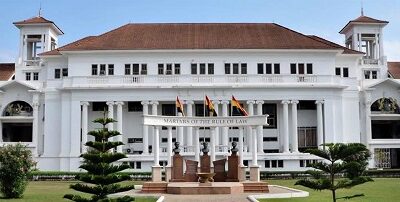



The Director of Legal Affairs of the New Patriotic Party (NPP), Gary Nimako Marfo, has questioned who will bear the cost of conducting presidential and parliamentary primaries following the Supreme Court’s ruling on the party’s delegate system.
Speaking to journalists, Mr. Nimako Marfo said he would not immediately comment on the ruling, adding that he wanted to wait for the full details before sharing his views.
“I don’t want to comment on it now. Let’s wait,” he said.
When asked about the Supreme Court’s decision that all members in good standing should vote in party elections, he shifted attention to the financial implications of implementing the ruling.
According to him, allowing all members in good standing to vote would increase the cost of organising internal party elections.
He questioned who would pay for the expanded electoral process.
“Who is going to pay for the cost of the elections?” he asked.
When a journalist suggested that political parties would bear the cost, Mr. Nimako Marfo replied, “Let’s wait and see.”
The comments come after the Supreme Court ruled that political parties should allow all members in good standing to vote in their internal elections, a decision that is expected to expand participation but also increase the financial and logistical demands of organising presidential and parliamentary primaries.
By: Jacob Aggrey

The Supreme Court of Ghana has declared the delegate system used by political parties to elect presidential and parliamentary candidates unconstitutional.
In a 5-2 majority decision delivered, the Court ruled that the long-standing system violates democratic principles and ordered all political parties to ensure every registered, card-bearing member participates in presidential and parliamentary primaries.
The ruling brings to an end decades of internal party elections conducted by a limited number of delegates.
The suit was filed by former Minister for Environment, Science, Technology and Innovation, Professor Kwabena Frimpong-Boateng; veteran politician Dr. Nyaho Nyaho-Tamakloe; and former Minister for Lands and Forestry, Dr. Christine Amoako-Nuamah.
The plaintiffs argued that the delegate system created inequality among party members by granting voting rights to a privileged minority while excluding ordinary members in good standing.
They told the Court that restricting voting rights to delegates was inconsistent with the democratic principles enshrined in the 1992 Constitution.
The Attorney-General’s Department supported the suit and urged the Court to adopt a “one member, one vote” approach.
In its submission, the State argued that political parties perform an important public function in Ghana’s democratic framework and that their internal electoral processes must reflect constitutional values of equality, participation and universal suffrage.
The Attorney-General further submitted that expanding voting rights to all registered members would strengthen accountability and deepen internal democracy within political parties.
The judgment means that going forward, presidential and parliamentary candidates will be selected by all registered members of a political party, instead of by delegates alone.
Political parties are expected to review their constitutions and structures to comply with the Court’s directive ahead of the 2028 general elections.
By Edem Mensah-Tsotorme