News
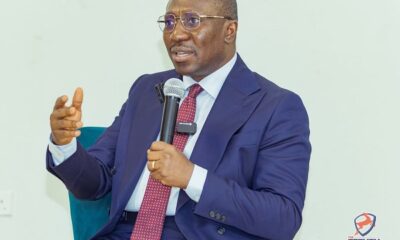
Gender Ministry, UNFPA hold review meeting on child marriage information portal


- /home/u249204778/domains/spectator.com.gh/public_html/wp-content/plugins/mvp-social-buttons/mvp-social-buttons.php on line 27
https://spectator.com.gh/wp-content/uploads/2025/06/41c77b4a-46af-44e3-82c6-e9026b123f8f-960x600.jpeg&description=Gender Ministry, UNFPA hold review meeting on child marriage information portal', 'pinterestShare', 'width=750,height=350'); return false;" title="Pin This Post">
- Share
- Tweet /home/u249204778/domains/spectator.com.gh/public_html/wp-content/plugins/mvp-social-buttons/mvp-social-buttons.php on line 72
https://spectator.com.gh/wp-content/uploads/2025/06/41c77b4a-46af-44e3-82c6-e9026b123f8f-960x600.jpeg&description=Gender Ministry, UNFPA hold review meeting on child marriage information portal', 'pinterestShare', 'width=750,height=350'); return false;" title="Pin This Post">
To assess the progress, performance, and future directions of the Child Marriage Information Portal (CMIP), a one-day review meeting tailored for the editorial team and stakeholders was held on Thursday, June 5, 2025.
The programme is under the auspices of the Child Marriage Unit of the Ministry of Gender, Children and Social Protection in collaboration with the United Nation’s Population Fund (UNFPA).
Among other things, the meeting sought to; Enhance editorial collaboration among stakeholders for effective content creation, Identify opportunities to enhance readers’ engagement and audience reach and increase accessibility and utilisation of the child marriage database.
Delivering her welcome address, the Chief Director of the Ministry, Dr Afisah Zakariah intimated that child marriage is a heinous act which robs millions of children especially girls of their childhood, education, and opportunities in their lives
She empathised that the CMIP developed by MoGCSP, Child Marriage Unit and the UNFPA, stands as a beacon of hope in fighting against child marriage.
‘This portal is a web-based platform that provides policymakers, practitioners, and the public real-time access to critical information on child marriage, sexual and gender- based violence,” she added
Dr Afisah Zakariah charged the editorial team and the stakeholders to work together to ensure the portal becomes a true one-shop for knowledge, empowering communities, informing policies, and driving action to meet the SDG of eliminating child marriage by 2030.
To buttress her point, the Head of the Child Marriage Unit, Madam Safia Tamimu underscored the importance of the CMIP as a tool of knowledge dissemination, data-sharing, and coordination in the national campaign to end child marriage.
She called on the officers to be bold in their commitment, share stories, amplify their successes, and confront challenges in order to promote transparency, access to data, and inter-sectoral collaboration in the CMIP.
During the meeting, the Representative from UNFPA Ghana, Madam Doris Mawusi Aglobitse, reaffirmed the organization’s ongoing support.
She urged participants to remain engaged in ensuring the child marriage information portal becomes a reliable, user- friendly and inclusive platform for national advocacy regarding child marriage.
The editorial team evaluated the portal’s effectiveness in providing credible, accessible, and actionable information related to child marriage in the country.
The review meeting brought forward actionable insights for improving the Child Marriage Information Portal, supporting the national efforts to end child marriage, and empowering affected communities in Ghana.







The Office of the Special Prosecutor (OSP) has taken note of public allegations of extortion and related conduct made against the Minority Leader of Parliament, Alexander Afenyo-Markin.
The allegations were made by the Chief Executive of the Ghana Gold Board (GoldBod), Sammy Gyamfi.
In a brief statement, the OSP said it has also received a joint petition submitted by two persons, as well as two separate petitions from other persons, in relation to the same allegations.
“Given the nature of the allegations, the OSP will assess the case and determine whether it falls within its statutory mandate and whether further investigative action is warranted,” the statement said.
The development comes amid a heated public feud between the Minority in Parliament and the leadership of GoldBod over the operations of the Domestic Gold Purchase Programme.
The Minority, led by Afenyo-Markin, has accused GoldBod and the Bank of Ghana of causing a loss of over $1.7 billion, citing the International Monetary Fund’s August 2026 report. The Minority has vowed to pursue the matter as Parliament has reconvened for an emergency sitting.
GoldBod, on the other hand, has rejected claims by some NPP MPs, including Tano South MP Dr Gideon Boako, that it owes the Bank of Ghana GH¢1 billion in overdrafts, describing the claim as “false and malicious.”
In the latest twist, GoldBod CEO Sammy Gyamfi has accused the Minority Leader of extortion and related conduct, an allegation that has triggered petitions to the OSP.
The OSP is mandated under Act 959 to investigate and prosecute specific cases of alleged or suspected corruption and corruption-related offences involving public officers and politically exposed persons.
By Edem Mensah-Tsotorme

General Secretary of the New Patriotic Party (NPP), Justin Kodua Frimpong, has filed his nomination to contest the position of General Secretary again as the party begins its rebuilding efforts ahead of the 2028 general elections.
He was accompanied by party stalwarts and supporters who were in high spirits, expressing confidence that he is the right person to hold the position.
Speaking after filing his nomination, Mr Kodua Frimpong assured the rank and file of the party that he would not disappoint them.
“I can assure you that the faith the rank and file of the party have had in me, I will never disappoint them,” he said.
He also pledged to run a clean campaign devoid of personal attacks.
“I can assure you that our internal campaign will be devoid of personal attacks,” he told his fellow contestants and the rank and file of the party as he seeks to retain his position.
His tenure has seen the party through the 2024 general elections, where the NPP lost power to the National Democratic Congress (NDC) after eight years in government.
The party is currently in a rebuilding phase, with internal elections scheduled to elect new national executives to lead its reorganization towards the 2028 polls.
The General Secretary position is considered one of the most influential in the party’s administrative structure, responsible for the day-to-day running of the party secretariat and implementation of party decisions.
By Edem Mensah-Tsotorme