Gender
Guzakuza WAW Ghana 2025 calls for gender equity in agribusiness

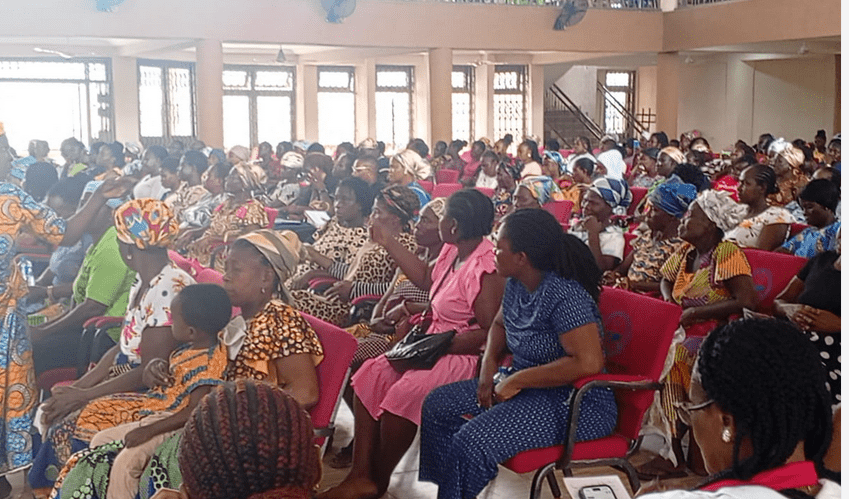
Stakeholders at the launch of Women in Agribusiness Week 2025, have urged bold action to address gender disparities in agriculture, stressing that women’s empowerment is critical to food security, rural development, and inclusive economic growth.
The Women in Agribusiness Week (WAW) Ghana 2025, organised by Guzakuza-a leading organisation committed to empowering women in agribusiness across Africa—was launched in Koforidua in the Eastern Region, bringing together policymakers, entrepreneurs, and advocates.
Addressing this year’s Women in Agribusiness Week theme: “Innovating for a Resilient Agribusiness: Finance, Technology and Market Access for Growth”, stakeholders took turns to highlight the need for innovation, equity, and investment to unlock the full potential of Ghanaian women in agribusiness.
Hajia Habiba Yusifu, Eastern Regional Director of Agriculture, described women as “the lifeline of rural and national economies,” but noted that they continue to face systemic barriers.
“For decades, African women have been trapped in poverty cycles due to unequal access to education, resources, and technology,” she said.
Adding, “Empowering women in agriculture is not only a moral imperative but also an economic necessity.”
She cited research indicating that closing the gender gap could significantly boost agricultural productivity, reduce hunger, and stimulate economic growth.
“We must provide women with equal access to land, finance, and modern technologies to enable them to become catalysts for innovation, productivity, and sustainable development,” she added.
Hajia Yusifu also called for increased representation of women in farmer cooperatives and decision-making platforms.
“Women’s voices must be heard and their perspectives considered when designing programmes that affect their livelihoods,” she said.
In a speech read on her behalf, Eastern Regional Minister, Mrs Rita Akosua Adjei Awatey, echoed the appeal, noting that women constitute 70 per cent of Ghana’s agricultural workforce but face challenges in scaling their businesses.
“Access to affordable credit and investment is vital for women to transition from subsistence farming to commercial agribusiness,” she said.
She highlighted government interventions under the Agriculture for Economic Transformation Agenda, including the Feed Ghana Programme and the Grains and Legumes Development Programme, which aim to enhance resilience and productivity.
“Our efforts in agriculture are not only about producing more food, but also about building resilience and ensuring that farmers, particularly women, can withstand climate change and market fluctuations,” she said.
Ms Vida Akuamoah Boateng, Project Officer at Guzakuza, said the conference provided a platform for product marketing, networking, and knowledge exchange.
“Industry experts add knowledge that enhances creativity, and through networking, women can support each other long after the event,” she said.
She acknowledged persistent challenges such as limited access to finance, land ownership, and fragile market access.
“That is why we organise exhibitions—to encourage women to add value to their produce and connect them with buyers,” she said.
She also emphasized the importance of agro-processing, noting, “We are still in the early stages of value addition. We encourage women to go into processing to make their products competitive locally and internationally.”
Mrs Perpetual Kyei, Executive Director of Guzakuza, said her organisation has built a pan-African ecosystem for women entrepreneurs in agribusiness.
“Our flagship Ignite programme has trained over 5,000 women from 36 countries since 2015,” she said. “We continue to connect alumni to collaborate and grow.”
Since 2015, Guzakuza has launched programmes such as Ignite, SheFarms, and the continental Women in Agribusiness Week (WAW Africa).
While WAW Africa 2025 will be hosted in Uganda, the Ghana edition marks the first national platform of its kind dedicated to women in agribusiness.
This year’s WAW Ghana was held in partnership with MTN Momo, Ghana Standards Authority, Ghana Export Promotion Authority, Environmental Protection Agency, Ministry of Trade, Agribusiness and Industry, and the Association of Ghana Industries.
Exhibitors showcased processed foods, packaged staples, cosmetics, and beverages produced by women-led enterprises.
Organisers said the programme rotates annually across Ghana to ensure broad participation.
A continental edition, WAW Africa, is scheduled for November, bringing together women entrepreneurs from across Africa to share innovations and expand market access. -GNA
Join our WhatsApp Channel now!
https://whatsapp.com/channel/0029VbBElzjInlqHhl1aTU2


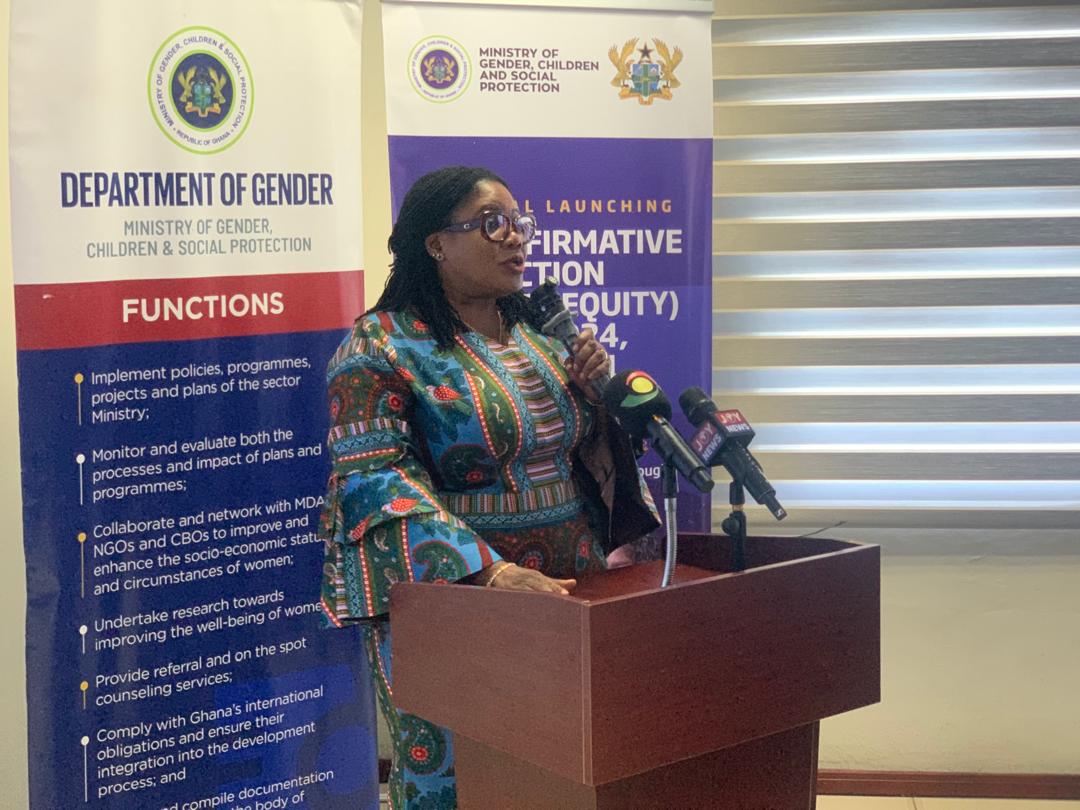
Gender equality should not be left to women alone, but requires the active participation of men and other stakeholders, the Minister for Gender, Children and Social Protection, Dr Agnes Naa Momo Lartey, has said.
She said gender equality was a national development issue and not a matter concerning only women, stressing that both men and women had important roles to play in creating an inclusive society.
Dr Lartey said this last Thursday in Accra at a capacity workshop on the implementation of the Affirmative Action (Gender Equity) Act, 2024.
The workshop was aimed at helping journalists understand the provisions of the Act, strengthen their capacity to communicate gender equity issues and promote accurate, balance reporting on the implementation of the Act.
Ghana could not achieve meaningful development if one section of society was excluded from participating fully in leadership, decision-making and other areas of national development.
“It is not about a group of people. It is not about one of the sexes. It is about the nation. It is about the country,” she said.
She called for stronger commitment to translating the Affirmative Action (Gender Equity) Act, 2024 (Act 1121), into practical action to improve women’s participation in leadership and decision-making.
She said the passage of the law should not be considered the end of the process, but rather the beginning of deliberate efforts to ensure that its objectives were achieved.
Dr Lartey said increasing the number of women in leadership was important, but their participation must also have a meaningful impact on national development.
“We want it to count,” she stressed, calling for practical initiatives that would move the affirmative action agenda from policy to implementation.
The Executive Director of Women, Media and Change (WOMEC), Dr Charity Binka, also urged the media to play a critical role in ensuring the effective implementation of the Act.
She said Ghana had taken an important step by passing the law after 13 years of efforts, but the real test was its implementation.
According to Dr Binka, the Act requires 30 per cent representation of women in leadership and decision-making by 2026, rising to 50 per cent by 2030.
She urged the media to inform the public about the law, monitor institutions’ compliance and challenge stereotypes that undermine women’s leadership.
Dr Binka urged journalists to ensure institutions were complying with requirements, including Gender Equity Policies, Compliance Certificates and annual reports.
She said affirmative action was not about replacing merit with gender, but addressing structural barriers that had historically limited qualified women’s opportunities to participate and lead.
She called for stronger collaboration among government, civil society, traditional and religious leaders, the private sector, the media and other stakeholders to turn the law into measurable results for women and girls.
By Esinam Jemima Kuatsinu
The United Nations has warned, that Gender equality is “woefully off track.”
At the current rate of progress, gender equality would take 171 years to achieve, the UN’s Gender Snapshot report said.
The number of countries with a woman as head of state or government has increased from 2020 to 2026. “Yet six in seven countries are still led by men.
Women’s representation in national cabinets declined to 22.4 per cent in 2026, after peaking at 23.3 per cent in 2024,” the report said. “The decline is a warning sign that gains cannot be taken for granted, and that progress towards equal political power remains fragile.”
Funding for gender equality has fallen to its lowest level since 2021, the report found. At the same time, 42 per cent of UN agencies reported that their efforts to promote gender equality had been weakened, as a result of budget cuts.
Millions of women also continued to endure some extremely severe forms of violence and discrimination across the globe, the UN said. Nearly one in five girls is married before the age of 18, and nearly one in three women globally have survived partner or sexual violence in their lifetime.
In the past year, 316 million women experienced physical or sexual violence by an intimate partner, the report said.
UN Under-Secretary-General for Economic and Social Affairs, Li Junhua, said the statistics were not inevitable. “It is the result of choices, made visible through data. Investing in gender equality, institutions, and the statistical systems that hold them to account is not a cost. It is the fastest route back to the 2030 Agenda’s promise of equal power for all.”-GNA
SKIP THE QUEUE, TAP THE NEWS
You can now read the Ghanaian Times and The Spectator newspapers from the comfort of your device via TimesNewsPlus.
Join our WhatsApp Channel: https://whatsapp.com/channel/0029VbBElzjInlqHhl1aTU27