News
National House of Chiefs rejects CRC recommendations to merge Office of the Land Administrator with Lands Commission

- /home/u249204778/domains/spectator.com.gh/public_html/wp-content/plugins/mvp-social-buttons/mvp-social-buttons.php on line 27
https://spectator.com.gh/wp-content/uploads/2026/05/WhatsApp-Image-2026-05-14-at-18.22.28.jpeg&description=National House of Chiefs rejects CRC recommendations to merge Office of the Land Administrator with Lands Commission', 'pinterestShare', 'width=750,height=350'); return false;" title="Pin This Post">
- Share
- Tweet /home/u249204778/domains/spectator.com.gh/public_html/wp-content/plugins/mvp-social-buttons/mvp-social-buttons.php on line 72
https://spectator.com.gh/wp-content/uploads/2026/05/WhatsApp-Image-2026-05-14-at-18.22.28.jpeg&description=National House of Chiefs rejects CRC recommendations to merge Office of the Land Administrator with Lands Commission', 'pinterestShare', 'width=750,height=350'); return false;" title="Pin This Post">
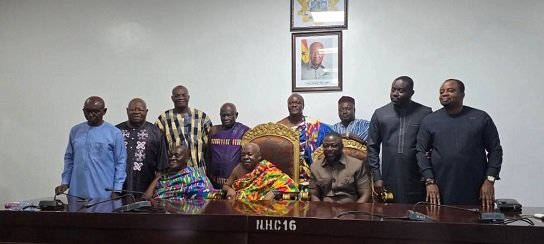
The National House of Chiefs has rejected the Constitutional Review Committee (CRC) recommendation to merge the Office of the Administrator of Stool Lands (OASL) with the Lands Commission.
The House said it maintains that the OASL, which currently operates as a separate and independent constitutional body should remain as such under the Ministry of Lands and Natural Resources.
In a statement issued in Accra and copied The Ghaianan Times, the House explained that the creation of OASL as an independent constitutional body was the request by the member Chiefs on the Consultative Assembly prior to the passage of the 1992 Constitution because of the poor management and handling of stool land revenue under the then Lands Commission.
The House stated that the OASL was created to manage stool land revenue efficiently; to generate income from sources such as rent, royalties, and concessions. The office was created to collect and manage this revenue efficiently.
Others include promoting transparency and accountability.
It said before the creation of OASL, the handling of stool land revenue was often uncoordinated and lacked proper accountability.
However, it noted that the office has since helped to ensure proper record-keeping and transparency.
The House emphasised that the OASL was established under Article 267 (2) of the 1992 Constitution of Ghana and of the firm belief that the recommendations from the CRC will not inure to the benefit of the chieftaincy institution.
The house said it reasons were that the OASL was created for Chiefs and since its establishment, the Office has discharged its functions creditably.
It said chiefs had always wanted their funds managed separately for the benefit of both traditional authorities and local development.
It explained that the recommendations of CRC defeats the purpose for the establishment of OASL as a distinct agency with the sole focus on supporting and assisting Stool and Skin lands administration.
Thus, it said, the OASL was not created merely for revenue collection but to help in the management of stool lands as captured in memorandum to the 1992 Constitution and contained at article 267 (7) & (8);l.
It said the proposed merger will relegate issues of stool and skin lands to the background.
That the OASL helps with the establishment of Customary Land Secretariats (CLSs), and provides land administration advisory services to the chiefs.
Furthermor National House of Chief said it observed that Lands Commission is currently bedevilled with numerous court litigations with a tall list of garnishee orders on their bank accounts which will put stool land revenue at risk.
That Chiefs are skeptical about mixing stool land management with state land management.
Therefore, merging the OASL with the Lands Commission will increase the bureaucratic processes needed for beneficiaries to access funds.
It said the assumption that the OASL and Lands Commission need to merge to make them efficient because the two agencies are operating in silos is not tenable, because the Section 14 of the Land Act, 2020 (Act 1036) article 267(7)(8) of the Constitution and section 7(1)(2) of the Lands Commission Act, 2008 (Act,767) requires the Lands Commission and the OASL to collaborate on customary land administration.
Again, the House found that, Lands Commission has not been able to properly manage state and vested lands under their care and observed how state land management by the Lands Commission has generated a lot of controversies in the recent years, which is just about 15 to 20% of the total land area of Ghana.
In addition, it observed t Lands Commission is not able to manage the 2% of vested lands under its care properly.
It said it takes a long time for Lands Commission to release ground rent from vested lands to the OASL for disbursement to the stools and there are no proper records on vested lands revenue.
The House said it also observed that the merger of the four land sector agencies in 2008 under the new Lands Commission Act, 2008 (Act 767) has not yielded expected results in the management of public lands, registration and land surveying in the country.
The merger of these four land sector agencies has rather worsened challenges that led to the merger. The House observed that, before the merger of the four divisions, then Land Valuation Board was operational in many districts across the country bringing services close to their clients, but the district offices have since closed.
BY MALIK SULLEMANA










The Attorney-General and Minister for Justice, Dr. Dominic Ayine, has announced plans to introduce a new Bill to strengthen the legal framework for the discipline of lawyers in Ghana.
In an address read on his behalf by the Deputy Attorney-General at the opening of the 2026 Conference of the Ghana Bar Association, Dr. Ayine disclosed that the Bill is headed to Cabinet for review and approval before being laid before Parliament.
The proposed law, to be called the Legal Profession (Practitioners Standards Board) Bill, is expected to transform and strengthen the regulatory framework for disciplining lawyers to safeguard the rights of practitioners and promote public confidence in the profession.
According to the Attorney-General, when passed, the Bill will establish an independent Disciplinary Committee with clear rules of procedure and proposals on proportionate sanctions.
He explained that this marks a progressive departure from the existing framework where the Disciplinary Committee both investigates and adjudicates complaints. The Bill also proposes clear and strict procedural timelines for resolving grievances to avert prolonged deliberations that frustrate both clients and lawyers.
Secondly, Dr. Ayine noted that under the current framework, Superior Court judges sit on the Disciplinary Committee whose decisions, as quasi-judicial decisions, are subject to reviews and appeals in the same courts where these judges preside.
The new Bill seeks to eliminate this conflict of interest by creating a separately constituted Board composed of lay non-lawyers and professional representatives with guaranteed tenure.
The Attorney-General added that the Bill seeks to separate professional discipline from executive, judicial or competitive interference to ensure that disciplinary mechanisms are not weaponized against lawyers by clients, the Bench, or the State.
The introduction of the new law forms part of efforts by the Attorney-General to introduce reforms into the legal profession aimed at revolutionizing legal practice and training. It follows the passage of the Legal Education Act, 2026, which is currently at the implementation stage.
News
Gov’t did not approve market near school — Stan Dogbe clears air on Ahafo Ano South market siting
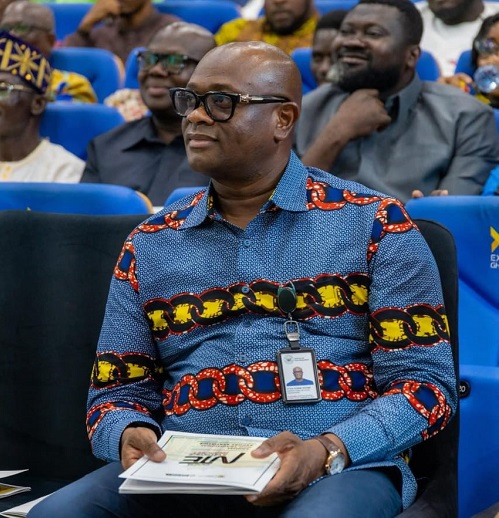
Deputy Chief of Staff, Stan Xoese Dogbe has reacted to a viral video raising concerns about the siting of a market close to a school in the Ahafo Ano South District of the Ashanti Region.
In a post responding to the video, Mr. Dogbe said he has been in contact with the Ashanti Regional Minister, Dr. Frank Amoakohene, who he said is on top of the situation and has long since halted the construction process.
According to him, the decision to designate the said land near the school for the market was not a government decision.
“Once the development was brought to the RCC’s attention, the regional minister immediately asked that the process be stopped,” he stated.
Mr. Dogbe explained that the community currently has no available land space for the construction of the model market, which necessitated their choice of the location near the school.
He noted however that the community has been asked to find another, more suitable piece of land for the project to commence.
“We thank all for the interest in developmental issues in our communities,” he added.
By Edem Mensah-Tsotorme