News
CSA marks Cyber Security Awareness Month with maiden National Cybersecurity Education Conference in Accra


The Cyber Security Authority (CSA) has held the maiden National Cybersecurity Education Conference in Accra to promote cyber resilience and digital rights in Ghana’s education sector.
The conference, organised at the Ghana Tertiary Education Commission (GTEC) auditorium, formed part of activities to mark this year’s National Cyber Security Awareness Month, under the theme “Empowering Higher Education for Cyber Resilience and Digital Rights.”
Speaking at the event, the Acting Director-General of the CSA, Mr. Divine Selase Agbeti, said the theme reflects a shared national commitment by the Authority, the Ministry of Education, GTEC, and all tertiary institutions to build a secure and responsible digital future.
He explained that cybercrime is projected to reach $10.5 trillion globally by the end of 2025, making it one of the biggest economic threats in history. Meanwhile, there remains a shortfall of about four million cybersecurity professionals worldwide.
Mr. Agbeti said Ghana’s rapid digitalisation, where nearly 70 percent of the population relies on the internet for education, governance, and commerce has also increased exposure to cyber risks.
He noted that tertiary institutions have faced cyber incidents such as grade alteration, forged certificates, exam leakages, sextortion, and admission scams, which threaten student welfare and institutional credibility.
He revealed that the education sector has been designated as critical information infrastructure, and protecting it is essential to national security and development.
For that reason, he revealed that the CSA has prioritised education within Ghana’s National Cyber Resilience Strategy, guided by the Cybersecurity Act, 2020 (Act 1038) and the National Cybersecurity Policy and Strategy.
According to Mr. Agbeti, the CSA is working with GTEC and the Ministry of Education to integrate cybersecurity into teaching, learning, and institutional management.
“A draft Memorandum of Understanding (MoU) has been submitted to GTEC to formalise the development of a National Cybersecurity Competency and Qualification Framework, which will create a clear learning path from basic cyber literacy to advanced professional certification” he added.
He further announced that the Authority is collaborating with the Ministry of Education to establish an Education Sectoral Computer Emergency Response Team (EDU-SCERT) to coordinate responses to cyber incidents across universities and colleges.
Mr. Agbeti added that the CSA has reached over 5.6 million adults with cybersecurity awareness programmes between January and October 2025, compared to only 102,000 people reached in 2022, a sign of growing national awareness.
“Cybersecurity can no longer be limited to IT departments or computer labs. Every student, whether studying medicine, law, or business, should have basic knowledge of digital safety and responsibility,” he emphasised.
He commended GTEC, the Ministry of Education, and the Accra Technical University for partnering to organise the event, calling for the conference to become an annual platform for dialogue between academia, industry, and policymakers.
Delivering a keynote address on behalf of the Minister for Education, the Executive Director of CENDLOS, Prof. Diyawu Mumin, said the education sector faces an average of 2,507 cyberattacks weekly globally, making it one of the most targeted sectors worldwide.
He disclosed that between January and October 2025, Ghana’s National Cyber Security Emergency Response Team identified 505 leaked employee credentials and over 5,000 stealer logs belonging to educational institutions, many of which were available for sale on the dark web.
Prof. Mumin said the Ministry recognises that effective policy is the first line of defence in protecting the education system.
He mentioned that the Ministry, in collaboration with the CSA, GTEC, and other stakeholders, has reviewed Ghana’s ICT in Education Policy and EdTech Strategy to embed cybersecurity and digital safety across all levels of learning.
He encouraged GTEC to expedite the signing of the MoU with the CSA to start implementing the cybersecurity competency framework, adding that cybersecurity should be a general course across all disciplines, not just in IT.
“Our vision is for every student, regardless of discipline, to graduate with a grounding in cybersecurity and digital ethics. Universities must treat cybersecurity as a matter of governance and national security, not merely a technical subject,” he stated.
Prof. Mumin also confirmed that the Ministry is working with the CSA to establish an Education Sector Computer Emergency Response Team, which will detect, coordinate, and respond to cyber incidents in the education ecosystem.
He called for urgent action against admission scams, sextortion, cyberbullying, and certificate forgery, which he said threaten trust in Ghana’s educational institutions.
The Director-General of the Ghana Tertiary Education Commission (GTEC), Prof. Ahmed Jinapor Abdulai, in his remarks, said safeguarding Ghana’s digital future must begin from the classroom, the laboratory, and the lecture hall.
He described the theme as visionary and relevant, noting that while digital transformation has improved teaching and research, it has also exposed institutions to cyber threats that can cripple systems and compromise data.
Prof. Jinapor said cybersecurity is no longer the sole responsibility of IT departments but a civic and educational duty that demands ethical reflection and institutional leadership.
He revealed that GTEC is integrating cybersecurity awareness into quality assurance frameworks, programme accreditation, and institutional audits, and reaffirmed the Commission’s partnership with the CSA to make cybersecurity education a national priority.
“Universities and colleges must produce not only employable graduates but resilient ones. individuals who understand the value of information, the sanctity of privacy, and the ethical use of technology,” he said.
He added that GTEC would continue to encourage curriculum reforms to ensure that cybersecurity education cuts across all disciplines and institutions.
Prof. Jinapor urged tertiary institutions to allocate resources for digital security, train staff and students to recognise risks, and adopt robust response systems, stressing that cyber resilience will soon define institutional credibility just as accreditation defines academic standards.
He concluded that Ghana’s youthful population and expanding tertiary sector give the country a unique opportunity to become a continental leader in cybersecurity education and policy innovation.
By: Jacob Aggrey






Medical Doctor and dietician, Dr Bernice Korkor Asare, has urged women to take greater responsibility for their lifestyle choices, particularly their eating habits and levels of physical activity, to help reduce their risk of developing breast cancer.

According to her, although, some breast cancer risk factors, such as family history and certain reproductive factors, may not be within an individual’s control, lifestyle choices offer an opportunity for people to take preventive action.
She made this known during a talk on the topic: “Role of diet in breast cancer prevention” organised by Times Ladies Association of the New Times Corporation, publishers of The Ghanaian Times and The Spectator, in Accra on Thursday.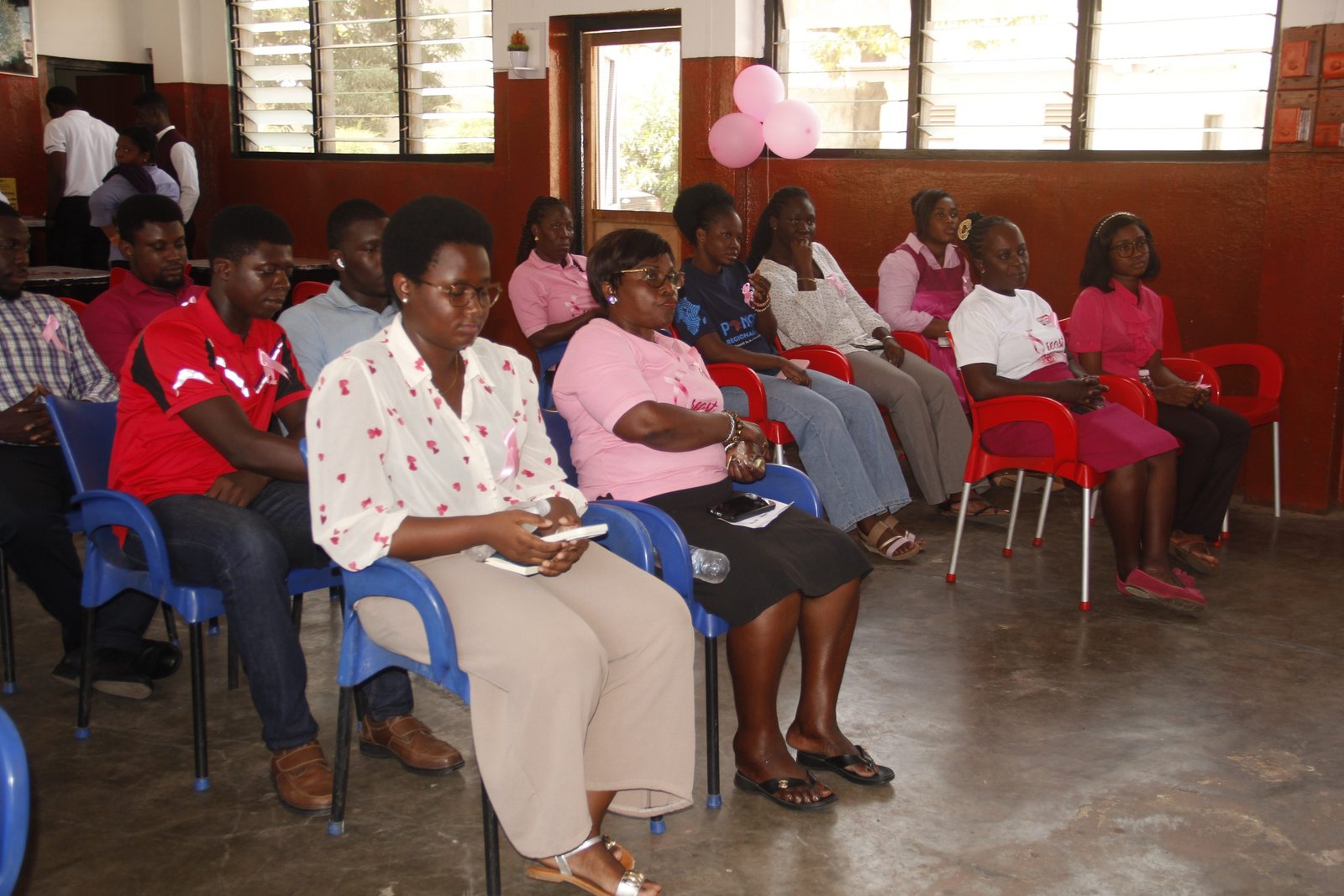
The event themed “Breast Cancer Awareness- Promoting Early Detection, Healthy Eating and Prevention.” 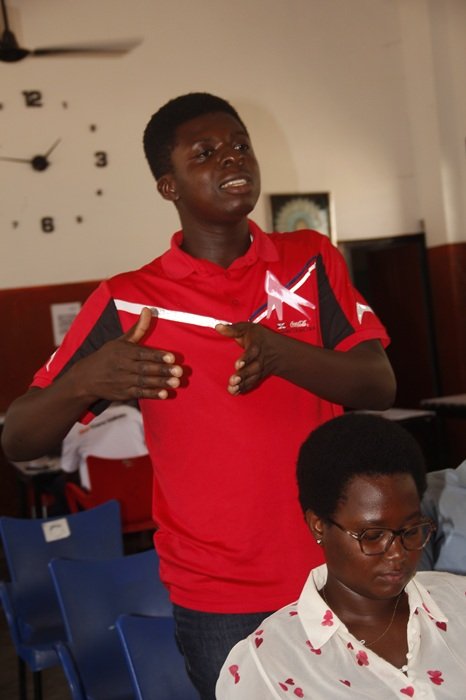
She noted that having a risk factor did not automatically mean a person would develop breast cancer, but could increase the likelihood of developing the disease compared with someone without that particular risk factor.
“Having close relatives who have had breast cancer, particularly a mother, sister or daughter, may increase the risk, although not everyone with a family history will develop the disease,” Dr Asare opined. Read More.
By Adizatu K. Munkaila
SKIP THE QUEUE, TAP THE NEWS
Read Daily News
You can now read the Ghanaian Times and The Spectator newspapers from the comfort of your device via TimesNewsPlus.
Buy Maps
Join our WhatsApp Channel: https://whatsapp.com/channel/0029VbBElzjInlqHhl1aTU27

A group of compassionate friends from Innovation Gospel Impact last Friday visited the management, teachers and learners of the Street Academy in Accra.
The visit was to interact to get a deeper insight into the operations of the Academy that houses hundreds of street and underprivileged children and find ways to support them.
The team was led by Rev. Dr Isaac Apenteng Yeboah, a former Director for West African Mailbox Club and Director for Prisons Support Foundation, and Rev. Dale Sutherland from Washington DC.
The call, according to the visitors was occasioned by reports about the struggles of the Academy despite the occasional support it enjoys from individuals and some corporate entities.
Briefing them, the Founder and Executive Director of the Academy, Dr Ataa Lartey, thanked them for the concern showed, indicating that “this is a major boost for both teachers and learners; knowing that their plight is known by people outside their premises.”
According Dr Lartey, the Academy had planned to undertake a number of project to enhance teaching and learning and also procure facilities for the children with keen interest in sports but had to shelve those plans for lack of finance.
He told the team that their biggest concerns were the monthly utility bills that takes a toll on their finances.
“We have a piece of land we planned to turn into an astro turf pitch to train the younger ones whose interests lies in making a career out of football, however, we have been unable to commence because there is no money now,” he said.
Dr Lartey expressed gratitude to the teachers who have dedicated their lives to training these children, rather than going for well-paying jobs and hoped that with time, their conditions of engagement would improve.
Moved by the plight of the Academy, the group donated a cash amount of Gh₵3,000 to settle its water bills.
They described as unfortunate the conditions of learners and teachers of the Academy and pledged to continuously support their operations to realize the dream to build a better future for the unfortunate children.
The group offered to support the school with its monthly utility bills, feeding and staff allowance and urged the Academy staff to remain in constant touch with them.
The Street Academy is located at the Accra Art Center and offers brilliant but needy the chance to pursue their educational dreams by enrolling them in public schools with others offered training in sports and cultural activities.
By Spectator Reporter
SKIP THE QUEUE, TAP THE NEWS
You can now read the Ghanaian Times and The Spectator newspapers from the comfort of your device via TimesNewsPlus.
Join our WhatsApp Channel: https://whatsapp.com/channel/0029VbBElzjInlqHhl1aTU27