News
Stakeholders call for deeper consultation on Ghana’s national energy transition framework

- /home/u249204778/domains/spectator.com.gh/public_html/wp-content/plugins/mvp-social-buttons/mvp-social-buttons.php on line 27
Warning: Trying to access array offset on false in /home/u249204778/domains/spectator.com.gh/public_html/wp-content/plugins/mvp-social-buttons/mvp-social-buttons.php on line 27
&description=Stakeholders call for deeper consultation on Ghana’s national energy transition framework', 'pinterestShare', 'width=750,height=350'); return false;" title="Pin This Post">
- Share
- Tweet /home/u249204778/domains/spectator.com.gh/public_html/wp-content/plugins/mvp-social-buttons/mvp-social-buttons.php on line 72
Warning: Trying to access array offset on false in /home/u249204778/domains/spectator.com.gh/public_html/wp-content/plugins/mvp-social-buttons/mvp-social-buttons.php on line 72
&description=Stakeholders call for deeper consultation on Ghana’s national energy transition framework', 'pinterestShare', 'width=750,height=350'); return false;" title="Pin This Post">
Participants in renewable energy and efficiency have called for deeper consultation on Ghana’s national energy transition framework to avoid dire financial consequences on local economies.
For them, energy transition was important as the whole world was moving towards that and Ghana could not be left out, however, there were a lot of implications in the quest to move towards cleaner energy.
In a day’s youth participation in energy transition and domestic resources mobilisation workshop organised by the Strategic Youth Network Development (SYND), they indicated that the energy transition model used by developed countries could not be used for African countries that were still struggling to grow.
Dr Robert Bright Mawuko Sogbadji, leading expert in Nuclear physics and renewable energy explained that Ghana’s National Energy Framework seeks to minimise energy related indoor air pollution and its related illnesses but Ghana was reliant on the oil and gas industry and that if we say we were going to hastily transition, it meant that we were going to lose out on revenue.
For instance, he said Ghana raked in $1.6 billion from petroleum revenue in 2022 and, therefore, any rush in energy transition would create financial loss to the country.
He said it was important for all countries in Africa to strive to achieve energy access because failure to do so would affect sustainable development.
In doing so, he said efforts must be made to put in place improved infrastructure along the value chain from generation to distribution.
Dr Sogbadji also said that even as African countries strived for the right financing for sustainable energy transition, there must be the political will to push through policies that would help to achieve net zero.
“The various governments must also ensure that there is ease of doing business, aside from implementing policies that will attract private capital,” she added.
Denis Gyeyir, Senior Programmes of Natural Resource Governance Institute (NRGI) said the energy sector was one of the high emitting sectors which was key if Ghana was to achieve its net zero ambitions.
This, he said, would have a significant impact on women and children who are the main gatherers of firewood.
However, he said limitations such as challenging investment climate, uncertainty of available resources, limited technology capacity, insufficient experience in renewable energy development, human and socio-economic challenges and information gap were some barriers to renewable energy development in the country.
He called for an information labelling to display information to be available to customers to help encourage energy efficiency in the country.
BY BENEDICTA GYIMAAH FOLLEY


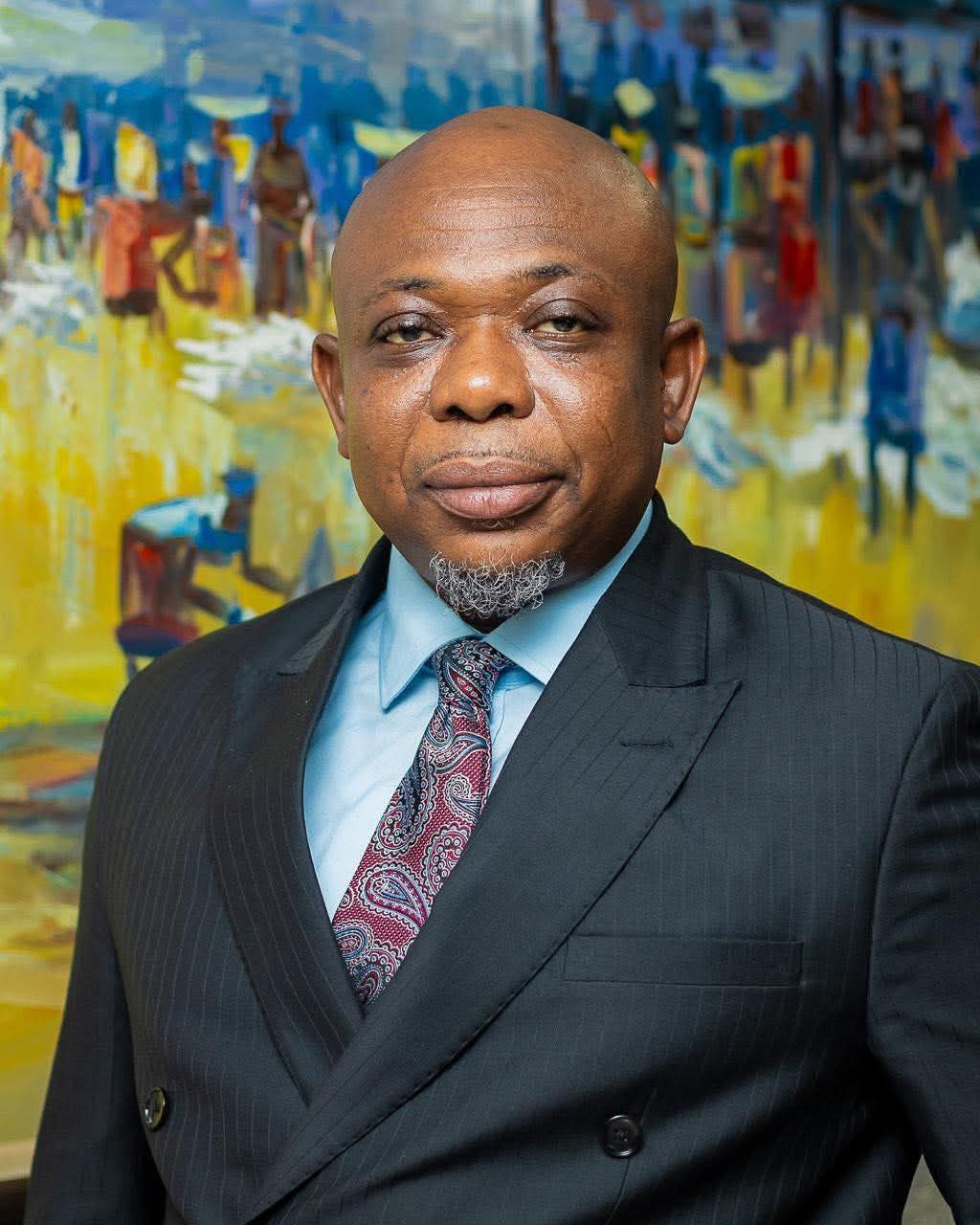
Majority Leader of Parliament, James Agalga, has expressed gratitude to Ghanaians for the confidence reposed in him following his elevation to the position.
Mr Agalga thanked Ghanaians who had sent him congratulatory messages and expressed appreciation to President John Dramani Mahama, the leadership of the National Democratic Congress (NDC), members of the Majority Caucus and the people of Builsa North.
In a statement posted on his socials, he also extended his gratitude to Ghanaians across the country for their support and confidence.
He pledged to work with other stakeholders to advance the government’s Reset Agenda and support the passage of legislation that would improve the lives of Ghanaians.
“We remain committed to working together to drive the government’s RESET Agenda and to champion legislation that delivers real benefits to every Ghanaian,” he said.
Mr Agalga called for continued cooperation as he begins his new role as Majority Leader.
By: Jacob Aggrey
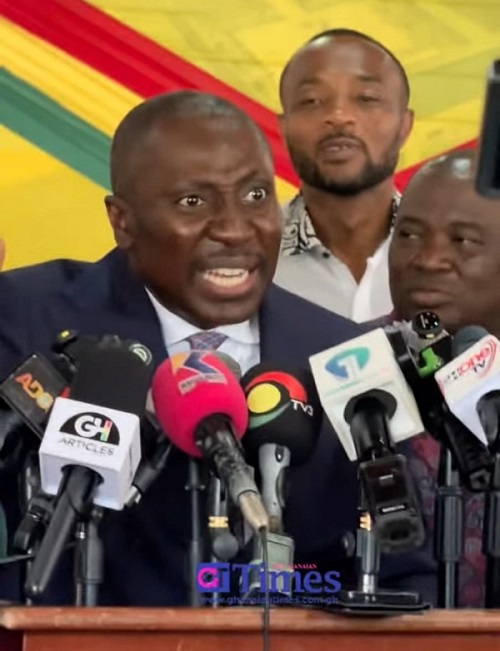
Minority Leader in Parliament, Alexander Afenyo-Markin, has maintained that the Minority’s concerns over the reported GH¢22 billion loss linked to the Ghana Gold Board (GoldBod) are not politically motivated.
He made the remarks at a press conference in Parliament on Tuesday, August 18, 2026, where he defended the Minority’s position on the financial implications of GoldBod’s domestic gold purchasing operations.
Mr Afenyo-Markin stated that the Minority was raising the concerns because Ghanaians deserved clear information about how public funds were used in the gold purchasing programme.
He explained that the figures being cited by the Minority were contained in the International Monetary Fund’s (IMF) report on Ghana and were therefore not figures manufactured by the opposition.
According to him, the IMF identified losses of about US$1.7 billion, equivalent to approximately GH¢22 billion, from the domestic gold purchasing programme in 2025.
He said the IMF attributed the losses to service and assay fees, discounts on gold sold to off-takers and exchange-rate differences between the rates used to purchase gold and the reference rate used by the Bank of Ghana for accounting purposes.
Mr Afenyo-Markin argued that the losses should be subjected to public scrutiny because GoldBod played a central role in buying, aggregating, assaying and exporting the gold, while the Bank of Ghana provided the financing.
He questioned why GoldBod should receive fees from the transactions while the associated losses were reflected on the books of the Bank of Ghana.
The Minority Leader stressed that the location of a loss in an institution’s accounts did not change its economic impact on the country.
He therefore called for answers on the prices paid for gold, how the prices were determined, the selection of off-takers, discounts applied to gold sales and the fees earned by GoldBod.
Mr Afenyo-Markin questioned the risk-sharing arrangement between GoldBod and the Bank of Ghana, arguing that the institution carrying out the commercial activity should not be able to benefit from transaction fees while another institution bears most of the financial risk.
He said the Minority was not seeking to trade insults with GoldBod officials but was focused on holding institutions accountable for the management of public resources.
He urged the government and GoldBod to address the concerns raised by the IMF and provide Ghanaians with clear explanations about the reported losses.
Mr Afenyo-Markin maintained that the Minority would continue to scrutinise the programme because the financial consequences ultimately affected Ghanaian taxpayers.
By: Jacob Aggrey