Gender
Plan International Ghana’s intervention enhances girls’ education

Plan International Ghana’s adolescent girls’ intervention in some communities in northern Ghana has helped retain adolescent girls in school and enhance their education to enable them to achieve their life aspirations.
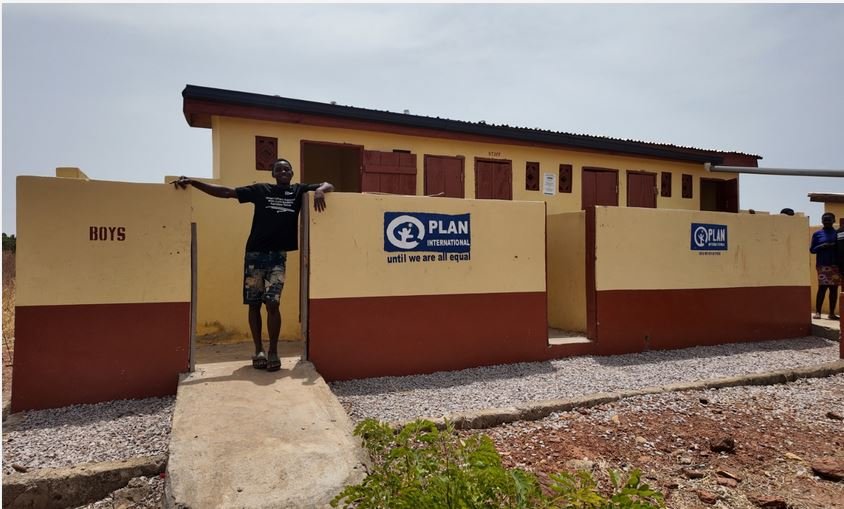
These interventions included the adolescent Drop-in Centres, school Water, Sanitation and Hygiene (WASH) facilities, improved access to and use of sanitary pads and changing rooms for girls.
The Drop-in Centres had been equipped with indoor and outdoor games, including ludu, oware, and footballs and a television set, to keep the girls lively while going through mentorship and sensitisation at the Centre.
That became known during a field visit to the Mimima, Sagadugu and Guabuliga communities in the North East Region, where those interventions were being implemented to ascertain the impact of the projects on the people.
The visit was to climax a three-day capacity-building workshop for some journalists and media practitioners in northern Ghana organised by Plan International Ghana, a development and humanitarian Non-governmental Organisation (NGO).
At the Mimima community, where a Drop-in Centre had been constructed, some adolescent girls told the Ghana News Agency (GNA) in an interview that the Centre was empowering them to take responsibility for their bodies.
Agnes, 14 (not her real name), said they were receiving Adolescent Sexual and Reproductive Health Rights (ASRHR) education, including menstrual hygiene management, which had enhanced their dignity.
She noted that had enabled them stay in school during their menstrual periods, ensuring their effective participation in academic activities and improving their educational performances.
Ms Hamdya Baaba, the facilitator at the Drop-in Centre at Mimima, said she had been teaching the girls good menstrual hygiene management and SRHR to prevent them from pregnancy and sexually transmitted infections.
Some parents in the community also praised the interventions as they saved their girl children from using rags to manage their menstruation.
“Some of us used to fold rags for our girl children during their menstrual periods, and because of that, they sometimes stained themselves with blood. But when Plan International Ghana came to this community, it taught the girls how to use sanitary pads.”
The NGO also gave the girls some reusable sanitary pads that they can always wash and use, and because of that, the girls are always in school even during their menstrual periods,” Madam Abena Miyanga, a parent, stated.
The Mimima community is also benefiting from the Educational Outcome Fund (EOF) project, where out-of-school children from the age of eight to 16 receive a nine-month cycle of literacy and numeracy training through Complementary Basic Education (CBE) and were integrated into the mainstream education.
Madam Miyanga told the GNA that her child, who dropped out of school, had returned and was currently in basic five through the EOF’s CBE programme.
Eleven-year-old Magdalene, a participant of the project and currently in basic six, expressed gratitude to Plan International Ghana for the intervention, as it had given her the opportunity to acquire formal education.
The Integrated Package for Sustainable Development (IPADEV) project constructed a WASH facility and girls’ changing rooms at the Sagadugu R/C Basic School to ensure safe access to WASH services and a place for menstrual hygiene management while in school. —GNA







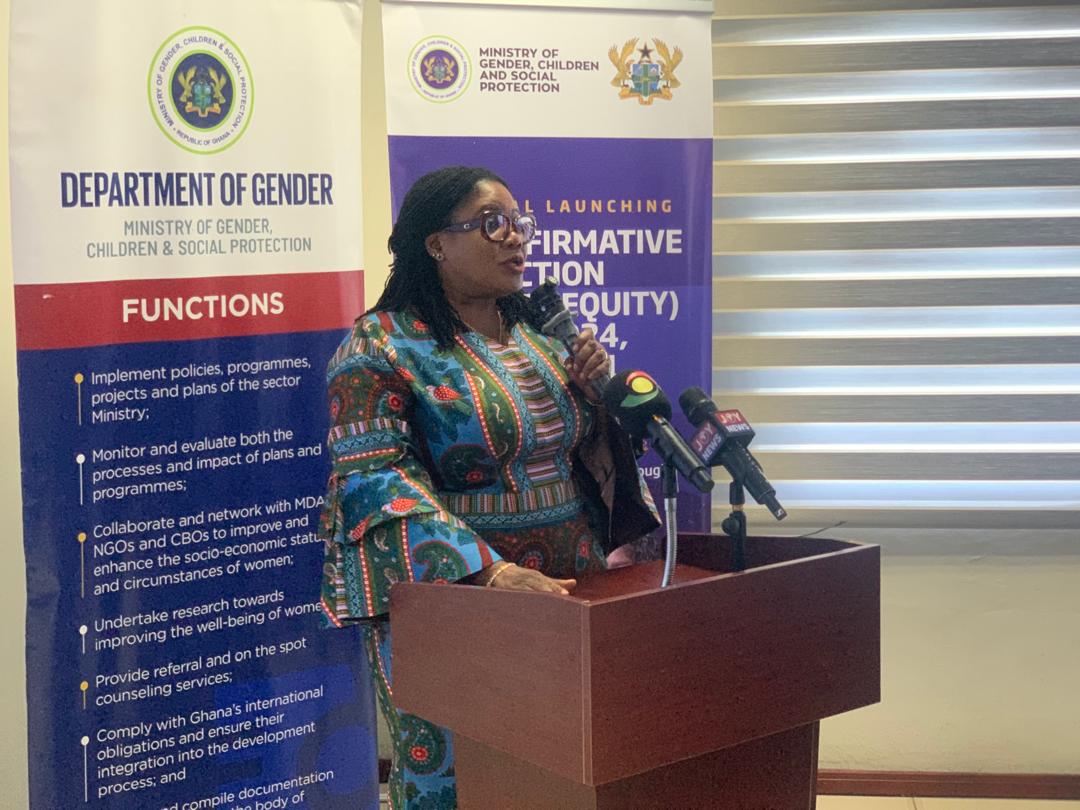
Gender equality should not be left to women alone, but requires the active participation of men and other stakeholders, the Minister for Gender, Children and Social Protection, Dr Agnes Naa Momo Lartey, has said.
She said gender equality was a national development issue and not a matter concerning only women, stressing that both men and women had important roles to play in creating an inclusive society.
Dr Lartey said this last Thursday in Accra at a capacity workshop on the implementation of the Affirmative Action (Gender Equity) Act, 2024.
The workshop was aimed at helping journalists understand the provisions of the Act, strengthen their capacity to communicate gender equity issues and promote accurate, balance reporting on the implementation of the Act.
Ghana could not achieve meaningful development if one section of society was excluded from participating fully in leadership, decision-making and other areas of national development.
“It is not about a group of people. It is not about one of the sexes. It is about the nation. It is about the country,” she said.
She called for stronger commitment to translating the Affirmative Action (Gender Equity) Act, 2024 (Act 1121), into practical action to improve women’s participation in leadership and decision-making.
She said the passage of the law should not be considered the end of the process, but rather the beginning of deliberate efforts to ensure that its objectives were achieved.
Dr Lartey said increasing the number of women in leadership was important, but their participation must also have a meaningful impact on national development.
“We want it to count,” she stressed, calling for practical initiatives that would move the affirmative action agenda from policy to implementation.
The Executive Director of Women, Media and Change (WOMEC), Dr Charity Binka, also urged the media to play a critical role in ensuring the effective implementation of the Act.
She said Ghana had taken an important step by passing the law after 13 years of efforts, but the real test was its implementation.
According to Dr Binka, the Act requires 30 per cent representation of women in leadership and decision-making by 2026, rising to 50 per cent by 2030.
She urged the media to inform the public about the law, monitor institutions’ compliance and challenge stereotypes that undermine women’s leadership.
Dr Binka urged journalists to ensure institutions were complying with requirements, including Gender Equity Policies, Compliance Certificates and annual reports.
She said affirmative action was not about replacing merit with gender, but addressing structural barriers that had historically limited qualified women’s opportunities to participate and lead.
She called for stronger collaboration among government, civil society, traditional and religious leaders, the private sector, the media and other stakeholders to turn the law into measurable results for women and girls.
By Esinam Jemima Kuatsinu
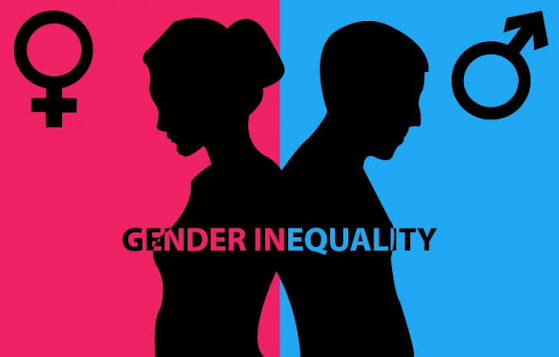
The United Nations has warned, that Gender equality is “woefully off track.”
At the current rate of progress, gender equality would take 171 years to achieve, the UN’s Gender Snapshot report said.
The number of countries with a woman as head of state or government has increased from 2020 to 2026. “Yet six in seven countries are still led by men.
Women’s representation in national cabinets declined to 22.4 per cent in 2026, after peaking at 23.3 per cent in 2024,” the report said. “The decline is a warning sign that gains cannot be taken for granted, and that progress towards equal political power remains fragile.”
Funding for gender equality has fallen to its lowest level since 2021, the report found. At the same time, 42 per cent of UN agencies reported that their efforts to promote gender equality had been weakened, as a result of budget cuts.
Millions of women also continued to endure some extremely severe forms of violence and discrimination across the globe, the UN said. Nearly one in five girls is married before the age of 18, and nearly one in three women globally have survived partner or sexual violence in their lifetime.
In the past year, 316 million women experienced physical or sexual violence by an intimate partner, the report said.
UN Under-Secretary-General for Economic and Social Affairs, Li Junhua, said the statistics were not inevitable. “It is the result of choices, made visible through data. Investing in gender equality, institutions, and the statistical systems that hold them to account is not a cost. It is the fastest route back to the 2030 Agenda’s promise of equal power for all.”-GNA
SKIP THE QUEUE, TAP THE NEWS
You can now read the Ghanaian Times and The Spectator newspapers from the comfort of your device via TimesNewsPlus.
Join our WhatsApp Channel: https://whatsapp.com/channel/0029VbBElzjInlqHhl1aTU27