Profile
Nyange: The sleeping capital of the Gonja Kingdom rises again

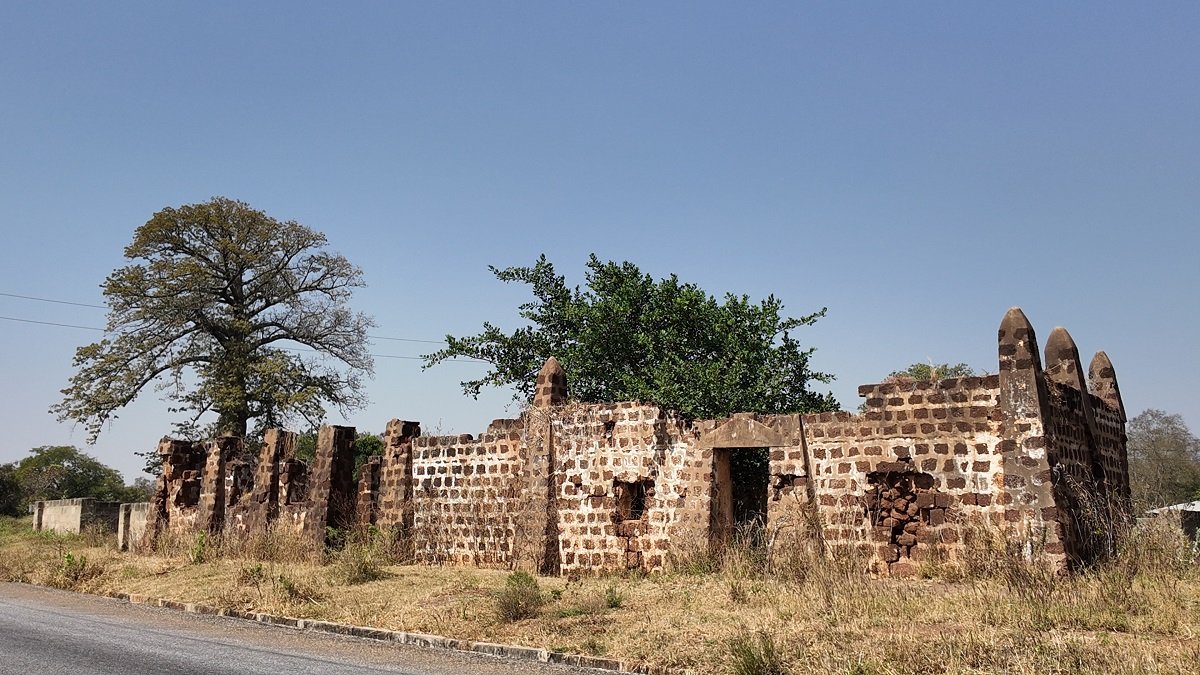
FEW miles from Damongo, in Ghana’s Savannah Region, is Nyange, a place which is divided by a busy major road from Tamale to Sawla, which looks abandoned because of the ruins of the buildings, but holds a history vast enough to have once anchored an entire kingdom.
Long before Damongo became the administrative heartbeat of Gonjaland, Nyange served as the spiritual and political centre of the Gonja Kingdom, the original seat of the Yagbonwura, home to ancestral palaces, ritual grounds, and the rituals that shaped kings.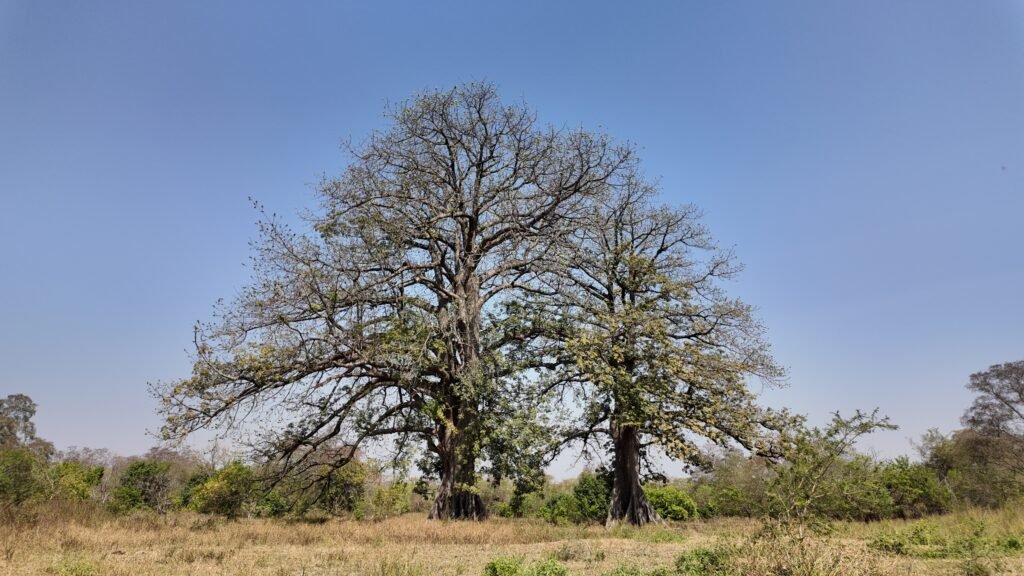
For decades, Nyange drifted into silence, but after Yagbonwura Bii-Kunuto Jewu Soale I, the King and Overlord of the Gonja Kingdom, announced intentions to reconstruct elements of the old capital, I felt compelled to visit to see for myself what remained of this sacred landscape, and to understand why its revival matters now.
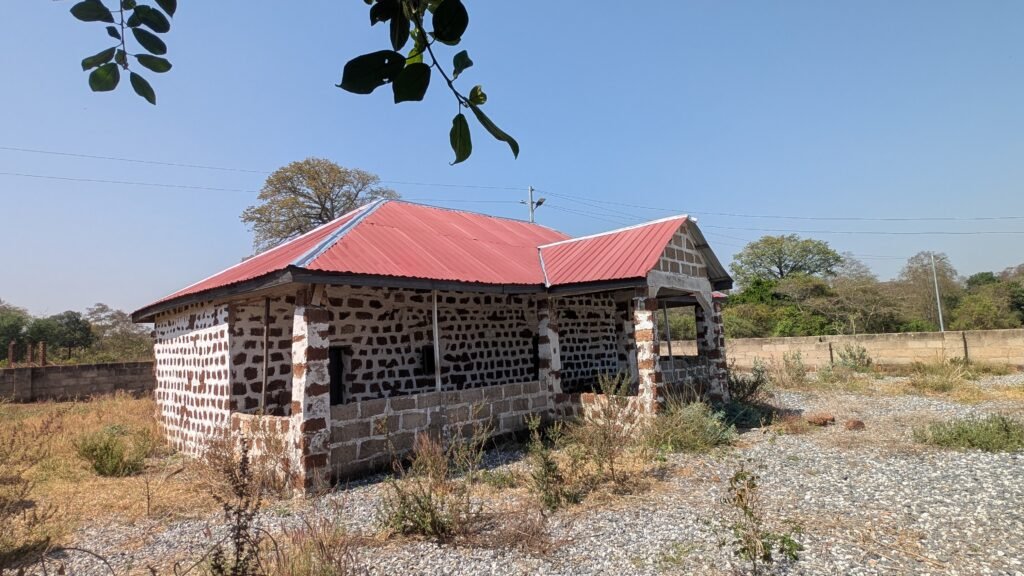
Walking through Nyange, I met a woman who we spent some time narrating briefly the unspoken chapters of Nyange history. The land according to her, still holds the outlines of what once defined a kingdom—the Gonja, the stone foundations of ancient palaces, sacred groves where rituals once echoed, and open courtyards where chiefs, land priests, and kingmakers shaped the affairs of the state—and the empty bricks and white dotted paint that host every late and Yagbonwura.
Nyange was the original home of the Ndewura Jakpa Palace, a towering symbol of power that stood until 1944, when Yagbonwura Awusi Ewuntomah of Daboya transferred the royal seat to Damongo. The administrative centre moved but Nyange’s spiritual authority never left.
Where Every King Begins and Ends His Journey
My visit revealed why no Gonja story is complete without Nyange. Its significance is anchored in traditions still observed today.
When a Yagbonwura passes, the first funerary rituals begin in Nyange before the body travels to the Royal Mausoleum in Mankuma. The journey follows an ancient path that deliberately avoids Sawla—a tradition safeguarded for generations.
Rites That Begin a Reign
In 2023, whiles covering the enskinment of the Yagbonwura, he first arrives in Nyange to begin his sacred initiation, where every Yagbonwura has to start the initiation.
These rites, performed only here, link the new king to the ancestry of Ndewura Jakpa. For centuries, Nyange was the permanent residence of successive Yagbonwuras, where its soil is layered with leadership, legacy, and the quiet footsteps of royalty.
A Heritage Landscape Waiting to Be Reimagined
As we moved through the community, it became clear that Nyange holds immense potential for cultural tourism, research, and documentation.
Still visible across the landscape are the ruins of palaces occupied by ancient Yagbonwuras, the tomb of Wasipewura Chinchanko of Daboya, remains of the stone palace of Yagbonwura Mahama Dagbonga of Bole, enskinment sites, sacred burial grounds, the Nyange Forest Reserve—long known for trees used in crafting royal coffins—and the homes of key custodians, including Nyangewura and Land Priest Vogu Jamani.
Nyange’s proximity to Mole National Park makes it ideal for an eco-cultural tourism circuit, weaving together wildlife, architecture, oral history, drumming, dance, and the lived memory of the Gonja people.
Local leaders are already discussing the creation of heritage trails, interpretive centres, and storytelling experiences led by community custodians.
Just beyond Nyange lies Larabanga, home to one of West Africa’s oldest Sudano-Sahelian mosques. Together, these two communities could anchor a cultural corridor capable of drawing visitors from across the world.
Larabanga offers architectural and religious significance, whiles Nyange offers political and spiritual heritage. Together, they tell a complete story of identity, power, belief, and continuity.
As I spoke with some people in Nyange, I could feel both urgency and hope, when they outlined a clear vision for the future by the efforts of the Yagbonwura to restore palace ruins, document sacred sites, establish cultural education and preservation programme, and develop sustainable tourism models that benefit residents.
But more than infrastructure, they spoke of identity—emphasising that, “our history is here.”
Leaving Nyange, I carried with me the feeling of a place on the brink of transformation, the past lingers in its broken walls and ancient pathways, but the future feels within reach—guided by royal leadership, community pride, and the quiet determination to revive a forgotten capital.
Nyange is not simply being restored, rather it is being reclaimed. And as the reconstruction efforts begin, the world may soon witness the rebirth of a capital that once shaped a kingdom and is ready to do so again.
From Geoffrey Buta, Nyange.
Join our WhatsApp Channel now!
https://whatsapp.com/channel/0029VbBElzjInlqHhl1aTU27



In the world of sports, athletes often take center stage while the role of officials remains equally critical, yet less celebrated.
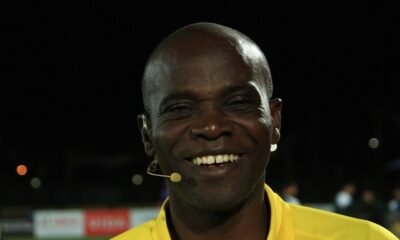
One Ghanaian is steadily changing that narrative. He is Aziz Adimah, a dedicated hockey umpire whose journey from the school field to the international arena reflects passion, resilience, and purpose.
Aziz Adimah’s story with hockey began during his secondary school days. Introduced to the sport in his second year by a peer tutor, what started as a casual interest quickly evolved into a lifelong commitment.
After completing school, he continued playing actively, but by 2008, he made a defining decision to pursue officiating seriously.
That decision marked the beginning of a remarkable turn in his sports journey.

While many athletes aspire to reach the pinnacle as players, Aziz recognised a different path to longevity and impact in the sport. According to him, playing careers especially at the national level can be short-lived, often limited to a few major tournaments.
Officiating, however, offered a broader horizon.
Through umpiring, Aziz found an opportunity not only to stay connected to the sport but also to rise through the global ranks. His dedication has since earned him a place on the international stage, where he proudly represents Ghana.
One of Aziz’s greatest motivations is the honour of representing his country internationally. Having officiated in global competitions, including World Cup qualifiers, he describes the experience as both humbling and inspiring.
Among his most memorable moments was officiating a high-intensity match between Pakistan and England during a World Cup qualifying tournament.
The pace, skill, and tactical depth of the game left a lasting impression on him and reinforced his passion for the profession.
“Being alone on that stage, representing your country is a special kind of pride,” he reflects.
Like every profession, umpiring comes with its own set of challenges. For Aziz, two stand out: logistics and performance expectations.
Unlike players who often benefit from structured team support, umpires must sometimes navigate limited resources, including travel logistics. Additionally, officials are expected to perform at standards higher than the level of play in their home countries which required constant learning, exposure, and adaptation to global trends.
Another major challenge lies in decision-making under pressure. Aziz recounts a particularly difficult moment when, as a video referee, he had to review footage and make a call that resulted in a player receiving a yellow card and a ten-minute suspension.
“In such moments, you know that if you get it wrong, it affects the entire game,” he explains.
Umpiring demands sharp judgment, often within split seconds. Aziz emphasises that fans and players must understand the intensity of this responsibility.
“The umpire processes everything in a split second. Sometimes you get it right, sometimes you don’t but the pressure is always there.”
Fortunately, he highlights the strong support system within the hockey hierarchy; from coaches to technical teams which provides room for reflection, learning, and growth.
Beyond officiating, Aziz is deeply committed to developing hockey in Ghana.
He runs an academy that focuses on nurturing young talent, with programmes for both youth and university students.
Currently, the academy trains players under 20 and is expanding its reach within tertiary institutions.
His goal is to build a strong pipeline of talent while also promoting officiating as a viable pathway in the sport.
However, he notes a significant gap in female participation, particularly in umpiring.
Efforts are underway to intentionally recruit and mentor more women into officiating roles, including collaborations with schools and international professionals.
Outside the hockey field, Aziz maintains a professional career, balancing work responsibilities with his demanding schedule as an umpire.
He credits his workplace –Promasidor Ghana Limited, for being supportive, allowing him to travel for international assignments.
Despite the challenges, he considers hockey not just a profession, but a form of leisure; something he genuinely enjoys.
Currently serving on the international panel just below the elite level, Aziz is determined to climb higher.
His immediate goal is to secure the required assessment scores to qualify for the top-tier panel, which would enable him to officiate at prestigious events such as the World Cup and the Olympic Games.
Driven by ambition, he hopes to become one of the first Ghanaian umpires to reach that level.
To young people considering a career in hockey officiating, Aziz offers both encouragement and realism. While the profession may not yet provide full financial security, it offers exposure, growth, and the chance to make a mark globally.
With structural improvements expected in international hockey, he believes the future holds greater opportunities for umpires worldwide.
A husband and father of two, Aziz Adimah embodies balance, discipline, and vision. His journey is not just about personal achievement but about elevating Ghana’s presence in international hockey.
Through every whistle blown and every decision made, he continues to inspire a new generation proving that sometimes, the most powerful impact in sports comes not from scoring goals, but from ensuring the game is played right.
By Esinam Jemima Kuatsinu
Join our WhatsApp Channel now!
https://whatsapp.com/channel/0029VbBElzjInlqHhl1aTU27

IN a world where inequality continues to limit access to basic life needs, a new generation of leaders is stepping forward to drive change.
Among them is Nuhu Alimatu Sadia, a development practitioner and philanthropist transforming lives across underserved communities.
A 2025 Mandela Washington Fellow and alumna of Project CURE’s Professional Development Exchange programme in Washington, D.C., Sadia brings a strong academic and professional background to her work.
She holds an MPhil in Community Health and Development, a degree in Health Education from the University of Development Studies, and another in Psychology from the International Open University.
Driven by this vision, Sadia founded Hereafter Ghana, a community-focused nonprofit organisation dedicated to improving equitable access to healthcare, education, economic opportunities, and social support.

The organisation operates on a practical, community-driven model that empowers people to take ownership of their development.
Through mobile medical outreaches, Hereafter Ghana has reached over 40 rural communities, many without access to healthcare facilities.
The organisation has facilitated the registration of more than 8,200 children onto the National Health Insurance Scheme, ensuring access to essential healthcare services.
Her expertise spans community development, resource mobilization, and capacity building, all anchored in a passion for equity and sustainability.
Sadia’s journey into philanthropy is deeply rooted in her upbringing. Growing up in a home where giving was a way of life, she was greatly influenced by her father, whose philanthropic work she supported for over a decade.
Through him, she learned the values of empathy, generosity, and structured giving. A defining moment, however, came when she and her family experienced hardship and received overwhelming support from their community.
“That experience strengthened my resolve to build systems that ensure no one is left behind,” she says.
In addition, Sadia and her team have mobilised over $600,000 in cash and in-kind support to fund life-saving surgeries for more than 250 patients.
Their impact also extends to education, with the distribution of over 5,000 learning materials and dual desks to improve conditions in underserved schools.
Women’s empowerment remains a key focus of her work. By equipping women with vocational skills and micro-business capital, Hereafter Ghana is helping to build sustainable livelihoods and strengthen local economies.
The organisation also runs charity initiatives, including food distribution programmes and orphan support schemes, reaching thousands of vulnerable individuals.
One of Sadia’s most memorable experiences came during a community outreach, where her team encountered an orphaned boy believed to be deaf from birth.
After raising funds for his medical assessment, it was discovered that he had partial hearing and could benefit from assistive devices.

“His reaction when he first heard a sound was priceless,” she recalls. “Moments like that remind us why this work matters.”
Despite these achievements, challenges remain. Limited resources and logistical constraints, particularly in reaching remote communities, continue to pose difficulties.
However, Sadia has addressed these challenges by strengthening local fundraising efforts, building strategic partnerships, and promoting a culture of community-driven philanthropy.
She is also passionate about changing perceptions around giving. According to her, philanthropy is not reserved for the wealthy but is about contributing in any form—time, skills, knowledge, or resources.
She emphasises the importance of shifting from short-term charity to long-term, sustainable solutions that address root causes.
As a young leader, Sadia acknowledges both the opportunities and challenges that come with her age. While her energy and innovation have helped her connect with communities, she has also had to overcome skepticism about her leadership.
Through consistent results and professionalism, she continues to build credibility and inspire confidence.
Beyond her direct interventions, she is investing in the future by mentoring young people and training civil society organisations across Africa in sustainable fundraising and leadership.
Her goal is to create a ripple effect of empowered change-makers who can drive impact within their own communities.
Looking ahead, Sadia envisions scaling Hereafter Ghana’s model across Ghana and beyond, strengthening locally driven systems for healthcare, education, and economic empowerment.
Her long-term vision is to see communities become self-sustaining, resilient, and actively shaping their own development.
Her advice to young people is simple: “start where you are, with what you have, and remain consistent.”
True change, she believes, takes time, but with purpose and persistence, it is always achievable.
By Esinam Jemima Kuatsinu