Hot!
Noguchi poised to become centre of excellence in research, diagnosis, others

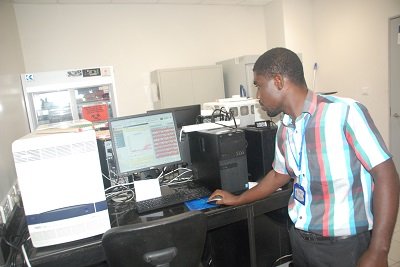
The Noguchi Memorial Institute for Medical Research (NMIMR), says it is poised to become a centre of excellence in research, diagnosis, prevention and control of diseases.
It has therefore appealed to the government to support its activities by providing the needed funding regularly.
“The institute is capable of being a scientific centre of choice, but this will require immense support in terms of capacity building and infrastructure development from government,” Dr James Aboagye, a Post-Doctoral Fellow at the centre said.
Speaking to the Ghanaian Times, Dr Aboagye said government must invest in research and development in general by helping to build the capacity and improve infrastructure.
According to him, most research funding came from external donors and this did not augur well in the country which wanted to develop.
“The government should invest research and development by helping to build infrastructure and capacity and also help us to meet up with the current need, so that we can do research pertaining to us,” he said.
“It would be easier if the funding was from our government for us to apply for, to be able to enhance our research,” Dr Aboagye added.
Dr Aboagye explained that most developed countries focused on research and development (R & D) to reach where they are now.
The Noguchi Memorial Institute for Medical Research was established in 1979 in honour of Dr Hideyo Noguchi, who researched into yellow fever in Ghana and died from the disease in the country in 1928.
Since then, the Institute has been conducting research into communicable and non-communicable diseases, training biomedical researchers and providing laboratory diagnostics, monitoring and surveillance services in support of national public health.
However, the Institute said it is ready to position itself as the preferred research centre with government assistance.
BY: FRANCIS NTOW


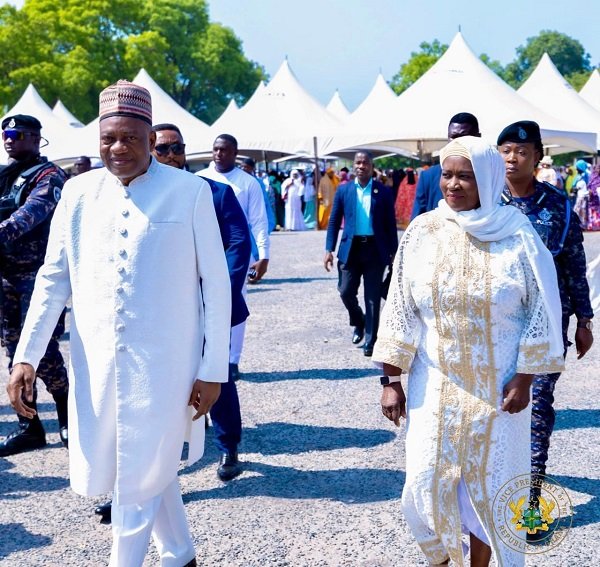
Vice President Jane Naana Opoku-Agyemang joined the Ahlus Sunna Muslim community at the forecourt of the State House to mark Eid, in the company of distinguished Imams, clerics, and fellow Ghanaians.
In her message, the Vice President highlighted Ramadan as a period defined by discipline, sacrifice, and moral renewal an opportunity for reflection, character building, and a recommitment to responsible citizenship.
She noted that the sacred observance reinforces shared values that unite the nation.
Extending warm Eid Mubarak wishes to the Muslim community in Ghana, Prof.Jane Naana Opoku-Agyemang called for continued peace, unity, and collective responsibility in building a harmonious society.
She further expressed hope that the blessings of Eid will bring joy to hearts, peace to homes, and strengthen national cohesion.

THE East Legon enclave in the Greater Accra Region is noted for housing the influential and affluent in society.
The area is synonymous with luxury mansions and ‘big-time’ businesses.
But within the same territory lies ‘Mempeasem,’ a community with a striking contradiction; it tells a totally different story.
‘Mempeasem’ translates from Twi, a local dialect, to “I don’t want trouble,” but the reality, however, is that the neighborhood is currently defined by a troubling disconnect between the admired reputation and its deteriorating infrastructure.
After publishing concerns expressed by a student in its ‘Write to the Editor’ column, The Spectator followed up to present detailed scenes of the sanitation problems in the area.

Residents are increasingly vocal about the lack of drainage systems, a deficiency that turns moderate rainfall into a logistical nightmare.
Without engineered channels for runoff, water settles in stagnant pools, eventually eroding roads.
The irony is sharp: billion-cedi homes often stand adjacent to clogged gutters and makeshift refuse sites.
The lack of public sanitation facilities and a centralised sewage system means that the environmental health of the area is constantly under threat, undermining the quality of life for its high-net-worth inhabitants and local workers alike.
Beyond waste and water, the community faces a broader infrastructure deficit.
Concerns about the prevalence of wooden structures in close proximity to refuse dump sites, where waste material is burnt, were raised; it’s a recipe for disaster.
The situation in Mempeasem is detrimental to public health and safety and serves as a wake-up call for urban planners and local authorities.
By Spectator Reporter