News
New SIM registration system to curb mobile money fraud- Sam George

- /home/u249204778/domains/spectator.com.gh/public_html/wp-content/plugins/mvp-social-buttons/mvp-social-buttons.php on line 27
https://spectator.com.gh/wp-content/uploads/2026/03/WhatsApp-Image-2026-03-24-at-11.58.21-500x600.jpeg&description=New SIM registration system to curb mobile money fraud- Sam George', 'pinterestShare', 'width=750,height=350'); return false;" title="Pin This Post">
- Share
- Tweet /home/u249204778/domains/spectator.com.gh/public_html/wp-content/plugins/mvp-social-buttons/mvp-social-buttons.php on line 72
https://spectator.com.gh/wp-content/uploads/2026/03/WhatsApp-Image-2026-03-24-at-11.58.21-500x600.jpeg&description=New SIM registration system to curb mobile money fraud- Sam George', 'pinterestShare', 'width=750,height=350'); return false;" title="Pin This Post">
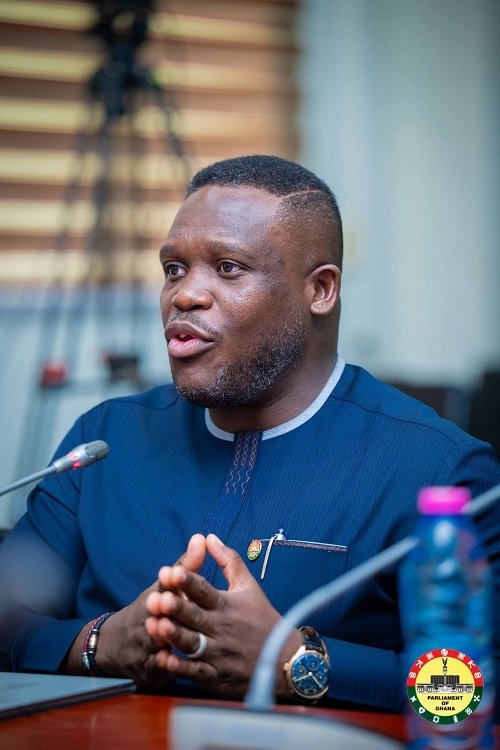
The Minister for Communications, Digital Technology and Innovations, Samuel Nartey George, has announced a new SIM card registration system aimed at making the process easier for citizens while tackling mobile money fraud.
According to the minister, the new system has been designed to avoid the difficulties many Ghanaians experienced during the previous registration exercise between 2021 and 2023.
He gave the remarks on Tuesday, March 24, on Metro TV Ghana.
According to him, President John Dramani Mahama insisted that the process must be convenient and stress-free.
“He made it clear that this exercise should not put Ghanaians through the hassle and discomfort they went through before,” he said.
He explained that under the new system, people with smartphones will be able to register their SIM cards using their own devices.
He said the process will involve facial recognition technology, similar to how users unlock their phones.
The Minister added that the system will connect directly to the database of the National Identification Authority to verify users in real time. He stressed that no biometric data will be stored by third parties.
“We are not taking anybody’s biometrics. We are only verifying in real time against the database,” he said.
He noted that once a person registers a primary phone number, any attempt to register another SIM using their Ghana Card will require a one-time password (OTP) sent to that primary number. This, he said, will prevent fraudsters from using other people’s details.
Mr. George also revealed that the government is introducing a Central Equipment Identity Register to link SIM cards, mobile devices and Ghana Cards.
He explained that each mobile device has a unique identification number, known as an IMEI, which will be tied to the SIM card and the user’s Ghana Card.
“This gives us a full picture of who is using which number and on what device,” he said.
He added that the new system will allow authorities to take stronger action against mobile money fraud.
He said once a fraud case is confirmed, both the SIM card and the device used can be blocked.
Currently, he noted, fraudsters can easily replace blocked SIM cards at a low cost and continue their activities.
However, blocking the device will make it more difficult and expensive for them to operate.
He further disclosed that individuals linked to fraud could have their Ghana Cards flagged or blacklisted after repeated offences. He said this could restrict their access to services such as banking, healthcare and driver’s licensing.
“That is the price people must pay if they choose to engage in fraud,” he said.
The Minister assured Ghanaians living abroad that they will be able to complete the registration process using a mobile app, without the need to travel to Ghana.
He added that a USSD option will be available for people without smartphones, while support centres will assist those who need help with verification.
Mr. George said the new system is part of efforts to sanitise the telecommunications space and protect citizens and businesses from fraud.
He urged the public not to register SIM cards for people they do not know, warning that they could face serious consequences if those numbers are used for criminal activities.
By: Jacob Aggrey

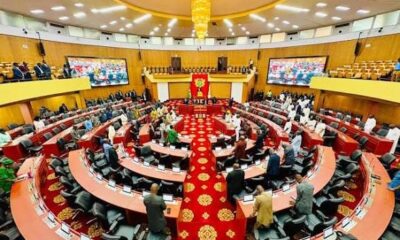







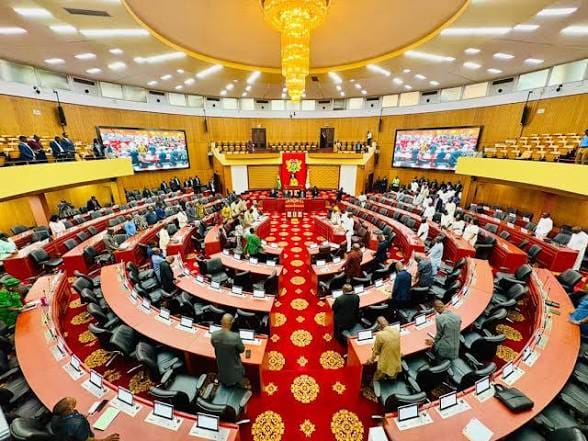
Parliament has clarified public commentary on social media regarding a notice on its notice board that read “No Vacancy for National Service Personnel 2026/2027. Kindly go for reposting.”
In a statement, signed by the Director of Media Relations, David Sebastian Damoah, Parliament said the notice has been misconstrued and was not a policy statement, a freeze on national service placements, or a change in its support for the National Service Scheme.
According to Parliament, the notice was a routine administrative message to prospective personnel who reported to the House, informing them that it has received more personnel than it can accommodate for the 2026/2027 service year and that they should seek reposting to other institutions.
It said it remains committed to the National Service Scheme and values the contribution of service personnel to its work, and regrets any confusion or inconvenience the wording may have caused.
By Edem Mensah-Tsotorme
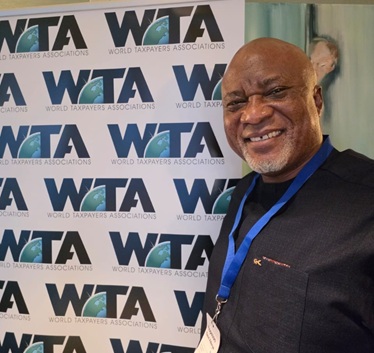
Ghanaian public advocate Hopeson Yaovi Adorye has been elected to the Board of Directors of the World Taxpayers Association (WTA).
The election took place on Sunday, October 5, 2026, during the Association’s conference in Kraków, Poland.
His election marks a significant addition to his international leadership portfolio and provides a platform for Ghanaian and African perspectives to contribute to global discussions on taxpayer rights, responsible taxation, transparency and prudent management of public resources.
Reacting to his election, Mr. Adorye expressed appreciation to the leadership and members of the WTA for the confidence reposed in him.
“I am deeply honoured by this confidence and conscious of the responsibility that comes with it. Taxpayers are at the heart of every economy, and they deserve fairness, transparency, accountability and value for the taxes they pay. I look forward to working with colleagues from across the world to strengthen the voice of taxpayers and promote responsible fiscal governance,” he said.
According to him, taxation should not be viewed solely as a mechanism for raising government revenue, but also as an important component of the social contract between citizens and the state.
Mr. Adorye said governments have a responsibility to ensure taxes are collected fairly and public resources are utilised efficiently to deliver quality infrastructure, healthcare, education, security and other essential services.
His election also creates an opportunity to bring African experiences into international conversations on taxation and public expenditure.
Mr. Adorye, who is Executive Director of Taxpayers League Ghana, has previously served as Global Board Chairman of the International Youth Network for UN Security Council Resolution 2250, an NGO associated with the United Nations Economic and Social Council (ECOSOC).
He is expected to use his new role to champion fiscal accountability, taxpayer education, good governance and stronger citizen participation in public financial management.