/home/u249204778/domains/spectator.com.gh/public_html/wp-content/themes/zox-news/parts/post-single.php on line 153
">
Warning: Undefined array key 0 in /home/u249204778/domains/spectator.com.gh/public_html/wp-content/themes/zox-news/parts/post-single.php on line 153
Warning: Attempt to read property "cat_name" on null in /home/u249204778/domains/spectator.com.gh/public_html/wp-content/themes/zox-news/parts/post-single.php on line 153
Major pledges propel African peace efforts at AU Peace Fund Gala

- /home/u249204778/domains/spectator.com.gh/public_html/wp-content/plugins/mvp-social-buttons/mvp-social-buttons.php on line 27
https://spectator.com.gh/wp-content/uploads/2024/07/IMG-20240725-WA0067-1000x600.jpg&description=Major pledges propel African peace efforts at AU Peace Fund Gala', 'pinterestShare', 'width=750,height=350'); return false;" title="Pin This Post">
- Share
- Tweet /home/u249204778/domains/spectator.com.gh/public_html/wp-content/plugins/mvp-social-buttons/mvp-social-buttons.php on line 72
https://spectator.com.gh/wp-content/uploads/2024/07/IMG-20240725-WA0067-1000x600.jpg&description=Major pledges propel African peace efforts at AU Peace Fund Gala', 'pinterestShare', 'width=750,height=350'); return false;" title="Pin This Post">
Accra, Ghana’s bustling capital, was the epicenter of commitment and hope as key players in Africa’s political leadership, private sector, multilateral financial institutions, state-owned enterprises, high-net-worth individuals, and billionaires gathered for the African Union (AU) Peace Fund event on Saturday, July 20, 2024.
Held at the prestigious Kempinski Hotel, this highly anticipated event aimed to rally support from crucial stakeholders to enhance the AU Peace Fund’s financial stability and further its mission of fostering sustainable peace across the continent.
The evening’s highlight was Afreximbank’s unprecedented pledge of USD 210 million over the next three years. This commitment, encompassing grants, technical assistance, a project preparation facility, and seed capital for peace and security initiatives, underscores Afreximbank’s unwavering dedication to fostering sustainable peace across Africa.
In his address, Afreximbank President Prof. Benedict Oramah emphasized the critical intersection of peace, humanitarian action, and development. “The peace we seek is not just the absence of conflict, but the presence of conditions that allow our economies to thrive,” he stated. “Our pledge of USD 210 million is a testament to our commitment to building a peaceful and prosperous Africa.”
Prof. Benedict Oramah’s powerful message of commitment set the tone for the evening, inspiring attendees to join the cause of peace and stability. His call to action resonated deeply, underscoring the essential role of the AU Peace Fund in driving Africa towards a future of peace and prosperity.
The event commenced with an inspiring cultural performance by Ghana-based Bambu Centre Productions, led by Playwright, Creative Entrepreneur and creator of Mansa World, Chief Abdul Moomen
In a welcome address, Mrs. Dagmawit Moges, Director of the AU Peace Fund Secretariat noted that it was an opportune time to look at how to involve the private sector in contributing to peace in Africa.
“Tonight, we gather not only to celebrate our collective achievements but to forge new paths towards sustainable peace,” she said. “The revitalization of the AU Peace Fund is a testament to our shared vision of a peaceful Africa, and we are immensely grateful for the support of our partners and stakeholders,” she said.
The AU Peace Fund, established by the Organization of African Unity (OAU) in 1993, has undergone significant reforms to become a more effective tool for promoting peace and stability. A pivotal decision in June 2015 by the Heads of State in Johannesburg, South Africa, laid the groundwork for the Fund’s revitalization in 2018, transforming it towards self-financing mechanisms.
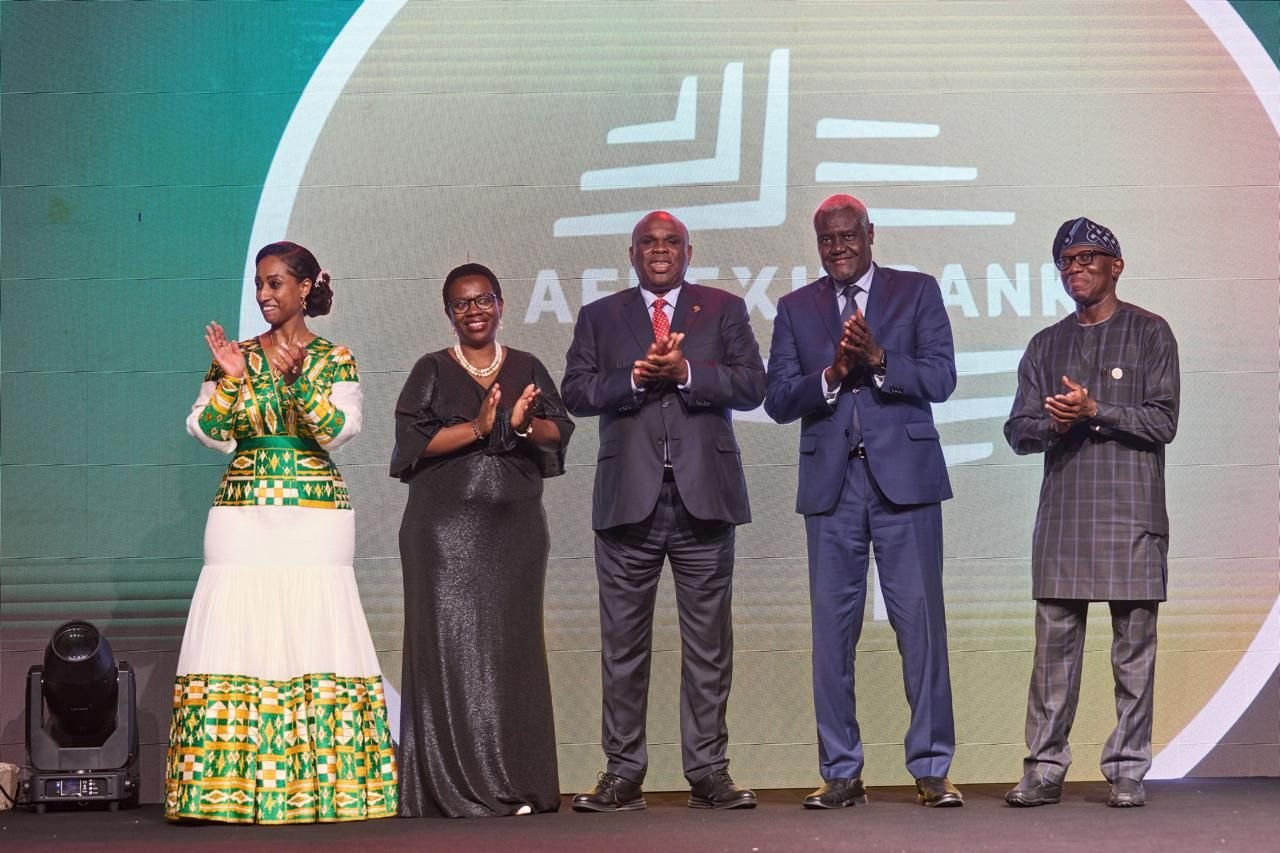
The African Union Commission, in partnership with Afreximbank, hosted the gala dinner themed: ‘Fostering Partnerships for Sustainable Peace in Africa’. The event marked the official launch of the revitalised Fund, with leaders advocating for innovative peace financing mechanisms to address Africa’s security challenges.
In addition to Afreximbank’s substantial pledge, the Standard Bank Group, Africa’s largest bank by assets, announced a commitment of $1 million to the AU Peace Fund. This includes an annual pledge of $200,000 over the next five years. The memorandum of understanding (MOU) for this pledge was signed by Felicity Osafo Sampong, Chief Risk Officer of Stanbic Bank Ghana, reaffirming the bank’s support for the AU Peace Fund and aligning with their mission: “Africa is our home; we drive her growth.”
Standard Bank Group’s dedication to the AU Peace Fund underscores their ongoing efforts to foster stability and promote sustainable development across the continent. “By promoting peace, we lay the foundation for a more stable and prosperous future for all,” noted Felicity Osafo Sampong.
Many parts of Africa have been adversely affected by conflicts and insecurity, undermining cross-border trade and economic growth. These challenges have been exacerbated by global crises such as COVID-19, the climate crisis, and international conflicts, disproportionately impacting Africa and threatening to undermine the gains achieved over the last two decades.
Understanding the sources and causes of conflicts and insecurity, as well as policies for conflict prevention and management, is critical to ensure a protective shield against future crises. A coordinated approach from all stakeholders is required, and the AU Peace Fund is the conduit to achieve this. The Peace Fund has made remarkable progress in mobilizing almost US$ 400 million, yet the increasing security needs require that this be scaled up significantly. In the context of tightening fiscal space and the reduction in development assistance, the traditional reliance on member states’ assessed contributions needs to be supplemented by other sources of financing.
The AU Peace Fund Dinner Gala was a resounding success, showcasing the critical need for innovative peace financing mechanisms and the importance of strategic partnerships in fostering sustainable peace across Africa. Afreximbank’s historic pledge and the substantial commitments from other stakeholders are significant steps towards achieving the Fund’s goals. As Africa moves forward, the revitalized AU Peace Fund will play a crucial role in promoting peace, security, and stability, paving the way for a prosperous and peaceful continent.
H.E. Moussa Faki, Chairperson of the African Union Commission, noted that “the operationalization of the African Union Peace Fund and the adoption of the principle of financing African peacekeeping missions from perennial resources are part of significant sectoral progress.
He added “The amplification of these advances could well, in time, usher in a new era of markedly reduced dependence on international partners for the demands of peace and the financing of peace support operations.”
H.E. Faki’s leadership and vision were pivotal in rallying the support and commitment needed to ensure the success of the AU Peace Fund, highlighting the importance of African-led solutions to the continent’s peace and security challenges.

Warning: Undefined array key 0 in /home/u249204778/domains/spectator.com.gh/public_html/wp-content/themes/zox-news/parts/post-single.php on line 493
Warning: Attempt to read property "cat_ID" on null in /home/u249204778/domains/spectator.com.gh/public_html/wp-content/themes/zox-news/parts/post-single.php on line 493
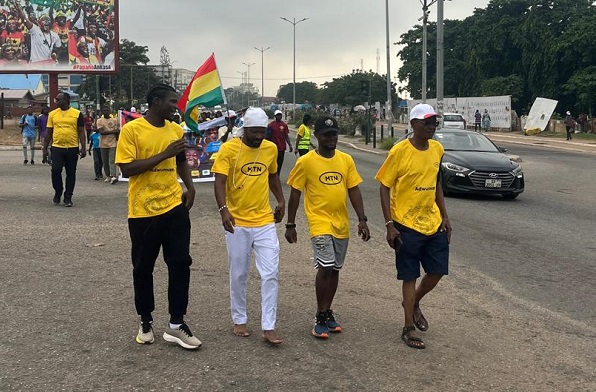
Students and management staff were joined by keep fit enthusiasts to partake in the 2026 edition of the Street Academy annual health walk held last Saturday.
It was held on the theme: “Feet on the Street, Hope in Motion.”
The event also brought opinion leaders from some of the Ga communities, sports men and women including former world boxing champion, Joseph Agbeko, and children from the academy and neighbouring communities.
The event was originally slated for July 18 but postponed due to President John Dramani Mahama’s declaration of July 17-18 as National Clean-up Day.
That development did not affect the event in any way as participants, mostly cladded in yellow outfits, turned up in their numbers.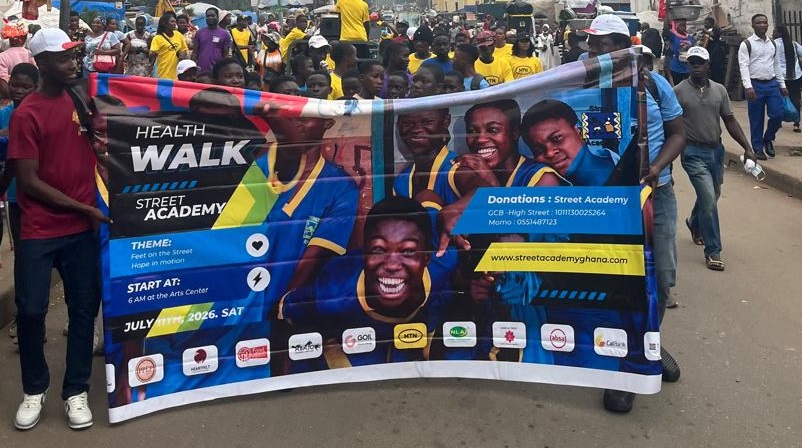
Spurred on by brass band music, the walk went through some of the principal streets of the capital, drawing more crowds from the communities it went through before returning to the Accra Arts Centre, the starting point.
Participants then went through another exhaustive aerobic session before they were refreshed.
Addressing the participants, Dr Ataa Lartey, the Founder and Executive Director of the Academy, commended them for turning out in their numbers for the walk, which he described as an event to enable the children and other guests to exercise.
Secondly, the event, he stated, was also to raise awareness about the plight of needy and underprivileged children, promote healthy living, and advocate the importance of basic education.
By Spectator Sports Reporter
Usually, when a coach is tasked to build a formidable national team for a major tournament, he does so with the best players available to him, with a special focus on local talents.
But where such local talents are not available or are unconvincing, the coach is allowed to supplement with foreign based players.
In this case, these players scouted beyond the borders of the country must be in top form and prove beyond reasonable doubt that they are far better than the locals.
Again, such players must also show some commitment and dedication to the national call.
A coach can however, decide to ignore this system in cases where there is insufficient time for the exercise, when there is a policy that forbids him from inviting certain crop of players, or if he finds himself in a position where he has no say on the players selected for him to use.
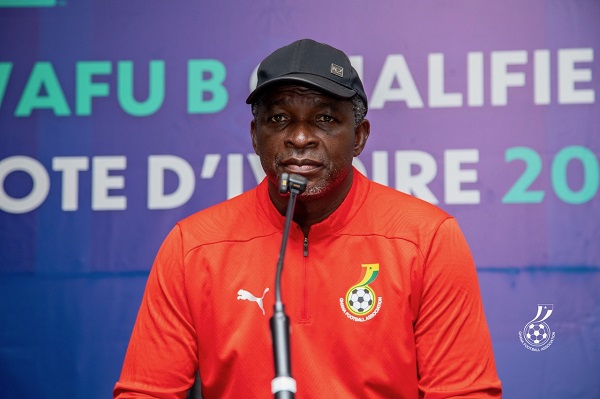
Recently, Coach Maxwell Konadu was tasked to build a Black Satellites team for the ongoing WAFU B U-20 championship in Cote d’Ivoire, a tournament which also serves as a qualifier for the 2027 Africa U-20 Championship which Ghana is hosting.
With that status, the Black Satellites become automatic candidates and rightfully, the focus should have been on a team to be groomed for the ultimate.
The sub-regional tournament did not actually oblige Konadu to rely on foreign based players, most of who are on pre-season assignments with their respective clubs.
Also, Konadu was under no misperception about quotas to allot local or foreign based players. It was very clear that the tourney was for the locals.
With this background, he is believed to have selected the players that formed the team that represented Ghana at the championship.
Sadly, Konadu and his boys disappointed woefully at the championship, failing to march his words against performance on the field.
Exiting just after the group stage came with little surprise. That has been the pattern for the national juvenile teams in their respective championships for now.
What left tongues wagging, however, was Konadu’s claim that lessons from the championship would help build a “stronger and more competitive squad for next year’s TotalEnergies CAF U-20 Africa Cup of Nations.”
The confusion lied in his admission that “the squad which competed in Côte d’Ivoire is unlikely to be the same one that represents Ghana at the 2027 TotalEnergies CAF U-20 Africa Cup of Nations.”
It would have made a lot of sense to rather build a team that uses the WAFU B Championships as a platform to prepare for the main championship next year, than selecting a team that in his own words is unlikely to compete.
This is a very common feature in other jurisdictions. The English FA, for instance, would have used an Under-18 team for the WAFU B, knowing the impact that experience would have on the team.
So clearly, the experience and lessons Konadu spoke about would be non-existent and would not help the team in anyway because if he happened to be in charge of the Ghana 2027 championship team, he would be supervising an entirely new team.
From where I sit, Konadu and whoever played any role in assembling this team got everything wrong and must be reminded that there would be no assurances that the next team would excel in the championship.
By Andrew Nortey