News
Increase taxes on tobacco, alcohol, sugary products — WHO

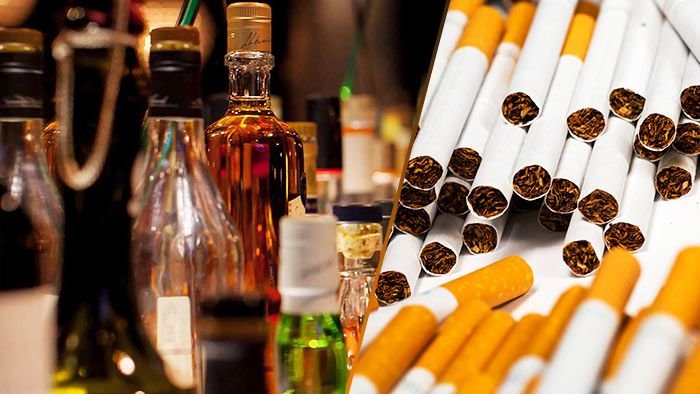
The World Health Organisation (WHO) has urged countries to increase taxes on tobacco, alcohol, and sugary drinks to protect public health.
At a virtual press conference on Tuesday, held during the launch of WHO’s two new global reports on taxes on sugary drinks and alcoholic beverages, Dr Tedros Adhanom Ghebreyesus, WHO Director-General, said the organisation is supporting countries to sustain health services and mobilise domestic resources to reduce aid dependency.
“One of the most effective tools available to governments is health taxes on tobacco, alcohol, and sugary drinks. Such taxes have consistently been shown to reduce consumption of harmful products, prevent disease, and ease the burden on overstretched health systems,” he highlighted.
Dr Ghebreyesus said that health taxes generate reliable revenue that governments could invest in health, education, and social protection.
In 2024, WHO launched its “3 by 35 Initiative,” aimed at supporting countries to increase the real prices of tobacco, alcohol, and sugary drinks through health taxes by 2035.
Dr Ghebreyesus stressed that health taxes are not a “set it and forget it” solution, noting that they must be carefully designed and regularly adjusted to remain effective.
The two new global reports show that in most countries, taxes on alcoholic beverages and sugary drinks remain too low, poorly structured, infrequently updated, and rarely aligned with public health objectives. They indicate that alcoholic beverages and sugary drinks have become more affordable over time, even as noncommunicable diseases, injuries, and related healthcare costs continue to rise.
The taxation approach aligns with Ghana’s efforts to boost revenue for health financing amid rising noncommunicable diseases. In 2023, Ghana implemented a 20 per cent tax on sugar-sweetened beverages, including sodas, energy drinks, and sweetened juices, through the Excise Duty Amendment Act. The measure sought to curb consumption and promote health.
The WHO cited evidence from several countries demonstrating the impact of well-designed health taxes. In the Philippines, a major tobacco and alcohol tax reform in 2013 increased revenues more than fivefold, enabling the expansion of national health insurance coverage to over 15 million poor families.
In Lithuania, a sharp increase in alcohol taxes in 2017 was followed by an almost five per cent reduction in all-cause mortality the following year. In the United Kingdom, a sugary drinks tax introduced in 2018 reduced sugar consumption, generated £338 million in revenue in 2024 alone, and was linked to lower obesity rates among girls aged 10 and 11, particularly in deprived communities.
WHO said that in 2024, countries including Malaysia, Mauritius, Slovakia, Sri Lanka, and Vietnam introduced or increased taxes on tobacco, alcohol, and sugary drinks. In 2025, India introduced a new excise duty on tobacco, while Saudi Arabia implemented a tiered excise tax on sugary drinks, with higher rates for products containing more sugar.
WHO said it looks forward to supporting more countries, including those in Africa, to design and implement effective health taxes as part of broader efforts to protect public health and build resilient, self-financed health systems. -GNA
Join our WhatsApp Channel now!
https://whatsapp.com/channel/0029VbBElzjInlqHhl1aTU27










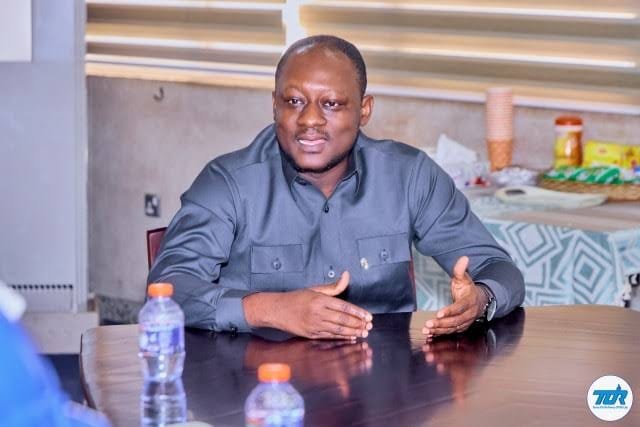
The Managing Director of Tema Oil Refinery (TOR), Edmond Kombat, has outlined a major expansion drive to restore the refinery to full commercial operation.
Speaking at the Government Accountability Series held at the Jubilee House today, Mr. Kombat said in the near term, engineers from Verga Engineering are working with TOR’s technical team to complete the tie-in and commission the F-61 this month.
He explained that this will allow the Crude Distillation Unit to move from its current throughput of about 28,000 barrels per stream day (bpsd) to its nameplate capacity of 45,000 to 55,000 bpsd.
In the medium term, TOR plans to install a new air cooler to raise capacity to 60,000 bpsd and replace the 6,500 barrel-a-day catalytic reformers with a 10,000 barrel-per-day continuous catalytic reformer.
Mr. Kombat added that the new 120-ton boiler has been installed, while work on the RFCC turnaround and SCADA system continues.
He disclosed that on August 1, 2026, President John Mahama directed the Minister for Energy and Green Transition to work with the TOR Board and management on a strategic roadmap to raise processing capacity to 100,000 barrels a day, with a further plan to increase it to 200,000 barrels per day as an end-state.
He also announced plans to restructure TOR so that it can operate on sound commercial principles without undue political interference. According to him, the Ministry of Finance is currently working with TOR to consider writing off $120 million of TOR’s legacy debt owed to the Government of Ghana or converting it into equity.
“TOR is part of a national plan. With the refinery’s expansion from 45,000 to 100,000 barrels a day, Government is targeting about 70 percent of national fuel demand from local refining by 2028,” he said.
By Edem Mensah-Tsotorme

The Managing Director of the Tema Oil Refinery (TOR), Edmond Kombat, has revealed that crude processing at the refinery has resumed after years of dormancy.
Speaking at the Government Accountability Series, Mr. Kombat said crude processing started on December 19, 2025, with all product streams going to storage for the first time in years.
He disclosed that since May 2026, TOR has received four five-million-barrel crude cargoes: Bonga, Baleine, Bonnie Light, followed on July 15 by Ghana’s Jubilee Medium Sweet crude, an indigenous crude delivered aboard MT Apache.
According to him, TOR paid for the Jubilee cargo in full, making it the refinery’s first Jubilee cargo in a decade.
Mr. Kombat added that on August 1, 2026, the President commissioned the refurbished Crude Distillation Unit.
The refinery, he said, then received another parcel of Ghanaian indigenous crude of 950,000 barrels of Sankofa crude on September 25, 2026, from its sister agency, the Ghana National Petroleum Corporation (GNPC).
By Edem Mensah-Tsotorme