
Features
Hope for Ghana’s economy

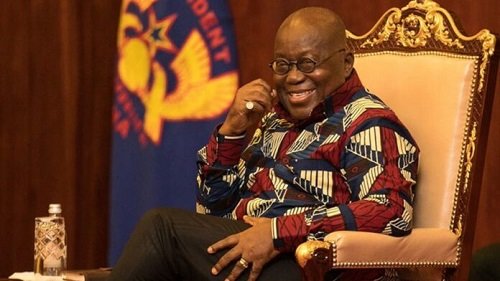
President Akufo-Addo
There is no doubt that the economy of the world, including that of Ghana, is in turmoil and needs to be rescued to ensure that economic recovery is experienced within the shortest possible time. For this reason, the government of Ghana is pursuing some policies that will make it possible to see growth in the various sectors of the economy.
Currently, Ghana is pursuing many policies to ensure that there is economic growth in the next two to five years. The impact of these programmes would be felt by the people from about 2024 onwards.
IMF SUPPORT
Already, the government has successfully managed and completed the Domestic Debt Exchange Programme (DDEP) and has received the approval of the International Monetary Fund for its support. This took effect in May of this year. In spite of this, the Ministry of Finance is also seeking negotiations with China to cancel some of her debt. It shows how serious and committed the government is as far as debt management is concerned.
A few years ago, the government screened the banking sector, and all fraudulent institutions were disapproved while others were merged. This measure will ensure greater efficiency in the banking sector. An efficient banking sector is what we need to run Ghana’s economy.
MANPOWER NEEDS
Apart from cleaning the banking sector, the free Senior High School system is also running successfully, and this has been done together with the Technical and Vocational Education and Training (TVET) programme to develop the manpower needs of this country. The most important asset in this country is its manpower needs, so if it is properly developed, it will make it possible for an efficient labour force to manage the affairs of the country when it comes to issues in all the sectors of the economy.
DIGITISATION
The government has adopted digitisation as a key policy objective and has recently introduced a number of programmes designed to develop a more digitally accessible public sector and encourage transparency and efficiency in order to drive growth in all aspects of the country’s economy.
STRONG INDUSTRIAL BASE
Again, the One District One Factory (1D1F) is growing in various parts of the country. This is in support of building a strong industrial base for the country. These will help reduce our dependence on imports when it comes to industrial products that can be processed locally. It is a good programme that must be continued at all cost.
What is more, the Planting For Food and Jobs programme has helped the country get enough food for its citizens even when the COVID-19 pandemic adversely affected the country. All these are indications that the country is on the right course.
Other programmes, such as One District One Dam, are all meant to produce useful results in the agricultural sector. It is expected that these and other programmes will make the needed positive impact and move the country forward.
IMPROVED SECURITY
In addition, security is very important, and the government is doing what it can to strengthen all security agencies. The police have just been given 100 pickup vehicles and over 500 motorbikes, as well as other gadgets to operate more efficiently. Many of these gadgets have been provided for the police since 2019, and it goes to show that President Nana Addo Dankwa Akufo-Addo values security in this country.
Apart from this, the military has also been given their fair share of what they need since 2018. The support includes vehicles, equipment and accommodation for officers and men in the Armed Forces.
Other forms of support in the form of accommodation and equipment have also gone to the Fire Service and Prisons Service, among others.
In addition, many personnel have also been recruited for training. The recruitment has been done to beef up men and women in all the security agencies.
Training for them is also ongoing. The training is meant to make them more efficient.
HEALTHCARE SYSTEM
One thing that cannot be forgotten is the health sector. Apart from the 307 ambulances dispatched to operate in all constituencies in the country, drones and other health equipment have also been made to operate throughout the country to improve the healthcare system.
Additionally, district and regional hospitals have been built in all parts of the country. This is under the programme known as Agenda 111. All these and many others show that the government is very focused on its progamme and will not be distracted by its political opponents.
Ghanaians must be grateful that we have a government that is looking into the future to meet the needs of its people. What the government needs is support to enable it to continue to improve the economic welfare of all Ghanaians.
If we all do this, the sky will be the limit.
Email address/WhatsApp number of author:
Pradmat201@gmail.com (0553318911)
By Dr. Kofi Amponsah-Bediako


I experienced something on Monday, June 15, that really frustrated me. I had to go to the ministries but I could not get up early that day so I decided to pick a taxi and get to the Tuba Junction.
When I got there I realised that Traffic had built up from the Toll Booth towards Accra. After a while I got a Taxi and it was when we got to a certain spot on the road, that I realised why there was a traffic jam.
There is a short stretch of the road where each time it rains heavily, loose material run down the hill onto the road, blocking one side of the road. Vehicles from Kasoa to Accra are then forced to move into one of the lanes of those going towards Kasoa from Accra.
The two lane road from Accra to Kasoa becomes a single carriage way. That was the reason for the traffic jam from the toll booth onwards.
This has been a perineal problem and yet, no permanent solution has been found till date. The area falls under Ga South and even though, a new MCE has taken over, the technocrats are still there and so the problem is not new to them.
There is therefore no excuse for the inability of the Ga South Metropolitan Assembly to resolving the problem on that stretch of the road. Apart from the Ga South Metropolitan Assembly, another institution that must be held accountable is the Ghana Highways Authority.
The Highways Authority cannot say they are unaware of this issue. The fact that the problem falls within the area of responsibility of the Ga South Assembly, does not relieve the Ghana Highways Authority, of their responsibility of ensuring that our highways are maintained in a motorable state at all times.
A collaboration between the Ghana Highways Authority and The Ga South Municipal Assembly is required for a permanent resolution of the problem.
There was another traffic jam at a place called Atala about 250 metres to the traffic light at Old Barrier as a result of an issue similar to the one close to the toll booth, that I talked about earlier.
When we got to Weija junction, we encountered another traffic jam. The cause of this jam was a bad condition of road about 80 metres from the traffic light at Ga South Hospital heading towards Accra.
Due to the bad nature at that section of the road, vehicles are compelled to slow down resulting in a traffic jam stretching all the way to Weija Junction.
I started wondering if that short stretch of road cannot be sorted on one Sunday when traffic is usually light. When we got to the traffic light at Odorkor, there was another issue.
When the traffic light shows green, there is a slow down because there is a big pothole or should I say manhole in the outer lane, right at the traffic light. Vehicles in the outer lane are compelled to swerve into the second lane thereby causing a traffic to slow down and resulting in a traffic jam.
It is very important to take into account the effect of traffic jam on the national economy. If we are able to assess the value of the loss to the economy of the nation, I believe the issue of traffic jam will be prioritised.
Imagine persons working at various Government Organisations like Registrar General’s Department, Ghana Ports and Habours Authority, Ghana Revenue Authority, CEPS etc. and lives at Kasoa and whose job is to collect revenue for the state and is held up in traffic.
Just imagine the effect their lateness to work will have on the economy if you consider the delays in say clearing of goods at the port and as a result traders cannot sell their goods for government to generate the required taxes.
Let us deal with the traffic jams on our streets to promote economic growth. God bless.
By Laud Kissi-Mensah
Mortality is an inherent aspect of life, a universal experience that has sparked philosophical, theological, and scientific inquiry throughout human history.
This article aims to provide a comprehensive and nuanced exploration of mortality, acknowledging the complexity of the topic and the diverse perspectives surrounding it.
The biological imperative
From a biological standpoint, death is a natural part of the life cycle. It serves as a mechanism for the evolution of species, allowing for the passing on of genetic material and the adaptation to environmental changes.
Evolutionary perspective: Death allows for the recycling of resources, promoting the survival and adaptation of species.
Life span and senescence: Cellular aging and the limitations of biological systems contribute to mortality.
Philosophical and existential perspectives
Existentialism: Emphasises individual freedom and responsibility in the face of mortality.
Meaning and purpose: The finite nature of life can prompt individuals to seek meaning and purpose.
The human condition: Mortality is a fundamental aspect of the human experience, shaping our perceptions and values.
Cultural and spiritual views
Afterlife and spirituality: Many cultures and religions believe in an afterlife or spiritual continuation.
Rituals and mourning: Cultural practices surrounding death reflect the significance of mortality in human experience.
Legacy and remembrance: The impact of one’s life can transcend mortality.
Ethical considerations
End-of-life care: Ethical debates surround issues like euthanasia, assisted dying, and palliative care.
Quality of life: Balancing the value of life with the quality of life is a complex ethical issue.
Resource allocation: Societal decisions about healthcare and resource distribution involve considerations of mortality.
Psychological impact
Grief and loss: The experience of mortality can evoke profound emotional responses.
Fear and anxiety: The awareness of mortality can lead to existential anxiety.
Appreciation and gratitude: Recognising mortality can foster appreciation for life.
Conclusion
Mortality is a multifaceted aspect of human existence, influencing how we live, relate, and find meaning. Understanding and acknowledging mortality can prompt deeper reflections on life and our place in the world.
By Robert Ekow Grimmond-Thompson

 News1 week ago
NFS, AACMA raise GH¢300K for new fire tender
- News6 days ago
FSD Africa, others launch Green Project Preparation Facility to unlock investment in climate infrastructure in Ghana
- News6 days ago
Merck Foundation holds 13th Africa Asia Luminary with 12 First Ladies to advance healthcare capacity across Africa and Asia


