News
Ghana’s journeying through COVID-19.

Coronavirus started in some parts of China in a town called Wuhan who are into farm animal marketing.
The virus was first identified in early December 2019. Coronavirus is a large group of viruses that are common among animals and it is formed in a genetic material which has enveloped protein spires around it.
In the haste of events, countries such as Spain, USA and Italy, immediately evacuated their citizens from China, an action which later accounted for to the wide spread of the virus in such countries.
Moreover, when these foreign countries hurriedly went for their citizens in China, they did not put any precautionary measures in place to check if those citizens had contracted the virus or not which led to escalation of the virus spread.
But in Ghana, the President together with the Chief of Staff placed a temporarily ban on all government officials travelling outside the country.
Some few days later Ghana recorded its first case on March 12, 2019.
Surprisingly, the day after the President had announced the closure of the country’s borders, many travellers entered Ghana and since the authorities could not send them back to wherever they came from, they rather placed them under quarantine to reduce the spread of the virus.
The government therefore established isolation centres to quarantine these travellers. They were not just left at the isolation centres but were given good health care. With regards to those who came before the closure, the authorities placed an extensive measure to trace people who came into contact with persons who had tested positive.
Looking at the media’s role in this pandemic, there is an increase in surveillance on how Ghanaians would adhere to protocols from authorities.
Although some media houses are not providing the breakdown of the active cases, recovery cases and death cases to Ghanaians to know how measures are helping the country, media houses, traditional rulers and politicians are educating Ghanaians on the implications that will come if protocols from authorities are not adhered to.
The Ghana Medical Association (GMA) called upon the government to declare a nationwide lockdown to reduce community spread which some Ghanaians did not seem to appreciate because, poor people needed to work in order to provide shelter for themselves and family members as well.
The GMA was able to back their demand based on science, which made the President to declare the partial lockdown in certain parts of Ghana (Greater Accra, Kasoa, and Greater Kumasi).
In Ghana’s handling of the COVID-19, the President called on the nation to fast and seek divine intervention concerning the virus for the country.
Various opinion leaders also gave their views on how the pandemic could be contained. It is worthy of note that, during the partial lockdown several organisations and individuals came together to provide shelter for the vulnerable people in our society to curb the spread.
When we look at some of the policies of the government during this era, there is provisions of free usage of water, and of 50 per cent reduction in cost of electricity as well as increasing the salaries of health workers to help Ghanaians.
Government later issued a policy that all Ghanaians should wear nose masks to help curb the spread of the virus. It is now an offence not to wear nose mask. However, some Ghanaians don’t seem to appreciate this because it is new and would take some time to adjust.
In conclusion, even though some citizens are politicising the pandemic and do not appreciate what is being done by the government, the more we are able to detect the inffected persons the more we are able to handle the virus in the country.
Helena Decker Arthur
Level 300 Student,
Ghana Institute of Journalism (GIJ).


Troubled and anxious citizens in Damongo of the Savannah Region have expressed concerns about the number of young people, believed to be under the age of 18, involved in ‘shisha’ smoking in pubs and drinking spots within the township.
Eyewitnesses say the minors were seen patronising nightlife venues, where Shisha smoking happen in the open.
The situation has sparked renewed public concern over the enforcement of child protection laws and regulations governing the operations of entertainment centres in the municipality and country as a whole.
An eyewitness, who spoke to The Spectator on conditions of anonymity for security reasons, noted that the situation was becoming increasingly common.
“This is not a one-off incident. It is becoming very common, but residents like us cannot openly report or speak about it because our lives will be at risk,” he said.
Under Ghanaian law, minors were prohibited from patronising Shisha.
Public health experts have consistently warned that shisha use exposes users to harmful substances that can negatively affect brain development, respiratory health, and overall well-being, particularly among young people.
The residents believe the alleged incidents point to broader challenges relating to youth supervision, substance abuse, and weak enforcement of existing regulations and have called on municipal authorities, security agencies, and regulatory bodies to intensify monitoring of pubs and entertainment centres to ensure compliance with the law.
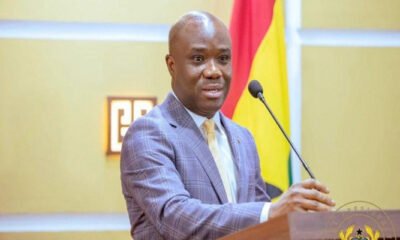
In an effort to address the menace, Mr Salisu Be-Awurbi, the Savannah Regional Minister, has led public education campaigns, engaged security agencies, and supported enforcement actions to address the rising use of illicit substances in the region.
Wura Kelly Seidu Boresah I, the Chief of Damongo, has also called on all stakeholders including parents, community leaders, institutions, and young people to actively support efforts to curb drug abuse, warning that the rising consumption of hard drugs poses a serious health threat to the future of the youth in the Savannah Region.
He also cautioned individuals involved in the sale and distribution of illicit drugs to immediately desist from the practice, stressing that offenders will face arrest and prosecution in accordance with the law.
From Geoffrey Buta, Damongo, Savannah Region
Join our WhatsApp Channel now!
https://whatsapp.com/channel/0029VbBElzjInlqHhl1aTU27


Dr Theresa Baffour, an advocate for ending violence and Chief Executive Officer (CEO) of SAHM SAHW Foundation, has said that society plays a critical and pivotal role in breaking the cycle of domestic violence.
According to her, domestic violence is a major contributor of making women, who are mostly the victims, mentally derailed and unable to engage in economic activities.
She said this when the foundation called on the Ga Mantse, Nii Tackie Teiko Tsuru II, to solicit support for the initiative by the “Strong and Healthy Minds, Strong and Healthy Women” (SAHM SAHW) to combat domestic violence within the Ga State.
The visit was occasioned by the fact that domestic violence cases have become quite prevalent in the Ga communities and is retarding growth.
According to her, the canker was an impediment to national development because the victims were usually tortured and would have to go through series of therapies to return to the right state of mind.
Dr Baffour mentioned that Gender-Based Violence (GBV) places a mental toll on women, and was, therefore, important to break the cycle through comprehensive mental health support, crisis intervention and empowerment programmes in communities with high rates of GBV.
This intervention, she underscored, would help in empowering the denigrated victim of domestic violence to soundly heal, build and thrive.
Dr Baffour added that the initiative would provide holistic, trauma-informed mental health care and advocacy for young women affected by domestic violence.
According to her, the above statement would create safe spaces for healing and equipping them with entrepreneurial skills for renewed hope and empowered life.
The Ga Mantse pledged his support for the laudable initiative to combat domestic violence and also acknowledged the need to address it in the Ga State.
Further endorsement came from Justice Julia Naa-Yarley Adjei Amoah, Chief of Staff at the Office of the Ga Mantse, as she commended the team of SAHM SAHW Foundation for taking a bold step to end the canker in the Greater Accra.
She added that it was a step in the right direction to save vulnerable women from torture, stress and emotional abuse.
By Alfred Nii Arday Ankrah
Join our WhatsApp Channel now!
https://whatsapp.com/channel/0029VbBElzjInlqHhl1aTU27