News
Ghana To Host 2026 Africa Real Estate Festival, bridging investment, policy, and culture


The Africa Real Estate Festival (AREF) is set to return in 2026 with an ambitious vision to redefine urban living across the continent.
Scheduled for April 18-19, 2026, in Accra, the festival will convene under the theme: “Innovation Meets Identity: Designing Africa’s Next Living Experience – Positioning Real Estate as More Than Just Property.”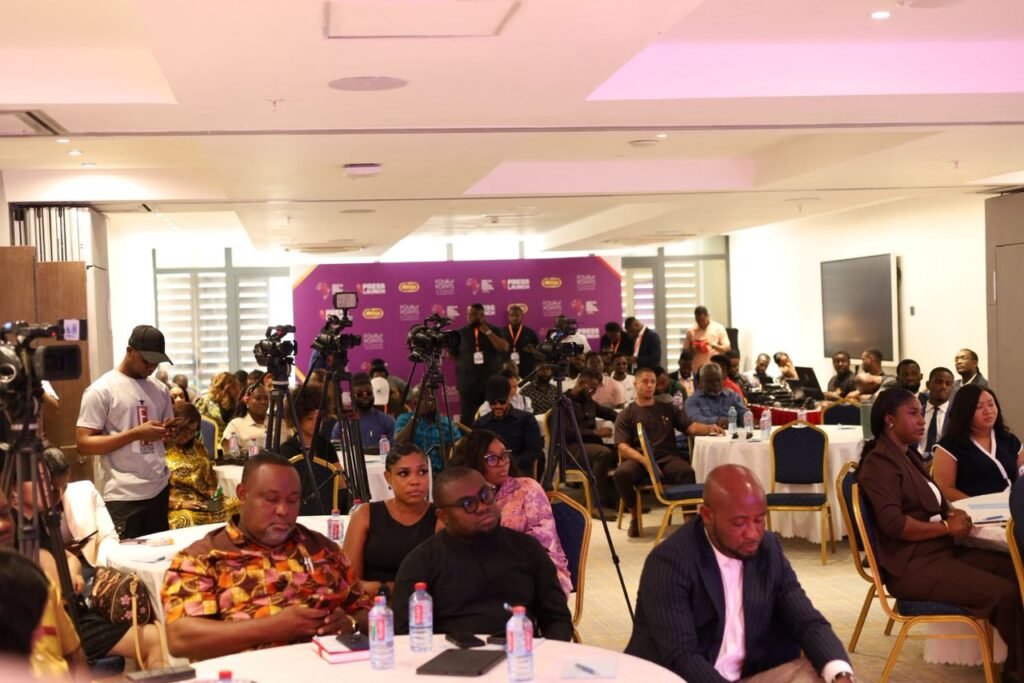
Speaking at the press launch in Accra on Friday, January 16, 2026, the Founder and Chief Executive Officer (CEO) of AREF, Desmond Oteng, described the festival as a movement rather than a one-off event, driven by the urgency of Africa’s rapid urbanisation.
“Africa is urbanising faster than any other continent. By 2050, over 1.4 billion Africans will live in cities, yet our real estate conversations still focus on buildings and prices instead of people, quality of life, and sustainability,” he said.
According to him, AREF seeks to reposition real estate as a catalyst for economic transformation, climate responsibility, cultural identity, youth empowerment, diaspora engagement, and inclusive urban growth.

The maiden festival will be held in Accra on April 18 and 19, 2026, and will convene policymakers, developers, investors, architects, planners, financial institutions, prop-tech innovators, and diaspora stakeholders from across Africa and the global African community.
Although hosted in Ghana, he stressed that AREF is a continental platform with plans to expand into other African countries.
“Our focus is intentional city building. Africa does not need more unplanned cities or gated silos. We need connected communities and functional urban ecosystems that work for people,” he noted.
The festival seeks to position real estate as a catalyst for cultural expression, technological innovation, and sustainable economic growth.
He went on to disclose that the event will bring together over 1,500 delegates, over 100 exhibitors from more than 30 countries, and over 50 renowned speakers, alongside significant government and diaspora representation.
International interest in AREF was underscored by the presence of Juliette Bynoe-Sutherland, High Commissioner of Barbados to Ghana, who announced Barbados’ participation in the festival. She described AREF as a practical bridge between diplomacy, investment, and sustainable development.
“Real estate today is no longer just about property ownership. It is about the full ecosystem, capital flows, lifestyle assets, and long-term value creation,” she said.
She highlighted Barbados’ experience, where real estate contributes about 18 percent of national GDP, supported by political stability, clear legal frameworks, progressive tax policies, and strong community education.
According to her, the Barbadian model offers valuable lessons for Ghana and other African coastal states, particularly in tourism-linked real estate, coastal conservation, health tourism, retirement living, and sustainable community planning.
The High Commissioner also revealed growing interest among Barbadians and Caribbean investors in Ghana, noting a sharp increase in travel and enquiries about property ownership following visits to the country.
From the government perspective, the Deputy Director of Diaspora Affairs Office of the President, Nana Kyere Agyemang, outlined Ghana’s evolving strategy to deepen diaspora participation in the real estate sector. He explained that the focus is shifting from informal remittances to structured investment and asset creation.
“Our objective is to move beyond remittances for consumption and toward remittances for asset building,” he said.
He identified three key priority areas: capital market integration through real estate investment trusts and diaspora bonds, improved regulatory transparency through digital land governance, and sustainability under the African Continental Free Trade Area framework.
He also noted plans to incentivise commercial real estate developments that serve as logistics hubs for intra-African trade.
Mr. Agyemang commended the AREF team for the speed and commitment with which the initiative has been executed, reaffirming government openness to partnerships that strengthen Ghana’s real estate ecosystem.
AREF’s unique model bridges real estate with sectors such as technology, finance, tourism, logistics, media, and culture, creating a shared platform for investment and partnership.
The festival will offer a curated, multi-faceted programme designed to inform, connect, and inspire.
Core pillars include the strategic Investment & Policy Conference; the transactional hub of the Real Estate Exhibition and Diaspora Investment Pavilion; the aspirational Luxury Experience & Lifestyle Showcase; and the forward-looking Cultural Festival & Innovation Matchmaking segment.
This will be complemented by a series of interactive workshops, demonstrations, and structured networking forums, ensuring a comprehensive and actionable experience for all participants.
With a target of generating over $200 million in investment leads, AREF aims to boost investor confidence and foster cross-sector deals. The event will also produce The AREF Report 2026, a data-driven publication on real estate trends and opportunities across Africa.
Beyond 2026, AREF plans to expand into a continent-wide circuit, hosting regional editions to promote sustainable urban innovation, economic collaboration, and cultural celebration.
Organised by the pan-African organisation Africa Real Estate Festival, the event is supported by year-round initiatives in research, PropTech acceleration, policy advocacy, and networking.
About Africa Real Estate Festival (AREF)
AREF is a pan-African platform dedicated to empowering the real estate ecosystem through events, research, innovation programs, and partnerships.
It connects all stakeholders across the value chain to drive sustainable growth, investment, and culturally grounded development in Africa’s built environment.
High level speakers at the forum include; H. E. Juliette Bynoe-Sutherland Barbados, High Commissioner to Ghana,









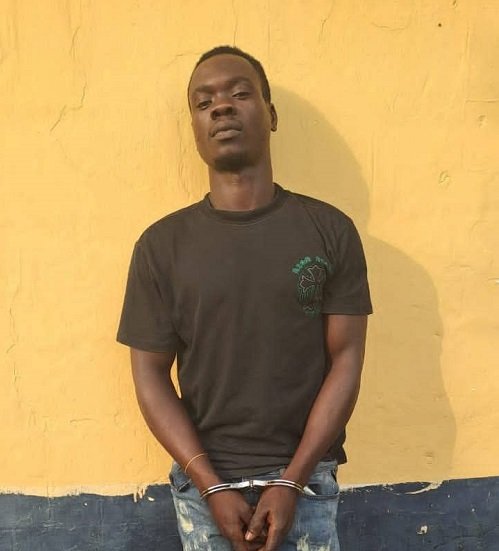
A 30-year-old man has been sentenced to 25 years imprisonment with hard labour by the Bekwai Circuit Court for his role in a 2022 robbery at a mining site at Manso Akwasiso in the Ashanti South Region.
The convict, Dominic Ofori, also known as Fanta, was arrested on 16th February 2026 after years on the run. He pleaded guilty before the Bekwai Circuit Court to robbery contrary to Section 149 of the Criminal Offences Act, 1960 Act 29, and was accordingly sentenced to 25 years imprisonment with hard labour.
On March 20, 2022, the Manso Adubia District Police received intelligence that a group of armed men from Manso Abodom were planning to attack a mining site at Manso Akwasiso to rob the owner of gold concentrate. Acting on the information, police mounted a coordinated operation and laid an ambush at the site.
At about 5:30 pm the same day, four-armed men arrived at the site, fired indiscriminately, and robbed the miners of their gold concentrate. The police team on surveillance intervened, resulting in an exchange of gunfire.
Three of the suspects, Abu Abubakar, Musah Latif, and Gideon Takyi, sustained gunshot wounds and were pronounced dead on arrival at St Martins Catholic Hospital at Agroyesum. Dominic Ofori escaped at the time but was later arrested and put before the court.
The Ashanti South Regional Police Command has assured the public of its continued commitment to combating violent crimes and bringing offenders to justice.
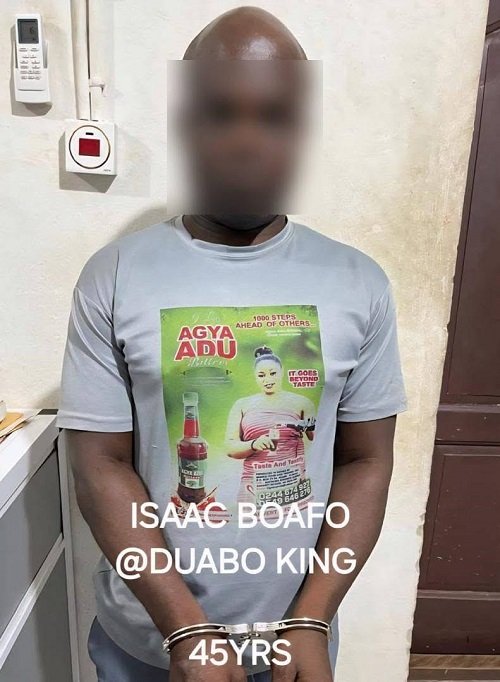
The Ashanti Regional Police Command has arrested 45-year-old Isaac Boafo, also known as “Duabo King,” for allegedly publishing false news intended to cause fear and panic.
Police said the arrest follows a viral TikTok video in which Boafo claimed that four officers at the Central Police Station in Kumasi engaged in inappropriate conduct with commercial sex workers during night patrols in Asafo.
Officers from the Police Intelligence Directorate (Ashanti Region) apprehended Boafo after receiving intelligence about the video.
During questioning, he admitted to creating the video to attract views and engagement online, and acknowledged that he could not prove the allegations.
Boafo also admitted making comments about the President of the Republic for content purposes and could not defend those statements.
He has been formally charged and is in detention as investigations continue.
The Ashanti Regional Police have warned the public against publishing or sharing false information on social media, noting that such acts can cause fear, panic, and damage reputations.
They said anyone found engaging in similar conduct will face legal action.
By: Jacob Aggrey