Gender
Ghana launches first National Non-Communicable Diseases Research Conference

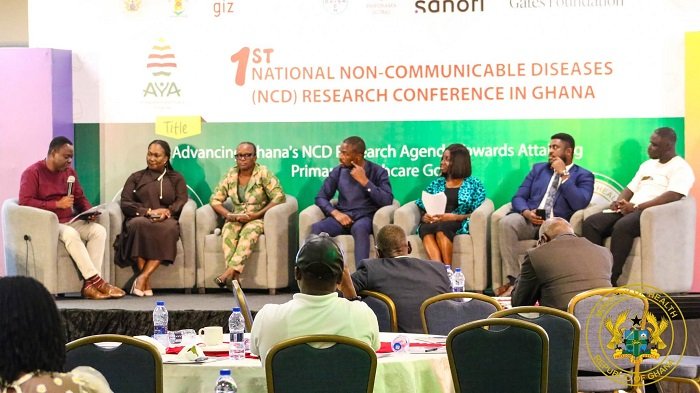
The Ministry of Health, in collaboration with the Ghana Health Service, GIZ, and AYA Integrated Healthcare Initiative, has launched the 1st National Non-Communicable Diseases (NCDs) Research Conference in Ghana, on the theme: Advancing Ghana’s NCDs Research Agenda Towards Attaining Primary Healthcare Goals.
The conference aimed to deliberate on the development of a National NCD Research Agenda for Ghana and to produce evidence briefs to inform policy decisions on NCDs, promote multidisciplinary collaborative research, and guide interventions to strengthen the healthcare system for the prevention and control of NCDs in Ghana.
Dr. Hafez Adam Taher, representing the Minister for Health, Hon. Kwabena Mintah Akandoh, highlighted their shared commitment to strengthening research, improving data quality, and integrating evidence into health policy and primary healthcare practice.
He underscore the conference as an important platform to convert research findings into actionable policy, build a strong network between Ghanaians and International NCD researchers, enhance national policy for data collection and knowledge generation, develop a National NCD Research Agenda that aligns with the sector’s strategic priorities including the Ghana Medical Trust Fund (MahamaCares), free Primary Health Care and the Universal Health Coverage roadmap.
Mr.Akandoh commended the partners, especially GIZ, for their continuous support and acknowledged the dedication of local research institutions in generating the evidence needed to develop contextually appropriate solutions.
He urged them to deepen their collaboration with the Ministry of Health and the Ghana Health Service to ensure that research transcends academic outcomes and becomes the backbone of policymaking.
Dr. Kwame Amponsah Achiano in his delivery on behalf of the Director-General, GHS, Dr. Samuel Kaba Akoriyea, said research can improve NCD care in the country through early detection and clinical health, strengthen health systems and policy and support monitoring, evaluation and accountability.
He concluded that the fight against NCD would be won through knowledge, research that informs practice, transforming systems and saving lives.









A training and capacity-building workshop was held on Thursday for the media to intensify coverage on gender-based issues to support women’s participation in leadership and governance in Accra.
The workshop, held under the theme ‘Strengthening Advocacy for the Implementation of Ghana’s Affirmative Action (Equity) Law, 2024 – The Case of the Media’, brought together journalists from selected media houses.
The Convener of the Affirmative Action (AA) Law Coalition, Ms Sheila Minka-Premo (Esq.), stressed that the media has a critical responsibility to educate the public on the importance of the Affirmative Action Act, noting that sustained and informed reporting would strengthen advocacy and support the effective implementation of the law.
While commending both the Legislature and the Executive for the passage and presidential assent of the Affirmative Action Bill into law, the AA Law Coalition Convener appealed to government to address existing gaps. These include the constitutional provision of 30 per cent women’s representation in politics, inadequate policy frameworks to advance affirmative action, and weak compliance by state institutions.
She charged the media to highlight and promote the role of women in leadership and to actively support a smooth and effective implementation process of the Act.
In her welcome address, Executive Director of ABANTU for Development, Dr Rose Mensah-Kutin, said the training sought to strengthen journalists’ advocacy skills to enable them to educate the public on the provisions and significance of the law.
Dr Mensah-Kutin commended ActionAid Ghana for supporting the advocacy efforts, urging the media to prioritise the law to ensure its sustainability.
The Affirmative Action (Gender Equity) Act, 2024 (Act 1121) was passed by Parliament in July 2024 and received presidential assent in September 2024, following years of sustained advocacy by women’s rights organisations, gender activists, and other stakeholders.
By Linda Abrefi Wadie
Join our WhatsApp Channel now!
https://whatsapp.com/channel/0029VbBElzjInlqHhl1aTU27

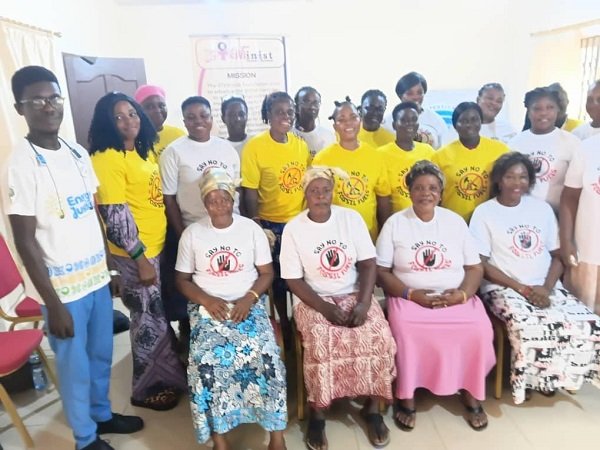
STEMINIST Foundation, Ghana, a Non-Governmental Organisation (NGO) with support from Keta Ramsar Centre has trained about 25 women selected from the Keta Municipality on the rights of women and how to use them for their voices to be heard in their communities.
STEMinist Foundation, Ghana, is a network of women advocating equal opportunities through excellent representation of women in Science, Technology, Engineering and Mathematics (STEM).
The women, mostly fishmongers and other self-styled workers, were taken through topics such as Understanding Energy and Climate Justice, Fossil Gas Expansion, Livelihoods’ Care Work and Health, Women Leadership, and Power Building among others.
Mrs Nerissa Edem Anku, Gender Justice Transition Advisor of the Foundation, noted that the theme “Energy Justice: Empowering Women with Power, Rights and Dignity,” was chosen for the women to reconnect, reflect, and look ahead in shaping their rights as women.
She stated that women have been relegated to the background in the communities when it comes to decision making, stressing the need to correct that for them to know they have rights to fight for themselves.
Mrs Nerissa Edem Anku further noted that women in fishing communities wanted to see real and tangible improvements in their living conditions, spearheaded by government to prevent unhealthy confrontations with the local people.
She assured that the NGO would continue to strengthen its programmes to ensure that women were empowered to contribute meaningfully to the socio-economic development of their families, communities, and the nation.
Miss Portia Adu-Mensah, Facilitator, Community Mobilisation Communicator, on her part added that all stakeholders have to adopt more innovative steps to build an environment in which women can thrive. That, she said, would win the confidence of the women and promote more inclusive partnerships.
The Assemblywoman for Dzelukope, Ruby Adukpoh, on behalf of the women thanked the NGO for the gesture and reaffirmed their commitment to strengthening their collective voices and influence in shaping policies that will affect them.
From Kafui Gati, Keta
Join our WhatsApp Channel now!
https://whatsapp.com/channel/0029VbBElzjInlqHhl1aTU27