
Features
Gbomowo: the new phenom?

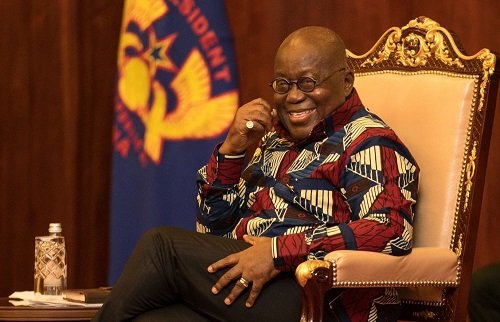
President Akufo-Addo
My Ga folks rounded off their annual Homowo festivities only recently. Homowo, in Ga, means ‘hooting at hunger. Having migrated from Ile-Ife in southwestern Nigeria and landed on the shores of their current abode, they planted corn, but had to endure hunger and starvation to await the time of harvest.
When they had a bumper harvest, it was then time to ‘hoot at hunger’. It was natural so to do. Therefore, Homowo has come to stay as a reminder of that epoch in their history.
I was involved with stage performances in secondary school, first as a chorister and again as an actor. I became a public speaker subsequently. I have come to learn that it is utterly important to know your audience and plan your delivery accordingly. It is also important to take the existing climate and factor that in.
So, it is vital to mount a stage, say the right thing at the right time. If you fail in this, your audience will boo you, hoot at you or clap you off the stage. This is what I call Gbomowo in Ga. Hooting at a person.
Just a couple of weeks ago, President Akufo-Addo was booed at the Independent Square where he carried his “Fellow Ghanaians…” thing to an African youth jamboree at that venue. Not in the mood for any “Fellow Ghanaians,” the youth were seen in a viral video booing the President.
I do not blame the organisers of the event, because how were they to know how participants would react to the Head of State? I blame the handlers of my President for not reading the climate of the youth. They were out to enjoy music and dance their hearts out, nothing more. Situate that with the trending frustration in the country over our economic hardship.
Put me in the shoes of a presidential handler. If the President had to be there, my strong advice would be that the President would mount the stage and begin to dance or boogie with the crowd. The youth would naturally respond in like manner, then would be minded to listen to Nana when he took the microphone. It is as simple as that, and none would be wiser.
The President is known to be a good dancer. He has been photographed dancing on stage and other events many times. Where I blame him also is that he did not read the mood right. Many politicians are smart enough to quickly read the mood at any event and change their script to suit the climate or put a prepared text aside and speak extemporaneously.
Personally, I felt embarrassed to see people boo a Head of State. Never have I seen this in Ghana. Unlike those who were quick to condemn the youth for their action, I would rather tread cautiously. But government commentators accusing the opposition of orchestrating the booing is as infantile as it is unconscionable.
No one can pretend to not know Ghanaians are frustrated over economic hardships in the country. Can we pretend that Ghanaians are not discerning enough to pit campaign promises against delivery? When people’s hopes are raised through the roof, what will their expectations be? Let us soberly avert our minds to the above questions.
Now, back to my Gbomowo. What happened at the Independence Square is a foretaste of things to come if no concrete action is taken to reverse the economic downturn.
The government must explain to the hungry and frustrated Ghanaian why we are in this in spite of shouting from the rooftops that they “have the men.” The COVID-19 and Ukraine mantra is clear. Even the World Bank and the IMF are saying the same thing. What the government must address is how other economies are faring better than us in the face of COVID and Ukraine.
In the absence of this, Gbomowo awaits our politicians when they mount political campaigns when that time comes. Everything our Members of Parliament do is under scrutiny and Ghanaians are waiting for them.
As I started drafting this write-up, videos flew in from Kumasi where traders were clearly seen hooting at the President an his 50-plus vehicular convoy. One fellow could be heard to have counted as many as 55 vehicles in the convoy. That our President would still travel this large in the face of high fuel prices and the frustrating situation in the nation defies understanding.
I can see through my crystal ball what our next political campaigns will be like. Gbomowo will, in all likelihood, be a part of our political campaign culture.
Situate this on the President brazenly stating that he cared less if people decided to vote the NDC into power in the next election. What does this statement do to people his party might field in the next election? How do we reconcile this with the man who, in seeking our votes, said, “Mo nsɔ me hwe?” This is clearly a slap in the face of the very people who voted him President. Not long after, the people of Akyem Akroso also hooted at the President’s convoy.
I have heard some commentators, in their condemnation of the youth booing our President, say that it is against our culture to boo adults. Be that as it may, who has given vent to so-called child-right groups that have made it near impossible to discipline children? Punishments that straightened our lives as we grew up have become human rights issues, to the extent that our children are more protected than their parents.
The children believe they have a right to do whatever pleases them and grow with that mindset into adulthood. What is the end result?
Not too long ago, one group of senior high school students or another was in the news for vandalising school property. Some even set school buildings on fire. Then the very parents who should not discipline their children are asked to bear the cost of this vandalism.
Should there be a national discourse on how we whip our children in line? Even teachers are not allowed to punish recalcitrant or incorrigible pupils appropriately. The cumulative effect is the lawlessness we see in the land. One can imagine a country being governed by these ‘protected’ children after they have grown into adults and politicians.
In the difficult days of the Acheampong era in the late seventies, when Ghanaians had to queue for every conceivable item christened “Essential Commodities,” our citizens did not feel as helpless as they are today. Even during the very early days of the 31st December Revolution, there was famine in Ghana. The rains had failed and crops withered. People’s collarbones jutted out of their skins and was christened “Rawlings Chain”, yet there was no despondency as there is today. What has gone wrong?
Instead of acting to save the situation, our politicians are playing politics with our very lives, putting every single issue in the laboratory of partisan politics. If the electorate offended you by giving you their votes, be prepared to be booed after they have learnt their lesson.
In my last meeting with the late Major Courage Kwashigah at the Beverly Hill Restaurant at Asylum Down before his death, he told me he feared Ghanaians might make a mistake and fight for independence all over again. I cannot give details here because he is not alive to confirm or deny what we discussed. How right was he…?
Gbomowo will be the new political phenomenon if things do not turn around for the better. Mark my word.
Writer’s email address: akofa45@yahoo.com
By Dr. Akofa K. Segbefia


I experienced something on Monday, June 15, that really frustrated me. I had to go to the ministries but I could not get up early that day so I decided to pick a taxi and get to the Tuba Junction.
When I got there I realised that Traffic had built up from the Toll Booth towards Accra. After a while I got a Taxi and it was when we got to a certain spot on the road, that I realised why there was a traffic jam.
There is a short stretch of the road where each time it rains heavily, loose material run down the hill onto the road, blocking one side of the road. Vehicles from Kasoa to Accra are then forced to move into one of the lanes of those going towards Kasoa from Accra.
The two lane road from Accra to Kasoa becomes a single carriage way. That was the reason for the traffic jam from the toll booth onwards.
This has been a perineal problem and yet, no permanent solution has been found till date. The area falls under Ga South and even though, a new MCE has taken over, the technocrats are still there and so the problem is not new to them.
There is therefore no excuse for the inability of the Ga South Metropolitan Assembly to resolving the problem on that stretch of the road. Apart from the Ga South Metropolitan Assembly, another institution that must be held accountable is the Ghana Highways Authority.
The Highways Authority cannot say they are unaware of this issue. The fact that the problem falls within the area of responsibility of the Ga South Assembly, does not relieve the Ghana Highways Authority, of their responsibility of ensuring that our highways are maintained in a motorable state at all times.
A collaboration between the Ghana Highways Authority and The Ga South Municipal Assembly is required for a permanent resolution of the problem.
There was another traffic jam at a place called Atala about 250 metres to the traffic light at Old Barrier as a result of an issue similar to the one close to the toll booth, that I talked about earlier.
When we got to Weija junction, we encountered another traffic jam. The cause of this jam was a bad condition of road about 80 metres from the traffic light at Ga South Hospital heading towards Accra.
Due to the bad nature at that section of the road, vehicles are compelled to slow down resulting in a traffic jam stretching all the way to Weija Junction.
I started wondering if that short stretch of road cannot be sorted on one Sunday when traffic is usually light. When we got to the traffic light at Odorkor, there was another issue.
When the traffic light shows green, there is a slow down because there is a big pothole or should I say manhole in the outer lane, right at the traffic light. Vehicles in the outer lane are compelled to swerve into the second lane thereby causing a traffic to slow down and resulting in a traffic jam.
It is very important to take into account the effect of traffic jam on the national economy. If we are able to assess the value of the loss to the economy of the nation, I believe the issue of traffic jam will be prioritised.
Imagine persons working at various Government Organisations like Registrar General’s Department, Ghana Ports and Habours Authority, Ghana Revenue Authority, CEPS etc. and lives at Kasoa and whose job is to collect revenue for the state and is held up in traffic.
Just imagine the effect their lateness to work will have on the economy if you consider the delays in say clearing of goods at the port and as a result traders cannot sell their goods for government to generate the required taxes.
Let us deal with the traffic jams on our streets to promote economic growth. God bless.
By Laud Kissi-Mensah
Mortality is an inherent aspect of life, a universal experience that has sparked philosophical, theological, and scientific inquiry throughout human history.
This article aims to provide a comprehensive and nuanced exploration of mortality, acknowledging the complexity of the topic and the diverse perspectives surrounding it.
The biological imperative
From a biological standpoint, death is a natural part of the life cycle. It serves as a mechanism for the evolution of species, allowing for the passing on of genetic material and the adaptation to environmental changes.
Evolutionary perspective: Death allows for the recycling of resources, promoting the survival and adaptation of species.
Life span and senescence: Cellular aging and the limitations of biological systems contribute to mortality.
Philosophical and existential perspectives
Existentialism: Emphasises individual freedom and responsibility in the face of mortality.
Meaning and purpose: The finite nature of life can prompt individuals to seek meaning and purpose.
The human condition: Mortality is a fundamental aspect of the human experience, shaping our perceptions and values.
Cultural and spiritual views
Afterlife and spirituality: Many cultures and religions believe in an afterlife or spiritual continuation.
Rituals and mourning: Cultural practices surrounding death reflect the significance of mortality in human experience.
Legacy and remembrance: The impact of one’s life can transcend mortality.
Ethical considerations
End-of-life care: Ethical debates surround issues like euthanasia, assisted dying, and palliative care.
Quality of life: Balancing the value of life with the quality of life is a complex ethical issue.
Resource allocation: Societal decisions about healthcare and resource distribution involve considerations of mortality.
Psychological impact
Grief and loss: The experience of mortality can evoke profound emotional responses.
Fear and anxiety: The awareness of mortality can lead to existential anxiety.
Appreciation and gratitude: Recognising mortality can foster appreciation for life.
Conclusion
Mortality is a multifaceted aspect of human existence, influencing how we live, relate, and find meaning. Understanding and acknowledging mortality can prompt deeper reflections on life and our place in the world.
By Robert Ekow Grimmond-Thompson

 News1 week ago
NFS, AACMA raise GH¢300K for new fire tender
- News6 days ago
FSD Africa, others launch Green Project Preparation Facility to unlock investment in climate infrastructure in Ghana
- News6 days ago
Merck Foundation holds 13th Africa Asia Luminary with 12 First Ladies to advance healthcare capacity across Africa and Asia


