Editorial
Extension of SIM card re-registration eminent

Dear Editor,
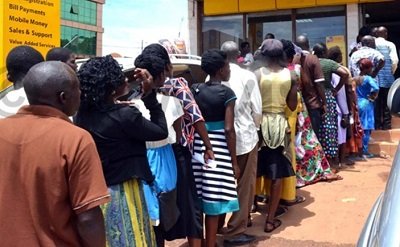
I have been concerned about the March 31 deadline given for the SIM card re-registration by subscribers. However, a recent comment by a senior official of the National Identification Authority (NIA) makes me believe an extension of the deadline is eminent.
The official in an interview granted an Accra-based radio station, acknowledged the challenges the NIA was facing, particularly unprinted and uncollected NIA cards, double and triple registration by some citizens, among others.
The staff admitted that since the Ghana Card was a pre-requisite for the SIM card re-registration, the challenges highlighted would imply that a lot of Ghanaians may not be able to register their SIM cards by the March deadline.
The official, just like many citizens, believed the SIM re-registration was being done in a “haste” and, therefore, should be extended until end of year, by which time an appreciable number of Ghanaians would have obtained their Ghana cards.
Listening to the submission, I instantly felt the staff could be in ‘trouble’ for expressing such a candid view. But on a second thought, I think it would be appropriate if those pushing for the March deadline take into account the existing challenges of the NIA and reverse the decision to end the SIM re-registration in March.
The government must not be too rigid because rushing the re-registration process may create more problems in future than we are trying to solve. After all, citizens did not call for the re-registration in the first place so they should be given ample time to go through the process. An extension of the deadline is possible and it must be done.
Franklin Adu-Adjei,
Trantra Hill, Accra.


Dear Editor,
I WRITE to condemn the circumstances under which an accident victim died recently after three major hospitals reportedly turned him away due to what has earned a place in our local parlance as ‘no bed syndrome.’
Reports suggested that this motor rider who got knocked by a vehicle was taken to three major hospitals – Police Hospital, Greater Accra Regional Hospital (Ridge Hospital), and the Korle-bu Teaching Hospital – but they all claimed they had no beds.
But one may ask, would there ever be beds?
Such is the treatment Ghanaians endure every now and then when one visits our hospitals, especially the public ones which are run with the taxpayers’ money. Many a time when one visits the hospitals, the sight of patients admitted and lying on benches, and some sitting on chairs while receiving care, is visible to all; making one wonder why this particular motor rider was not admitted at any of the facilities, looking at his condition.
This leads to the reason for this letter, which is to bring out a perceived apathy against these motor riders, the majority of whom are referred to as ‘Okada’ riders.
Due to their recklessness on the roads and the inconvenience caused to commuters, people always speak ill about them; drivers equally have no regard for them. Every user of public transport would attest to this. These riders are blamed for every offence, even when it is obvious drivers may be at fault sometimes.
Motor riders have become like orphans on the road; people care less about them, and when they are unfortunately knocked down, no one cares about them.
This is the mischief our authorities and agencies, including the police, must seek to cure to make the road safe for all users.
These are young folks that want to make a living for themselves, and with no skill or education, ‘Okada’ rides have become their source of livelihood. They need the protection accorded drivers and commuters as well.
In other countries, some facilities have been provided to make their work safer, but in Ghana, we lack them, leaving them with no alternative than to share the available space with the cars.
What has happened should serve as a wake-up call on our authorities to aim to take a second look at the ‘Okada’ menace. With the numbers increasing, there should be a way to regulate them because no government would have the guts to ban it totally.
Drivers should be made to accept the reality that they are sharing the roads with them, and therefore the need for patience and tolerance.
For some of our hospitals, I suggest the Ministry of Health conduct their own investigations to see what patients go through in accessing medicare, which is even not for free.
Thank you, Editor, for the space.
F. Morgan, Kokrobite
Dear Editor,
THE heartbreaking death of 29-year-old engineer Charles Amissah in a hit-and-run accident has exposed once again the failures in our health system.
Even more painful is the fact that his father had previously donated beds to some hospitals, yet when his son needed urgent care, he was moved from one facility to another because there were ‘no beds.’
This is not only tragic but unacceptable. How can a country lose its bright young citizens simply because hospitals cannot provide emergency treatment? The ‘no bed syndrome’ has become a national disgrace, and Charles’ death is a reminder that reforms cannot wait.
Our hospitals must be equipped to handle emergencies, and accountability must be enforced. If donations are made to improve facilities, then those facilities must serve the people when it matters most. Ghana cannot afford to keep losing lives to negligence and poor infrastructure.
Charles Amissah’s death should be the turning point. Let us honor his memory by fixing the system so that no family would suffer this kind of preventable loss again.
Princess Wonovi
Accra
Join our WhatsApp Channel now!
https://whatsapp.com/channel/0029VbBElzjInlqHhl1aTU27