Features
Dementia: A comprehensive review of diagnosis, management, future directions

Dementia is a broad term describing a decline in cognitive function, impacting memory, thinking, and social abilities, severe enough to interfere with daily life.
Alzheimer’s disease is the most common cause, accounting for 60-80 per cent of dementia cases.
Types of Dementia
1. Alzheimer’s disease: Characterised by amyloid plaques and tau tangles in the brain.
2. Vascular dementia: Caused by reduced blood flow to the brain, often due to a series of small strokes.
3. Lewy body dementia: Marked by abnormal protein aggregates (Lewy bodies) in the brain.
4. Frontotemporal dementia: Involves degeneration of the front and temporal lobes, affecting personality, behavior, and language.
5. Mixed dementia: Combination of Alzheimer’s and vascular dementia or other pathologies.
Risk factors and prevention
1. Age: Increasing age is the greatest risk factor.
2. Genetics: Family history and genetic mutations (e.g., APOE ε4).
3. Lifestyle factors: Physical inactivity, poor diet, smoking, and social isolation.
4. Medical conditions: Hypertension, diabetes, and cardiovascular disease.
Diagnosis
1. Clinical assessment: Medical history, cognitive testing, and physical examination.
2. Neuroimaging: MRI, CT, and PET scans to rule out other causes.
3. Biomarkers: CSF analysis and blood tests for amyloid and tau proteins.
4. Neuropsychological testing: Assessing cognitive function and decline.
Management and treatment
1. Pharmacological interventions: Cholinesterase inhibitors and memantine for symptom management.
2. Non-pharmacological approaches: Cognitive stimulation, physical exercise, and caregiver support.
3. Lifestyle modifications: Healthy diet, regular exercise, and social engagement.
4. Caregiver support: Education, respite care, and counseling.
Emerging therapies and research directions
1. Disease-modifying therapies: Targeting amyloid and tau pathologies.
2. Immunotherapy: Anti-amyloid antibodies and vaccines.
3. Lifestyle interventions: Promoting cognitive reserve and brain health.
4. Precision medicine: Tailoring treatments to individual genetic and biomarker profiles.
Challenges and future perspectives
1. Early diagnosis: Identifying dementia at the preclinical stage.
2. Personalised approaches: Addressing heterogeneity in dementia pathophysiology.
3. Global health initiatives: Addressing disparities in dementia care and research.
4. Support for caregivers: Providing resources and reducing caregiver burden.
Conclusion
Dementia is a complex and multifaceted condition, requiring a comprehensive approach to diagnosis, management, and research.
Advances in understanding dementia pathophysiology and developing effective therapies offer hope for improved outcomes and quality of life for affected individuals and their families.
BY ROBERT EKOW GRIMMOND THOMPSON

In late 2025 and early 2026, Ghana witnessed a cruel paradox. From Tumu in the Upper West Region to Akomadan in Ashanti Region and Ziope in the Volta Region, farmers harvested abundance only to watch it rot.
This food glut occurred where thousands of bags of maize, rice, tomatoes, crates of eggs and other foodstuffs remain unsold, even as consumers especially in the urban areas complained bitterly about soaring food prices. In Ghana today, success in farming has become a punishment.
Here is the hard truth: Ghana’s food crisis is no longer about how much we produce; it is about how poorly we protect, move, price, and value what we produce. Until we build and fix storage, market rules, processing capacity, and import discipline, bumper harvests will keep bankrupting farmers while cities keep paying too much.
Over the last decade, national policies have celebrated production. Initiatives like “Planting for Food and Jobs” (PFJ) and “Nkoko Nkitinkiti” expanded acreage, inputs, and output. By most metrics, farmers delivered.
Yet the food system beyond the farm gate (storage, transport, processing, pricing, and trade protection) was left to chance.
The result is a broken chain. A maize farmer in the Upper West sells a 100kg bag for about GH¢200, down from GH¢500 the previous year, a 60% collapse.
In Accra, maize products barely reflect this drop. Poultry farmers offload eggs at GH¢40 per crate, while consumers still pay GH¢75. Somewhere between farm and market, value is extracted, distorted, and hoarded.
Reports across food markets show that the greatest margins sit not with producers, but with intermediaries also known as “middlemen”. High transport costs, multiple informal levies, weak farmer bargaining power, and opaque pricing allow middlemen to buy at giveaway prices and sell at premiums. This has led to farmers being financially crippled, unable to recover input costs or reinvest for the next season. Young investors are also discouraged from agriculture due to the little to no profits or negative margins.
Consumers remain trapped in high-price markets despite national food surpluses. Ghana has mastered the art of growing food, but failed at the science of managing it.
Import dependence is also another factor undermining local success. While imports can stabilize prices during shortages, Ghana’s current trade posture actively undermines local producers. The appreciation of the cedi in 2025–2026 made imported rice, poultry, onions, and tomato paste cheaper just as local harvests peaked.
Tomato farmers in Akomadan and Ziope watched their produce decay as markets preferred longer-shelf-life varieties from Burkina Faso or imported paste. Poultry farmers struggle against frozen chicken imports. This is not competition; it is policy neglect.
The impact of these actions will be felt when local farmers lose market confidence and reduce future production, where Ghana exports jobs and value while importing food insecurity and end up sacrificing its long-term food sovereignty for short-term price optics. True food security comes from stable local prices and resilient producers, not volatile imports that collapse domestic systems.
Some argue that imports are necessary to protect the urban poor and keep inflation low. This is partially true but dangerously incomplete. Cheap imports may ease prices today, but they destroy the producer base that feeds the nation tomorrow. Without seasonal import controls, border discipline, and anti-smuggling enforcement, Ghana is locking itself into perpetual dependence and rural poverty.
A protection package Ghana can implement
If abundance is to become prosperity, Ghana must pivot from a production-only mindset to full value-chain protection:
1. Guaranteed minimum price + strategic buffer buying (MoFA/NAFCO/GGC): During peak harvest, the state and credible private aggregators should buy key staples at a floor price based on transparent quality grades. The rule should be clear: when prices fall below a threshold, the buffer buyer steps in; quickly, transparently, and with audit trails.
2. Storage and cold-chain as national infrastructure, not an afterthought (MoTI, MoFA, Assemblies, private sector): Every major producing corridor should have community aggregation centres, warehouse capacity with grading and weighing, cold rooms for perishables including solar-backed cold storage where feasible.
3. Rules-based seasonal import controls (MoTI, Customs, enforcement agencies): Ghana should define import windows for selected commodities, set clear triggers and enforce controls during peak harvest periods.
4. Institutional procurement that guarantees demand (GES/School Feeding, Prisons Service, Hospitals, Security Services): Set district-level procurement targets and mandate institutions to source food locally, especially in harvest seasons. This creates predictable demand, supports farm prices and improves nutrition quality in public institutions.
5. Market transparency and farmer power (digital price dashboards + cooperatives + enforceable contracts): Farmers must have resources like real-time price information by region, standard grading and weights, contract farming frameworks with dispute mechanisms and strengthened cooperatives that negotiate transport, storage, and sales. These resources reduce dependence on exploitative intermediation. When farmers act individually, they are easy to squeeze. When they aggregate, they can bargain.
One more thing: stop treating value addition as a slogan. The promise of “One District One Factory” vision must move beyond political slogans and become the “One District One Processing Plant” reality for our perishable staples.
A bumper harvest should be a cause for national celebration, not financial death sentence to the farmer. Until Ghana fixes the space between the farm and the fork, abundance will remain a curse and the Ghanaian farmer will keep paying the price for feeding the nation.
By: Sophia Komasi
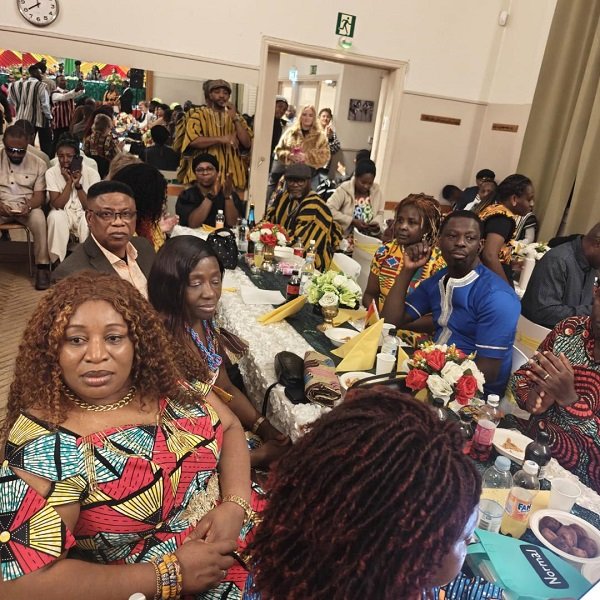
The Ghanaian community in Finland on Saturday, March 14, 2026, celebrated Ghana’s 69th independence anniversary in an impressive event in Helsinki, the capital city of Finland.
The event was organised by the Ghana Union Finland (GUF), an association of Ghanaian migrants in Finland. It was an occasion well attended by many people from the Ghanaian community in Finland, Finns and other nationalities.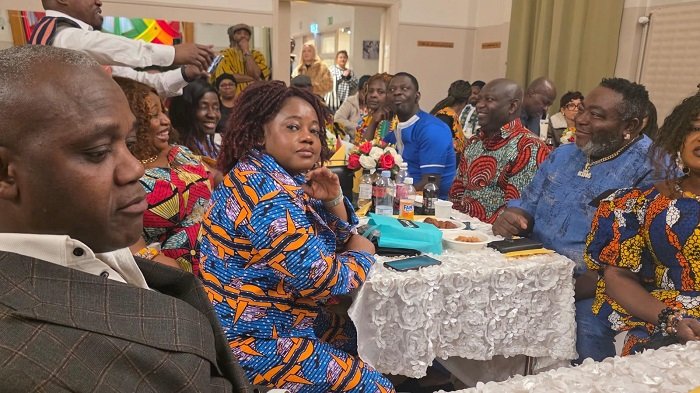
The occasion was graced by the Special Guest, Her Excellency Abigail Naa Adzoko Kwashi, the Ambassador of Ghana to Norway with concurrent accreditation to Finland and Iceland.
In her speech, the Ambassador encouraged Ghanaians living in Finland to pursue unity, actively participate in, and support the Ghana Union Finland to build a stronger body better positioned to advocate for its interests and goals.
Also present at the event was the Honorary Consul of Ghana in Finland, Mrs Kati Kivisaari, who has replaced the retired Ms Ulla Alanko. Mrs Kivisaari urged Ghanaians in Finland to remain good ambassadors of Ghana in their lives in Finland.
The event saw the inauguration of new executive members of the Ghana Union Finland. The team was inducted by Elder Samuel Anini, Patron of the Ghana Union Finland.
Earlier, a “royal entry” was performed by leaders of the Asanteman Finland and Mfantseman Kuw and other personalities in their colourful kente attire adorned with ornaments, amidst traditional music and adowa dance to usher in the Ambassador.
Some personalities present at the event were Nana Ekuoba Gyasi Gyimah and other leaders of Asanteman Finland, Mfantseman Kuw Finland, as well as representatives of other Ghanaian ethnic groups.
It was a very colourful occasion with dance and other performances such as poetry recitals. The audience was also treated to tasty Ghanaian dishes such as jollof rice, fried yam, and soft drinks.
Unity and harmony
I see such events, especially the ones marking independence anniversaries, as ample display of unity and harmony in the Ghanaian migrant community as well as in the larger Ghana and Finland relations.
For me personally, whenever I think about Ghana’s Independence Day anniversary every 6th of March, my mind also goes to Finland’s own day on 6th of December. The two dates always give me such a special, positive feeling. As soon as one of the dates ends, I begin a countdown to the other (next) date.
Last year on December 6, 2025 when Finland celebrated its 108th independence anniversary and I participated in two events marking the celebration in Helsinki, I started looking forward to Ghana’s 69th anniversary this year. Now that Ghana’s anniversary is over, I am looking forward to Finland’s 109th anniversary on December 6, 2026. That’s the beauty of it all for me.
Ensuring integration
What I see in all this, especially for Ghanaian migrants in Finland, is the chance for members of the Ghanaian diaspora in Finland to integrate into the Finnish society through such celebrations that are marked by social activities, affiliations and ideas of inclusion.
Inclusion is key to integration, and the two ideas undoubtedly build a sense of belonging. As I previously wrote, Finland sees the role of migrant associations as bridge-builders for the integration and inclusion of migrants through participation in the decision making process and by acting as a representative voice, which is highly appreciated in Finland.
As I keep pointing out, Finland encourages migrants’ participation in the planning of issues concerning the migrants themselves, using such a strategy as one of the efficient ways to improve their inclusion. Thus, there is an enabling environment created within the Finnish cultural ecology that undoubtedly helps migrants to integrate into the host Finnish society. Thank you!
GHANA MATTERS COLUMN
With Dr Perpetual Crentsil