Hot!
CAF medical seminar for WAFU Zone B has ended

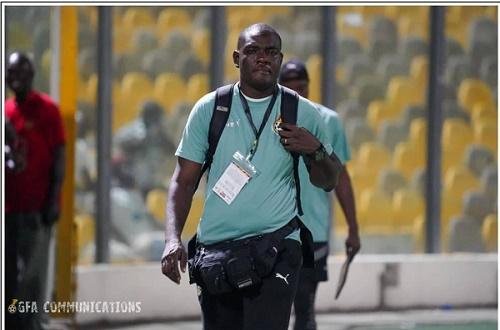
Ghana’s male U-17 team doctor, Ernest Anim Opare, has successfully participated in a four-day medical seminar organised by the Confederation of African Football (CAF).
The seminar, held under the auspices of the West African Football Union (WAFU) Zone B took place in the Burkina Faso capital, Ouagadougou, from April 23-26, 2024.
Dr Anim Opare was among a cohort of high-profile medical doctors that took part in the workshop in the build-up to the 2024 CAF/WAFU-B U17 tournament to be held in Ghana from May15-28 in Accra.
The seminar focused on the use of Magnetic Resonance Imaging (MRI) and fitness protocols captured in the Pre-Competition Medical Assessment (PCMA) in determining the eligibility of the U-17 players.
The CAF Executive decision (2023) regarding player eligibility for U17 tournaments remains in effect, emphasizing the use of MRI screenings to verify player age.
It was reiterated at the seminar that, for the qualifying phase, an eligibility test will be compulsorily performed for all the participating teams before the start of matches.
All tests will be performed according to the CAF protocol in health facilities and duly accredited centres with MRI (Magnetic Resonance Imaging) equipment.
CAF reserves the right to conduct the eligibility test (MRI) for the tournament as well as the final phase for the twelve teams qualified to the CAF U17 AFCON tournament, where all costs of the MRI tests will be covered by CAF.
Again, after performing MRI tests for participating teams, no country will be allowed to replace an ineligible player.
The seminar touched on the importance of team doctors in educating players about the dangers and consequences of doping violations. Doctors are also to provide assent for minors selected for doping tests and to stay informed about the sample collection process and anti-doping procedures to support their players effectively.
With the conclusion of this medical seminar, it is anticipated that all participating teams are up to speed with all medical requirements and protocols for the upcoming WAFU B U-17 tournament.


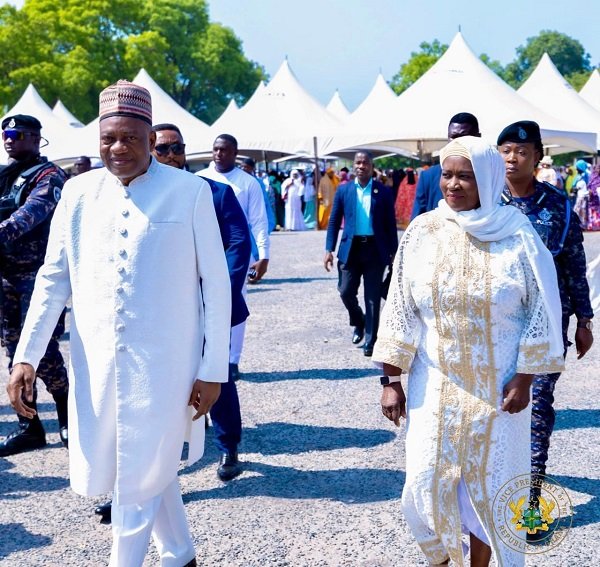
Vice President Jane Naana Opoku-Agyemang joined the Ahlus Sunna Muslim community at the forecourt of the State House to mark Eid, in the company of distinguished Imams, clerics, and fellow Ghanaians.
In her message, the Vice President highlighted Ramadan as a period defined by discipline, sacrifice, and moral renewal an opportunity for reflection, character building, and a recommitment to responsible citizenship.
She noted that the sacred observance reinforces shared values that unite the nation.
Extending warm Eid Mubarak wishes to the Muslim community in Ghana, Prof.Jane Naana Opoku-Agyemang called for continued peace, unity, and collective responsibility in building a harmonious society.
She further expressed hope that the blessings of Eid will bring joy to hearts, peace to homes, and strengthen national cohesion.

THE East Legon enclave in the Greater Accra Region is noted for housing the influential and affluent in society.
The area is synonymous with luxury mansions and ‘big-time’ businesses.
But within the same territory lies ‘Mempeasem,’ a community with a striking contradiction; it tells a totally different story.
‘Mempeasem’ translates from Twi, a local dialect, to “I don’t want trouble,” but the reality, however, is that the neighborhood is currently defined by a troubling disconnect between the admired reputation and its deteriorating infrastructure.
After publishing concerns expressed by a student in its ‘Write to the Editor’ column, The Spectator followed up to present detailed scenes of the sanitation problems in the area.

Residents are increasingly vocal about the lack of drainage systems, a deficiency that turns moderate rainfall into a logistical nightmare.
Without engineered channels for runoff, water settles in stagnant pools, eventually eroding roads.
The irony is sharp: billion-cedi homes often stand adjacent to clogged gutters and makeshift refuse sites.
The lack of public sanitation facilities and a centralised sewage system means that the environmental health of the area is constantly under threat, undermining the quality of life for its high-net-worth inhabitants and local workers alike.
Beyond waste and water, the community faces a broader infrastructure deficit.
Concerns about the prevalence of wooden structures in close proximity to refuse dump sites, where waste material is burnt, were raised; it’s a recipe for disaster.
The situation in Mempeasem is detrimental to public health and safety and serves as a wake-up call for urban planners and local authorities.
By Spectator Reporter